
Reviewed · TERRACOTTA WARRIORS TOURS
Xi’an: Terracotta Warriors Private Tour with Optional Lunch
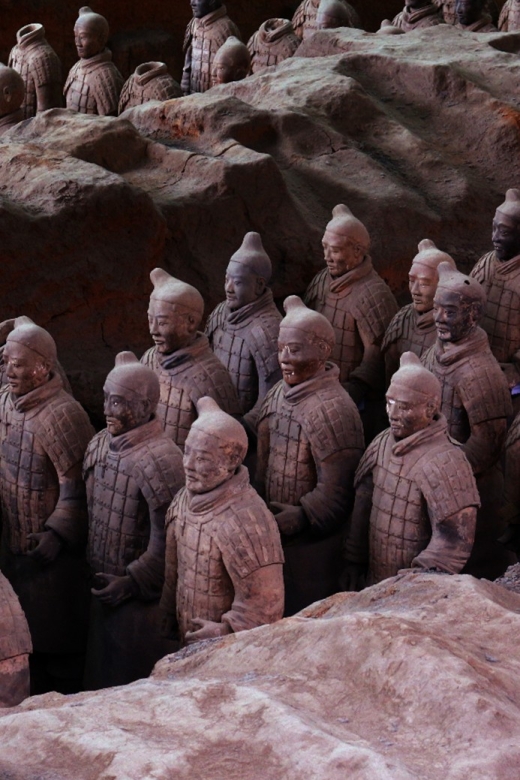
The first sight of the Terracotta Army is hard to forget: rows of life-sized clay soldiers appear ready to march from the earth. This private tour gives you an English-speaking guide to explain Emperor Qin’s huge afterlife project and help you make sense of the museum’s sprawling pits.
I like two things here. Private pacing matters in a crowded museum, and guides such as Eva, Tai, Kai, Mary, and Noble have been praised for clear English, useful directions, and strong historical explanations. I also like the included downtown transfer, which saves you from arranging a long trip east of Xi’an yourself.
The main consideration is lunch. The Qin-themed meal suits the schedule, but it has not pleased everyone, particularly diners expecting a generous spread of meat. You can choose the tour without lunch and eat near the museum instead.
Key points to know before booking
- Pit 1 is the dramatic centerpiece: Around 6,000 soldiers fill the largest excavation hall.
- A private guide changes the visit: You can ask questions, pause for photographs, and move at a more comfortable pace than in a large group.
- Pits 2 and 3 add military detail: Cavalry, infantry units, and officers show that this was more than a single row of statues.
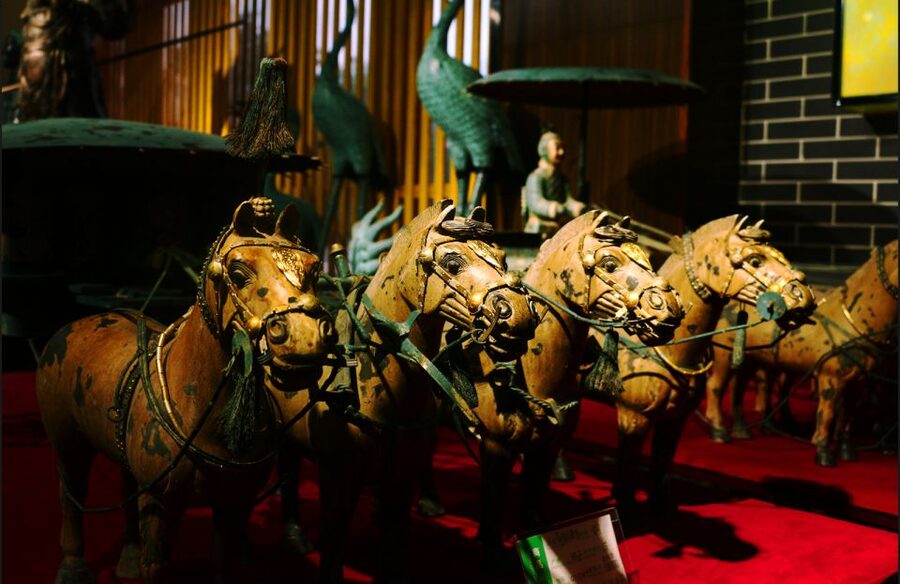
- The bronze chariots are easy to miss without guidance: Two painted bronze chariots are displayed in a separate pit.
- The outing takes 5 to 6 hours overall: The museum visit lasts about 2.5 hours, with roughly an hour each way by van.
- Lunch is optional: The traditional set meal saves decision-making, but independent diners may prefer the restaurants and food stalls outside.
Why the Terracotta Army deserves half a day
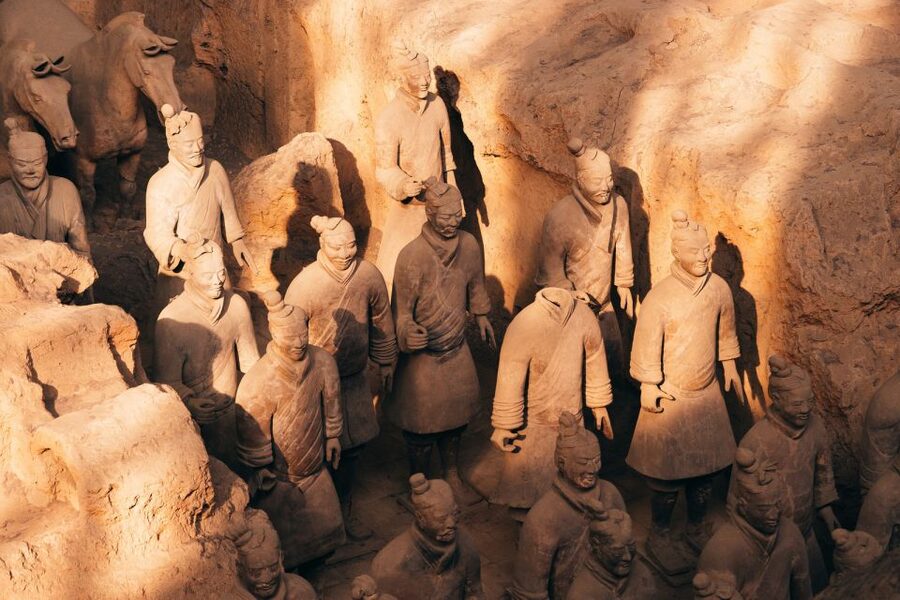
The Terracotta Warriors are not a small collection tucked into a single gallery. The museum protects a huge archaeological site built around the burial complex of Qin Shi Huang, the First Emperor of China.
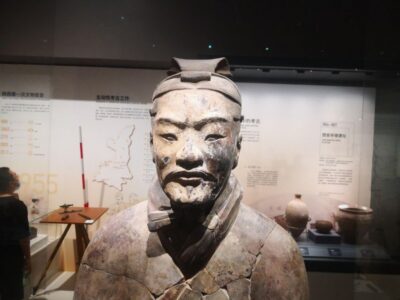
The scale is the point. You see thousands of clay figures arranged as an army, each made for an imperial afterlife rather than for public display. The figures include soldiers, officers, cavalry, and other military units, giving the site a strong sense of order and purpose.
Your guide helps connect the statues to the First Emperor’s political project. Qin united several competing states and created the foundation for a single Chinese empire. His mausoleum was designed to carry his power into the next world, with an army large enough to guard him there.
That context makes the visit more than a parade of ancient sculptures. Without an explanation, you may simply see rows of soldiers behind a railing. With a good guide, you can understand why the figures were made, how they fit into Qin’s imperial vision, and why the discovery became one of the world’s major archaeological events.
More Terracotta Warriors Tours in Xi An:
- Xi’an: Terracotta Army Mini Group or Private Tour
★ 5.0 · 926 reviews - Xian: Terracotta Army Ticket & Guided Bus Tour with Options
★ 4.6 · 579 reviews - Xi’an: Exclusive Terracotta Army Tour & Local Family Lunch
★ 4.9 · 484 reviews
The one-hour ride from Xi’an
The tour collects you from accommodation in Xi’an’s Yanta area, with pickup and drop-off available within the city’s third ring road. You travel in an air-conditioned vehicle with your guide and driver.
Allow about an hour for the outward journey. The total experience is listed at 5 to 6 hours, while the museum portion takes around 2.5 hours. That leaves room for the drive, entry procedures, and lunch if you select it.
The transfer is especially useful if you are staying in central Xi’an and do not want to work out a separate route to the museum. It also keeps the day simple: hotel pickup, museum visit, optional meal, and return to your accommodation.
Traffic can affect the timing. One outing took longer than expected during a public holiday because of congestion, and the guide also needed extra time to organize the visit. You should avoid placing a tight train or flight connection immediately after this tour.
A bottle of mineral water per person is included. Bring your passport, as passport details are required when booking and the passport itself is required during the visit.
Pit 1, where the scale hits you
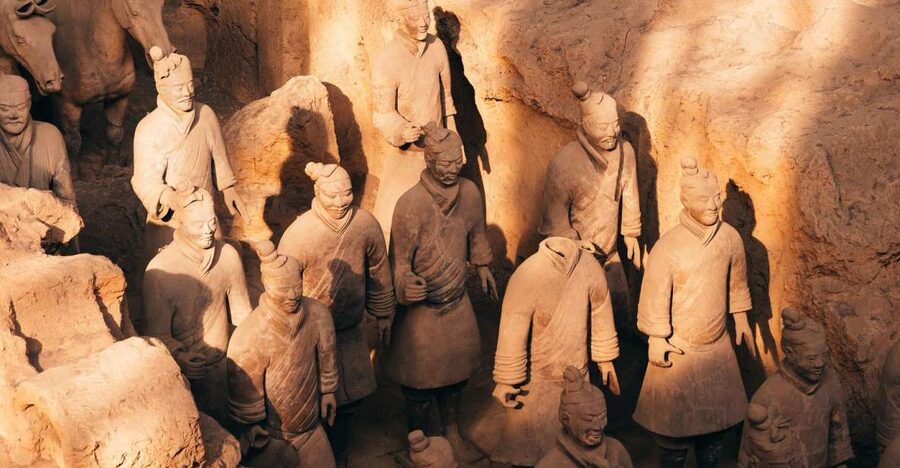
The tour begins in Pit 1, the largest and most impressive of the excavated halls. Around 6,000 soldiers are arranged in formation here, creating the view most people associate with Xi’an.
This is where a private guide earns much of the $132 price. The hall can be very busy, so it helps to have someone point out the layout, explain what you are seeing, and steer you through the best viewing areas. A guide can also keep the pace comfortable instead of forcing you to follow a fixed crowd.
Give yourself time to look beyond the first row. The figures are not simply identical copies. Their positions and military roles create a carefully organized formation, and the overall arrangement shows the emperor’s desire for order even in the afterlife.
Photography is part of the experience, but the sight is stronger when you occasionally lower your phone and take in the full hall. The sheer number of figures is what makes Pit 1 memorable.
Pits 2 and 3 reveal the army’s structure
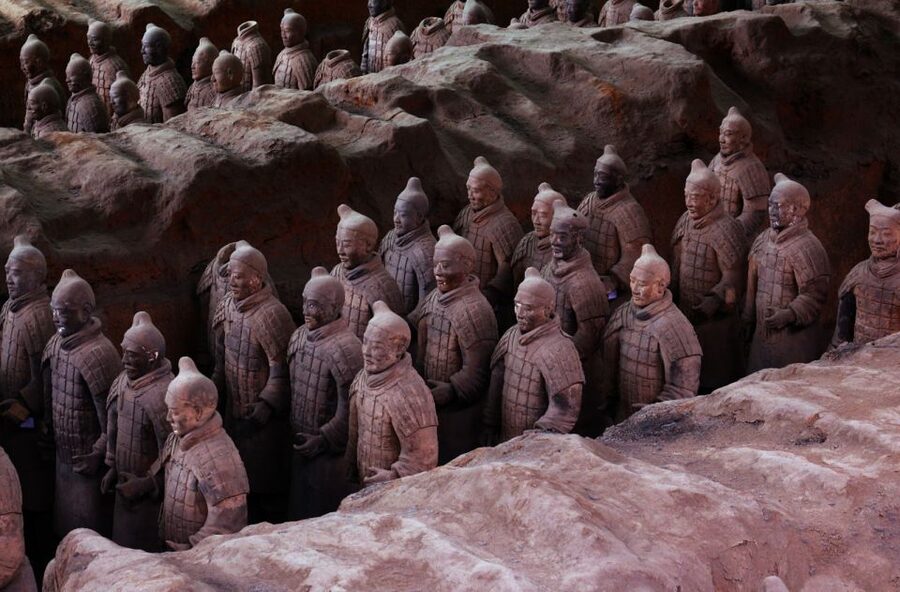
Pits 2 and 3 are smaller than Pit 1, but they add important detail. Here you see cavalry and infantry units, along with officers. These areas help you understand that the burial army was planned as a functioning military force, not a random gathering of statues.
Pit 2 is useful for seeing different types of troops and formations. Pit 3, associated with officers, gives the military arrangement another layer. Your guide can explain the roles represented and point out how these groups relate to the larger army.
The viewing experience is different from Pit 1. Instead of one overwhelming hall, you get closer looks at the way the army was organized. If you are interested in ancient warfare, imperial power, or archaeology, these pits may hold as much interest as the famous first hall.
The tour allows plenty of time for photographs and questions. That flexibility is valuable here because you may want to stop longer at one formation or ask about how the figures were built and arranged.
A few more Xi An trips to weigh up
- Xi’an in A Day: Terracotta Army+City Highlights+Family Lunch
★ 4.9 · 304 reviews - Xi’an: Terracotta Army, Lunch, City Wall, Pagoda, Bazaar
★ 5.0 · 72 reviews - Beijing: Mutianyu Great Wall Daily Tour with Ticket & Lunch
★ 5.0 · 3,056 reviews - Great Wall of China at Mutianyu Full-Day Tour Including Lunch from Beijing
★ 4.0 · 565 reviews
The bronze chariots are worth seeking out
The Bronze Chariot Pit contains two painted bronze chariots. They are among the most delicate and remarkable objects connected with the mausoleum complex.
The chariots give you a change of scale after the life-sized soldiers. They also show the craftsmanship involved in the burial project, with fine details that are easier to appreciate in a focused display than in the enormous halls.
This is one of the places where a guide’s route planning helps. The chariots are not the first thing most people picture when they think of the Terracotta Army, so an independent visit could leave them receiving less attention than Pit 1. Your guide makes sure they are part of the main visit rather than an afterthought.
What a private English guide adds
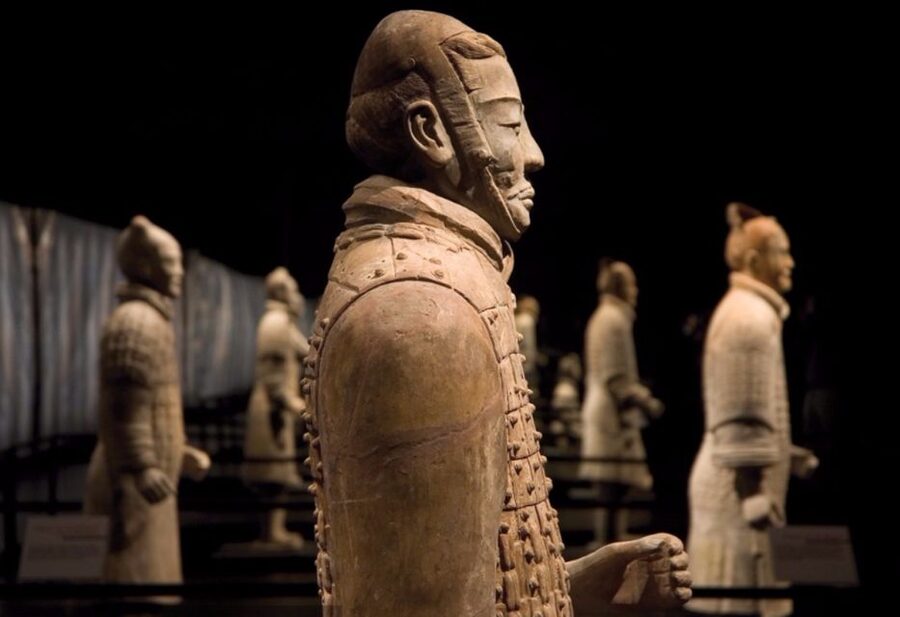
The tour uses an English-speaking guide and a private group format. This does not mean the museum will be quiet, but it does give you more control over how you use your time.
The strongest part of the experience is the explanation. Guides including Eva, Tai, Kai, Mary, Noble, and Richard have been singled out for fluent or clear English, historical insight, practical help, and friendly service. That range of praise suggests that the guide is central to the experience, not just someone who handles tickets.
You can ask why the emperor built the army, how the different pits fit together, or what distinguishes an officer from an ordinary soldier. You can also ask for help with the museum route and photo stops.
This matters because the Terracotta Warriors are visually powerful but not self-explanatory. Signs and displays can tell you what a pit is called. A live guide can connect the objects to the First Emperor’s ambitions and make the visit easier to follow.
The tour is also explicitly non-shopping. That is a practical advantage if you want your half-day devoted to the museum rather than forced stops at commercial sites.
Is the optional Qin-style lunch worthwhile?
If you select the lunch option, you eat at Da Qin Xiao Yan, a restaurant with a Qin-culture theme. The meal is described as a traditional local Chinese set menu and takes about an hour.
The timing is convenient. After walking around the museum, you can sit down for a planned meal before the drive back to Xi’an. One person found the local meal very good, while another described it as basic, with little meat. That makes the lunch a matter of expectations.
I would choose it if you value convenience, want to try a traditional set meal, or prefer not to make another decision after the museum. I would skip it if food is a major part of your Xi’an plans or if you want to choose dishes for yourself.
Restaurants and food stalls are available outside the museum, so you have another option. If you are particular about Chinese food, the non-lunch tour gives you more freedom and may also make the day feel less fixed.
The value of $132 per person
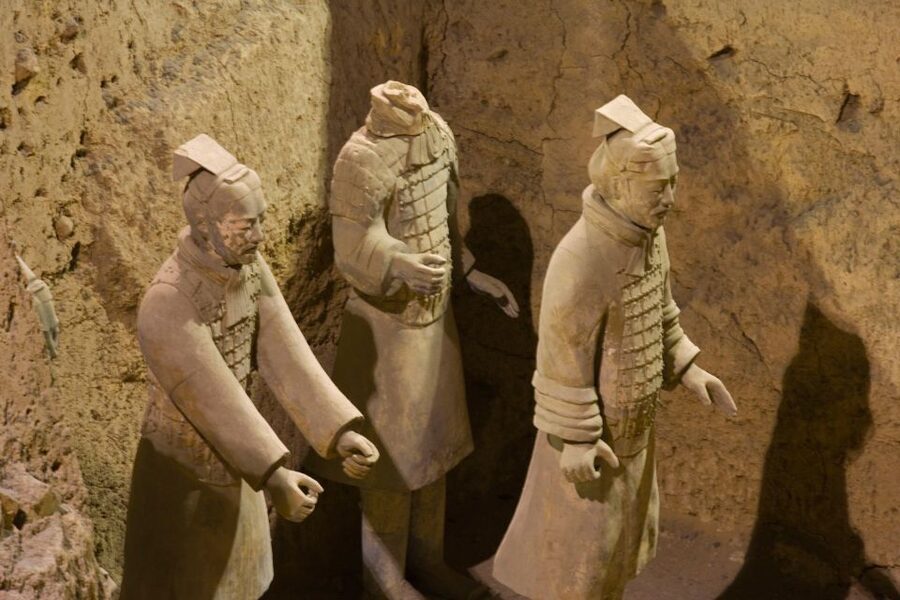
At $132 per person, this is not the cheapest way to see the Terracotta Warriors. The price pays for more than admission, though. You are also paying for a private vehicle, hotel pickup and return, an English-speaking guide, entry to the museum, and a private group experience.
The value is strongest for two or more people who want comfort and personal attention. A private guide can help you get oriented quickly, answer questions, and avoid the uncertainty of handling the long transfer and museum visit alone.
It is also a sensible choice if this is one of the major reasons you came to Xi’an. The Terracotta Army is a large site with several separate areas, and a rushed or poorly organized visit would be a bad place to economize.
The value is weaker if you are happy with public transport, prefer to read at your own pace, or have a very limited budget. It is also less attractive if you mainly want a quick look at Pit 1 and do not care about the military context or bronze chariots.
The transport receives especially strong marks, with 97 percent of ratings giving it a perfect score. That fits the practical appeal: you do not need to negotiate the journey yourself, and you return to the same accommodation area after the visit.
Comfort, timing, and mobility
The air-conditioned vehicle is useful during Xi’an’s warmer months and makes the long transfer easier. The tour lasts 5 to 6 hours, so wear comfortable shoes and expect a substantial amount of walking and standing at the museum.
A wheelchair and attendant were arranged for one visitor with significant mobility and vision needs. That assistance made the museum possible for him, but you should raise accessibility needs when booking rather than assume every arrangement is automatic.
The museum can become crowded. Your guide may help you reach useful viewing positions and organize the route, but no private tour can remove the crowds entirely. Public holidays can also add traffic and delay the return.
The schedule is best for a morning or early afternoon when you have no other fixed appointment. The tour includes a return to Yanta, but the exact end time can shift with traffic and the pace of your group.
Who should book this Xi’an tour?
I would recommend it most strongly to first-time visitors who want the main archaeological story without spending a day sorting out transport and museum logistics.
It also suits:
- Couples or families who want a private pace
- Visitors who prefer spoken explanations to reading signs
- Anyone with a short stay in Xi’an
- People interested in imperial China, archaeology, or military history
- Those who want a hotel pickup and return within the third ring road
- Visitors who want a non-shopping outing
Independent visitors may prefer another plan if they want to stay longer than 2.5 hours, choose their own route, or spend more time eating near the museum. The private format is convenient, but it does not turn the site into a quiet one.
Final call: a strong choice for a first visit
Book this tour if you want the Terracotta Army explained clearly, reached comfortably, and covered in a focused half-day. The private format, strong English guides, three main pit areas, bronze chariots, and hotel transfer make the price reasonable for many visitors.
Choose the lunch option for convenience, not because it is the unquestioned culinary highlight. If you care more about food than schedule, skip it and eat outside the museum.
I would also keep your return plans flexible, especially during holidays. With that small caution, this is a well-organized way to see one of China’s essential sights without wasting time on transport or shopping stops.
FAQ
How long does the Terracotta Warriors tour take?
The full experience takes about 5 to 6 hours. The guided museum visit lasts around 2.5 hours, and the itinerary allows about an hour for the van journey each way.
Where does pickup take place?
Pickup and drop-off are available from accommodations in Xi’an’s Yanta area and within the city’s third ring road.
Is this a private tour?
Yes. The activity is arranged for a private group rather than a large shared group.
Is an English-speaking guide included?
Yes. An English-speaking live guide is included. Guides named in the tour information include Eva, Tai, Kai, Mary, Noble, and Richard.
What parts of the Terracotta Army museum are included?
The visit includes Pit 1, Pits 2 and 3, and the Bronze Chariot Pit. You see the large soldier formation, cavalry, infantry, officers, and two painted bronze chariots.
Is lunch included?
Lunch is included only if you select the lunch option. It is a Chinese-style set meal at Da Qin Xiao Yan, a Qin-culture themed restaurant.
Can I take the tour without lunch?
Yes. Lunch is optional, and restaurants and food stalls are available outside the museum.
What should I bring?
Bring your passport. Passport details are required when booking, and you must carry your passport during the tour.
Can I cancel the tour?
You can cancel up to 24 hours in advance for a full refund. Reserve now and pay later is also available.
Just added around Xi An
- Top 3 Xian Sites to Terracotta Army & Dinner Show w/ Options★ 4.7 · 11 reviews
- The Legend Of Camel Bell In Xi’An★ 5.0 · 4 reviews
- Terracotta Warriors And Xi’An DowntownTour★ 5.0 · 6 reviews
- Terracotta Army, Huaqing Palace & Song of Everlasting Sorrow★ 5.0 · 3 reviews
- Terracotta Army E Ticket with Optional Transfer or Guide★ 5.0 · 32 reviews
- Terracotta Army Day Tour from Xi’an-Tickets&Flexible Pickup★ 5.0 · 8 reviews
- From Xi’an: Mt. Huashan Private Tour and Cable Car Ride★ 4.8 · 3 reviews
- Private Tour: Xi’an’s Must-See 3 UNESCO Sites in One Day★ 4.7 · 4 reviews
Terracotta Warriors Tours, compared.

Mini Group Xian Day Tour to Terracotta Army, City Wall, Pagoda and Muslim Bazaar
Read our review →
Terracotta Army Ticket & Guided Bus Tour with Options
Read our review →
Customized Private Day Tour of Terracotta Warriors and Xi’an
Read our review →
Exclusive Terracotta Army Tour & Local Family Lunch
Read our review →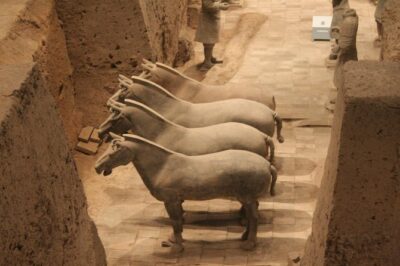
Half-Day Mini Group Xian Tour to Terracotta Warriors Museum
Read our review →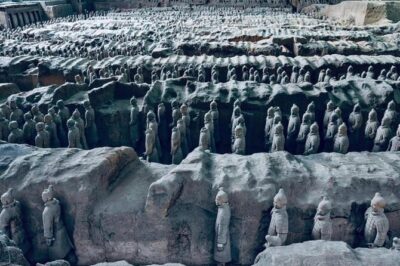

Private Customizable Terracotta Warriors Day Tour with Options
Read our review →Browse the lists this tour appears in