
Reviewed · TERRACOTTA WARRIORS TOURS
Terracotta Tickets With Professional Guide In English / Italian
The most striking part of this Xi’an visit is the scale of Pit 1, where thousands of life-sized warriors and horses fill a long hall in battle formation. A guide helps you see the army as more than a wall of clay faces, pointing out ranks, weapons, poses, and the careful work behind each figure.
I like the practical entry help, especially for an attraction where buying tickets online can be awkward without a local ID or Chinese payment method. I also like the private format and the chance to hear the tour in English or Italian, with guide Jenny praised for calm explanations, useful shortcuts, and good photo spots. The main drawback is that the mausoleum admission is not included, so the advertised price does not cover every part of the visit.
Key points to know before booking

- Pit 1 gives you the big spectacle: More than 6,000 life-sized warriors and horses are arranged in battle formation.
- Pit 2 rewards a slower look: You can see cavalry, chariots, archers, infantry, and the famous kneeling archer.
- A private guide keeps the visit focused: Only your group takes part, with English or Italian guiding available.
- Jenny is a name worth asking for: Her tours are praised for clear history, short routes through the museum, and well-chosen viewing points.
- The bronze chariots are separate from the pits: The half-size teams of horses show a finer side of Qin craftsmanship.
- Budget for one extra ticket: Admission to the mausoleum section is not included in the $47.20 price.
Why a guide matters at the Terracotta Army
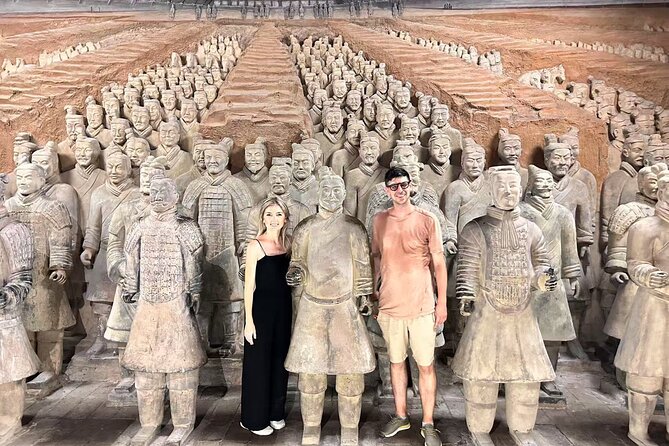
The Terracotta Army is easy to visit badly. You can walk into the huge exhibition halls, see rows of clay soldiers, take a few photographs, and leave without understanding what you are seeing. The figures are impressive on their own, but the details only begin to make sense when someone explains the ranks, military formations, repairs, and burial project.
This is where the six-hour format earns its keep. The guided portion gives you a clear route through the main excavation pits, while still leaving room to look around at your own pace. The guide can also help you find useful viewing positions rather than leaving you to press toward the first open railing.
The practical help matters just as much. Booking major Chinese attractions can be difficult if you lack a local identity document or payment method. Meeting at the museum ticket office means you are not trying to solve every entry problem alone after a long journey to Lintong District.
The activity is private, so you are not folded into a large group with a fixed script. That makes it easier to ask questions, slow down at the kneeling archer, or spend more time with the bronze chariots. It also means the quality of your visit depends heavily on the guide assigned to you. Jenny is specifically praised for her English and Italian ability, warm manner, and skill at moving a group through the complex without rushing the important parts.
More Terracotta Warriors Tours in Xian:
- Mini Group Xian Day Tour to Terracotta Army, City Wall, Pagoda and Muslim Bazaar
★ 5.0 · 1,320 reviews - Xi’an: Terracotta Army Mini Group or Private Tour
★ 5.0 · 926 reviews - Xian: Terracotta Army Ticket & Guided Bus Tour with Options
★ 4.6 · 579 reviews
Pit 1: the army at full scale
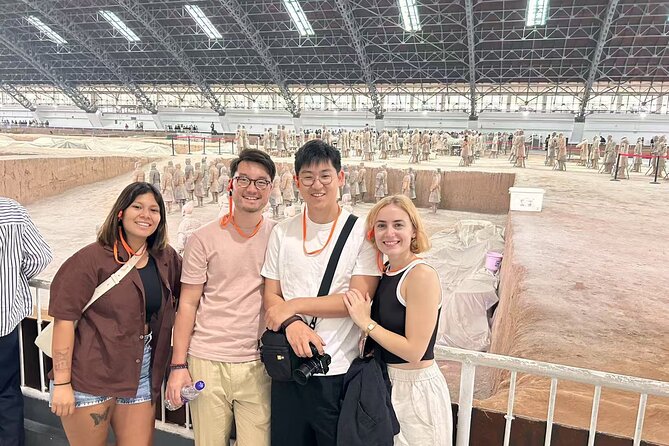
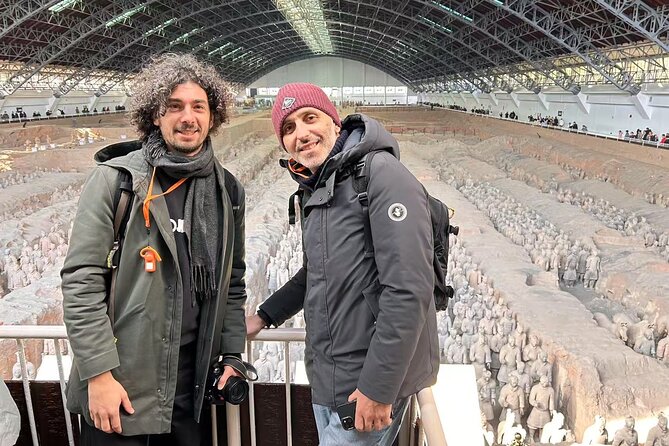
Pit 1 is the reason most people make the trip from Xi’an. It is the largest excavation hall and contains more than 6,000 life-sized warriors and horses arranged in battle formation. The first sight is less about one perfect statue than about repetition and scale: row after row of soldiers, standing in an army that once guarded the tomb of Qin Shi Huang.
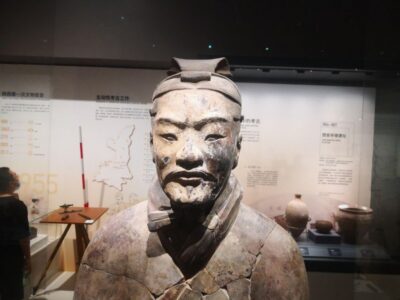
Give yourself time to notice the human touches. Figures have different poses, ranks, hairstyles, and equipment. Horses are set among the troops, and the spacing helps you understand the order of the formation. The sheer number of clay fingers is also striking, since small details survived across an enormous project.
A guide is useful here because the hall can feel visually overwhelming. Jenny is praised for showing people the best places to stand for a clear view. That sounds like a small service, but it changes the visit. Instead of wandering from one crowded point to another, you can begin with a broad view, then look closer at selected figures.
Do not expect every warrior to be untouched or fully assembled. This is an archaeological site, and the broken pieces and ongoing work are part of what you are seeing. A professional explanation helps you understand that the museum is not simply displaying a finished collection. It is also presenting the remains of a vast burial project that is still being studied.
Pit 2: a more complex military picture
Pit 2 is smaller than Pit 1, but it gives you a more varied view of Qin military planning. The pit includes cavalry, chariots, archers, and infantry, with several formations placed together. For many people, this is where the army starts to feel less like a mass and more like a carefully organized force.
The kneeling archer is one of the most recognizable figures in the museum. Its pose makes it easier to study the sculptural detail, especially when compared with the standing figures around it. You may also see better-preserved pieces here, which makes the pit useful for understanding how the original figures might have looked before damage and restoration.
I would pay attention to the guide’s explanation of the different units. Without context, a horse, chariot, archer, and foot soldier can blend into one ancient military display. With a little explanation, you can follow the logic of the arrangement and see why Pit 2 adds something different from the grand sweep of Pit 1.
The trade-off is that this area can reward patience more than speed. You will not get the same immediate shock as you do in Pit 1, but the mix of units gives you more to study. If your time is limited, let the guide help you set priorities rather than trying to inspect every figure equally.
Pit 3: the command post

Pit 3 is the smallest of the three main pits. It is believed to have served as a high-ranking command post, with officers and a ceremonial chariot. Its size makes it easier to grasp as a specific space rather than an entire army.
This pit provides a useful contrast. Pit 1 is about massed troops. Pit 2 is about varied formations. Pit 3 suggests command, planning, and ceremony. The building itself does not create the same dramatic photograph as Pit 1, but the military structure becomes clearer when you view all three spaces together.
A guide can connect these sections into one story. Jenny is repeatedly praised for presenting two hours of history and cultural explanation with energy and a warm, steady voice. That balance matters here. The facts are important, but the visit should not feel like a lecture delivered while you are trying to look through a crowd.
A few more Xian trips to weigh up
- Terracotta Army Ticket
★ 5.0 · 334 reviews - Xian Terra Cotta Warriors Ticket Only
★ 4.6 · 268 reviews - Xi’an Terracotta Army Entry Ticket Booking – with Guide Option
★ 4.5 · 122 reviews - Xi’an: Xi’an City Wall South Gate(Yongningmen) Entry Ticket
★ 3.8 · 87 reviews
Qin techniques and the people behind the figures

The terracotta army is often reduced to a single question: how did ancient workers make so many soldiers? This experience adds interest by drawing attention to the high-level techniques used more than 2,000 years ago.
The figures were not simply identical molds stamped out by one workshop. Their faces, hair, clothing, and positions create variation across the ranks. The guide can help you look for these differences and explain how the army reflects organization on a huge scale.
The optional hands-on element makes that craft easier to understand. After the museum, you can try making your own terracotta finger. It is a small activity, but it gives you a direct sense of how much care went into features that are easy to overlook behind glass and barriers.
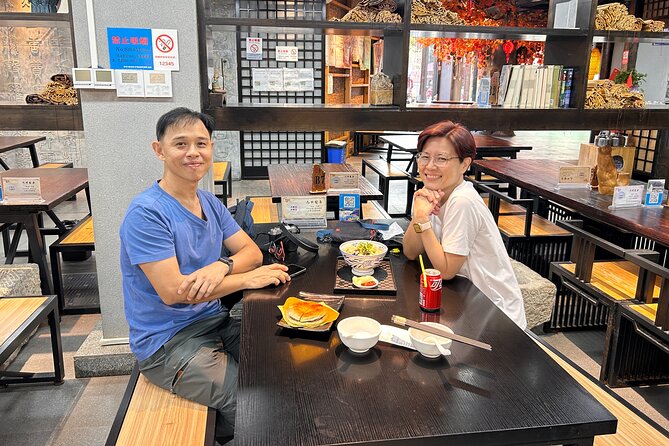
You may also have the chance to taste Biangbiang noodles and local drinks. The food element is not the main reason to book this experience, and the supplied details do not specify a restaurant or a full meal. Still, it adds a local touch to a day focused heavily on archaeology and imperial power.
The mausoleum grounds and the bronze chariots
The second major stop is connected to Qin Shi Huang’s tomb. The actual tomb mound remains unexcavated and sealed. You can see the exterior mound, covered with vegetation, and walk around the surrounding park-like area, but you cannot enter the burial chamber or view the palaces and treasures said to lie inside.
This is an important expectation to set before you go. The mausoleum visit is not an underground tomb tour. It is an outdoor look at the mound and a chance to understand the scale of the emperor’s burial complex. If you are hoping for an open chamber, you will be disappointed.
The strongest feature of this section is the exhibition hall containing two bronze chariots and horses. Each is about half life-size and drawn by four bronze horses. They show a different kind of skill from the clay army: finer scale, complex metalwork, and careful detail in the horses, vehicles, and fittings.
The bronze chariots are a good reason to include the mausoleum area if your schedule allows. They are not simply a repeat of the excavation pits. The pits show the emperor’s army in mass formation, while the bronze display brings attention to craftsmanship at a smaller scale.
There is one clear cost issue. Admission to the museum of the Terracotta Warriors is included, but the mausoleum admission is not. Ask about the additional ticket before setting your budget. The $47.20 price is easier to justify if you value entry assistance and guiding, but you should not treat it as the complete cost of both sites.
Six hours, private timing, and meeting details

The full experience lasts about six hours. The two principal stops are each allotted around two hours, leaving time for movement, entry, the clay activity, food, and a little flexibility. The museum portion alone can absorb a lot of attention, so the schedule is sensible for someone who wants explanation rather than a quick photograph.
You meet at the Museum of the Terra-cotta Warriors and Horses of Qin Shihuang ticket office. The activity ends back at the same meeting point. Since no hotel pickup or private vehicle is described, you should plan your own way to the museum and allow time to locate the ticket office inside the site area.
The published operating period is April 7, 2025, through February 14, 2027, with hours listed from 6:00 a.m. to 11:30 p.m., Monday through Saturday. Check your exact booking details because the experience is not presented as a Sunday activity.
A mobile ticket is provided, which is useful when you are managing several Chinese attraction bookings on a phone. Confirmation arrives at booking. Service animals are allowed, the site is near public transportation, and most people can participate, although the information does not provide a detailed mobility assessment of every route.
The tour is described as private, meaning only your group participates. That does not mean you have the entire museum to yourself. It means your guiding time is not shared with unrelated people, which is a real benefit at a large and crowded archaeological site.
Is $47.20 good value?
At $47.20 per person, this is not the cheapest way to look at the Terracotta Army. You are paying for more than an admission ticket, though. The price covers museum entry, a professional guide in English or Italian, and help with an attraction that can be hard to book without local credentials and payment tools.
The value is strongest for first-time visitors, people on a short Xi’an schedule, and anyone who wants the history explained in clear English or Italian. The private format adds value if you are traveling with family or friends and want to ask questions without holding up a large group.
The value is weaker if you already have museum entry arranged, speak Chinese, or prefer to read signs and move independently. It is also important to add the separate mausoleum admission if you want to visit that section. The tour’s price should be judged as guided access to the main museum, not as an all-inclusive ticket to every nearby attraction.
Booking far ahead is sensible. The experience is booked an average of 66 days in advance, which suggests that popular dates may fill well before arrival. That is especially relevant if your Xi’an schedule is tight.
English, Italian, and the guide experience
The guide is the heart of this activity. English and Italian are offered, and Jenny is specifically associated with the experience. She is praised for clear English, strong knowledge of the Qin dynasty and the sites, and a friendly manner that remains energetic without becoming frantic.
Her practical strengths are just as useful as her historical explanations. She helps people find shorter routes and better places for photographs. She has also been praised for assisting an older family member with bags, which suggests a considerate approach, though you should not treat that as a guaranteed service for every booking.
The best guide-led museum visits do not bury you in dates. They give you enough background to understand why the Qin army was built, then point you toward details you would otherwise miss. That is what you should hope for here: context, good positioning, and the freedom to look after the explanation ends.
If having Jenny matters to you, ask at booking if she is available. The published information identifies the provider and language options, but it does not guarantee that a named guide will lead every departure.
Who should book this experience?
I would recommend it to you if this is your first visit to Xi’an and the Terracotta Army is high on your list. It is also a good fit if you are traveling without a Chinese payment method, want help at the ticket office, or prefer a private conversation to a large coach tour.
Families may appreciate the flexible pace and hands-on clay activity. Older visitors may benefit from a guide who keeps the route clear and helps with orientation. The English option is useful for independent visitors who want more than translated signs, while the Italian option gives Italian-speaking visitors a more natural way to handle a complicated archaeological site.
You may want to skip it if you have already arranged admission and prefer complete independence. Also think twice if you want hotel transportation, since the stated meeting point is at the museum ticket office and no pickup service is included.
Should you book it?
Book this tour if you want the Terracotta Army explained properly, value help with entry, and like the idea of a private English or Italian visit. The best reasons are the guide’s practical direction, the clear coverage of all three pits, and the extra look at the bronze chariots and mausoleum grounds.
Before paying, confirm the meeting point, language, guide availability, and the extra mausoleum ticket. If those details fit your plans, $47.20 is a fair price for a focused six-hour introduction to one of Xi’an’s major sights. Free cancellation is available up to 24 hours before the start time, but cancellations within 24 hours are not refunded.
FAQ
How long does the experience last?
The activity lasts approximately six hours.
Where does the tour start?
It starts at the ticket office of the Museum of the Terra-cotta Warriors and Horses of Qin Shihuang in Xi’an’s Lintong District.
Where does the activity end?
It ends back at the same meeting point.
Is the tour private?
Yes. Only your group participates in the activity.
Which languages are available?
The tour is offered with a professional guide in English or Italian.
Is museum admission included?
Admission to the Museum of Qin Terra-cotta Warriors and Horses is included.
Is admission to the mausoleum included?
No. Admission to the Mausoleum of the First Qin Emperor is not included.
What can I see at the mausoleum?
You can view the exterior tomb mound, walk around the surrounding grounds, and see two bronze chariots and horses in a separate exhibition hall. The tomb interior remains sealed.
Is a mobile ticket provided?
Yes. The experience includes a mobile ticket.
What is the cancellation policy?
You can cancel up to 24 hours before the start time for a full refund. Cancellations or changes made less than 24 hours before the start time are not accepted or refunded.
Just added around Xian
- Top 3 Xian Sites to Terracotta Army & Dinner Show w/ Options★ 4.7 · 11 reviews
- The Legend Of Camel Bell In Xi’An★ 5.0 · 4 reviews
- Terracotta Warriors And Xi’An DowntownTour★ 5.0 · 6 reviews
- Terracotta Army, Huaqing Palace & Song of Everlasting Sorrow★ 5.0 · 3 reviews
- Terracotta Army E Ticket with Optional Transfer or Guide★ 5.0 · 32 reviews
- Terracotta Army Day Tour from Xi’an-Tickets&Flexible Pickup★ 5.0 · 8 reviews
- Private Xian Mt. Huashan Adventure Tour: Explore in Your Own★ 4.9 · 6 reviews
- From Xi’an: Mt. Huashan Private Tour and Cable Car Ride★ 4.8 · 3 reviews
Terracotta Warriors Tours, compared.

Mini Group Xian Day Tour to Terracotta Army, City Wall, Pagoda and Muslim Bazaar
Read our review →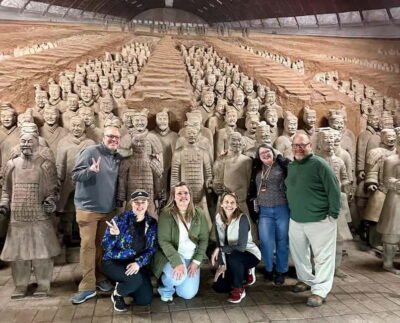
Terracotta Army Ticket & Guided Bus Tour with Options
Read our review →
Customized Private Day Tour of Terracotta Warriors and Xi’an
Read our review →
Exclusive Terracotta Army Tour & Local Family Lunch
Read our review →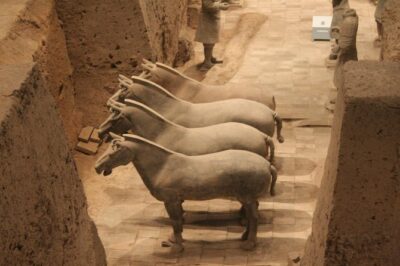
Half-Day Mini Group Xian Tour to Terracotta Warriors Museum
Read our review →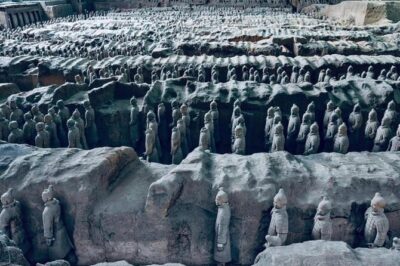

Private Customizable Terracotta Warriors Day Tour with Options
Read our review →Browse the lists this tour appears in