
Reviewed · FOOD & DRINK
Suzhou Alleyway Walking Food Tour
Suzhou’s best introduction may be a morning spent eating your way through its narrow lanes. This 3.5-hour walking brunch pairs local dishes with Ming Dynasty gardens, old monasteries, and 800-year-old pagodas, so you get a taste of the city in both the literal and cultural sense.
I like the small group limit of 10 people, which should make alleyway stops and restaurant seating easier. I also like the serious food range, from seasonal noodles and homemade silken tofu to tiny wontons, sesame balls, and chewy rice balls in red-bean soup.
The main consideration is the pace and size of the meal. You will walk for several hours and eat far more than a normal brunch, so this suits curious eaters more than people wanting a light snack or a quiet sightseeing tour.
Key points to know before you book
- Suzhou food comes first: Try noodles, savory soy milk, spring rolls, donuts, tofu, dumplings, wontons, sesame balls, and dessert.
- The route begins at Beisita Subway Station: This is a practical starting point in Gusu District, with the tour returning to the same meeting point.
- Two cultural stops add meaning to the meal: Expect a Buddhist nunnery and a Ming Dynasty garden with Taihu Lake stones, along with old pagodas and monasteries.
- The group is capped at 10 people: That matters when eating in small local restaurants and walking through tight lanes.
- An English-speaking guide leads the morning: Guides such as Hilary provide the local explanation that turns unfamiliar dishes and sights into a connected story.
- The $58 price covers the food and drinks: Several sit-down stops, dessert, cultural visits, guide service, and unlimited bottled water are included.
Starting at Beisita and entering old Suzhou
The meeting point is Beisita Subway Station in Gusu District, and the start time is 9:30 a.m. That timing is useful: you can reach the meeting point by public transportation, then eat through the morning before the heat and crowds become more of an issue.
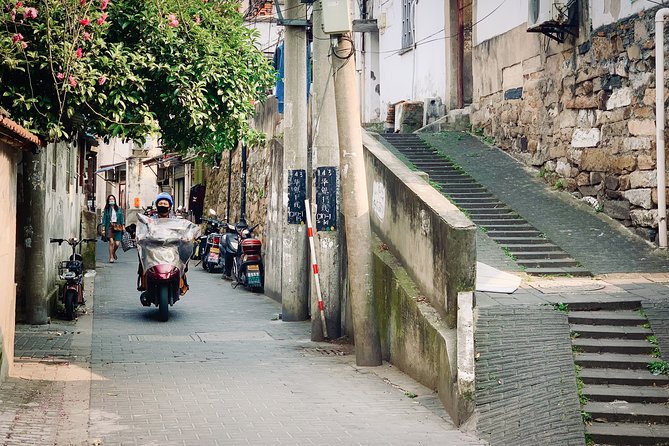
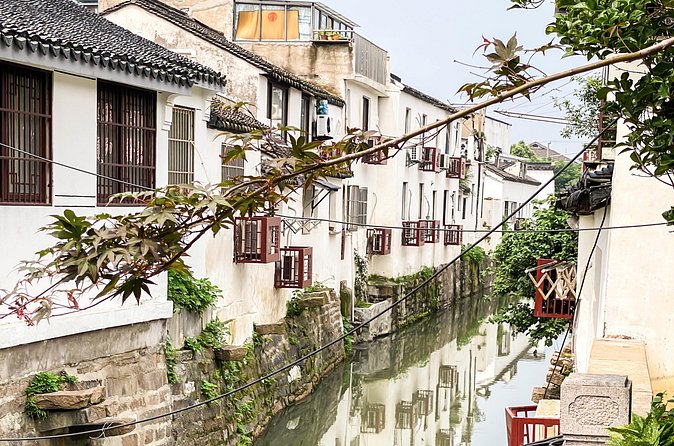
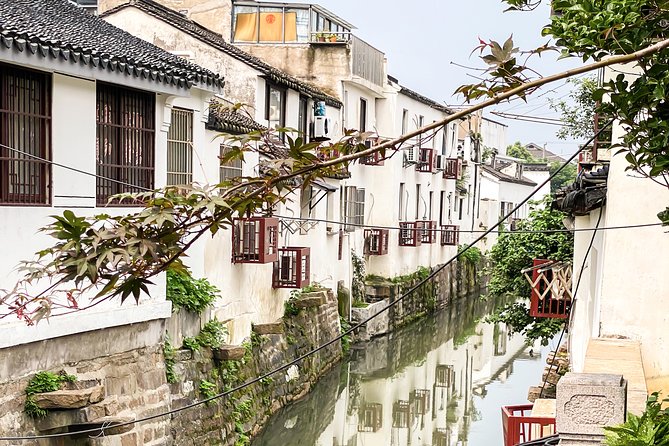
From there, the route leads into old Suzhou by foot. The appeal is not a single grand attraction. It is the way the morning links small lanes, waterways, temples, gardens, and family-run food shops that can be difficult to locate on your own.
You should wear comfortable shoes. The walking is not described as strenuous, and most people can take part, but this is still a moving meal rather than a restaurant crawl done by taxi. Keep your phone charged for the mobile ticket and allow enough time to arrive before 9:30.
The group size is limited to 10 people. That is a good fit for Suzhou’s narrow streets and compact eating places. A large group could easily turn a small noodle shop into a logistical exercise; a small group can move with less fuss.
A few more China trips to weigh up
- Authentic Local Food Tour in Central Shanghai
★ 5.0 · 1,382 reviews - Beijing Hutong Walking Food and Beer Tour at Hidden Restaurants
★ 5.0 · 1,132 reviews - Xi’an Evening Food Tour by TukTuk
★ 5.0 · 715 reviews
Seasonal noodles with a local Suzhou habit
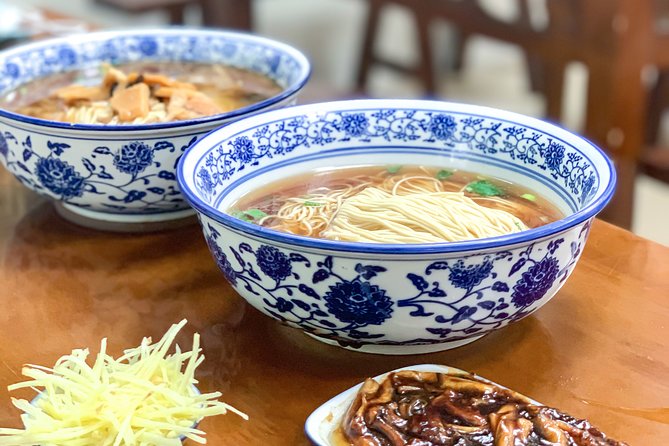
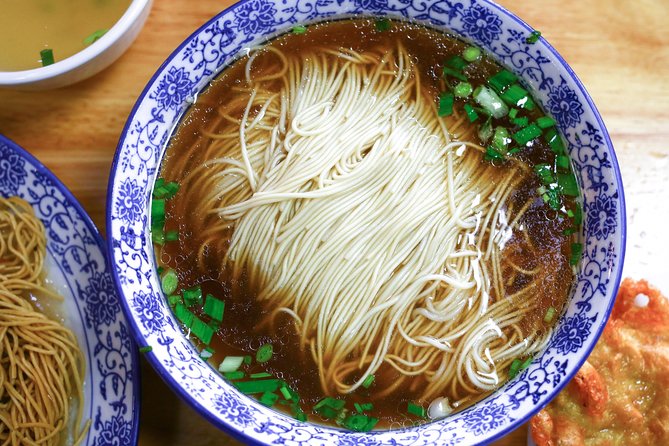
One early food stop focuses on seasonal Suzhou noodles. The unusual detail is that the dish can come with more than 500 possible toppings, which helps explain why noodles are not treated as a plain bowl of carbohydrates here.
Your guide also explains the local custom of enjoying noodles with opera. That small cultural note is exactly the kind of detail a food tour should provide. It tells you not only what is in the bowl, but how the dish fits into daily life.
Expect this to be a useful stop for first-time visitors because noodles are a major part of Suzhou’s food identity. You may also find the seasonal approach more interesting than a fixed tourist menu, since what goes on top can change with the time of year.
The practical drawback is appetite management. This is only the first major taste, and the tour continues through several more substantial stops. Take smaller portions when possible, and remember that sampling everything does not require finishing every bite.
Homemade silken tofu in a narrow family alley
The tofu stop offers a different kind of food story. For more than 50 years, one family has made fresh silken tofu at home, beginning work at 5 a.m. The shop is tucked into a narrow alley, which gives you a look at the scale and routine of neighborhood food production.
This is not a polished dining room or a staged cooking demonstration. It is a family operation built around a food that needs to be made fresh and handled with care. That makes the stop valuable even if tofu is not normally high on your list.
The dish is homemade silken tofu, and the long-running family connection gives your guide plenty to explain. You get a small view of how food businesses can grow out of ordinary homes and local habits.
Access through a tight alley may not suit every visitor, especially if you need wide, open walking space. The tour information says most people can participate, but anyone with mobility concerns should ask the provider before booking because the route includes old lanes, gardens, and several walking sections.
Buddhist nunnery, pagoda, and a Ming garden
Food is only half the reason to book this experience. Along the route, you visit cultural sites that include Suzhou’s only Buddhist nunnery, old monasteries, imposing pagodas dating back about 800 years, and a Ming Dynasty garden.
The nunnery gives the morning a quieter turn. It also broadens the picture of Suzhou beyond its canals and classic gardens. Your guide supplies the historical context, which helps you understand why a modest entrance or side lane can lead to a significant religious site.
The Ming garden is described as a hidden, intricate space with Taihu Lake stones. These porous limestone rocks are a familiar feature of classical Chinese gardens, valued for their unusual shapes and connection to the natural world.
You should not expect a long, museum-style visit at each cultural stop. This is a food walk, and the schedule has to keep moving. The benefit is variety: you see several types of Suzhou site in one morning instead of spending the entire tour in one garden.
The pagodas and monasteries are also the sort of places that can be tricky to find without local help. A map may show a landmark, but it does not always show the best lane, courtyard, or entrance. The guide’s role matters here, not just for translation but for finding the places that reward a closer look.
Same country, a completely different kind of day:
- From Beijing: Mutianyu Great Wall Tours with Options
★ 4.9 · 9,216 reviews - Beijing: Forbidden City Tour(Group/Private)-Tickets Included
★ 4.8 · 7,974 reviews - Beijing: T-Square & Forbidden City Group or Private Tour
★ 4.8 · 4,446 reviews - Beijing: Mutianyu Great Wall Daily Tour with Ticket & Lunch
★ 5.0 · 3,056 reviews
Savory soy milk, spring rolls, and sesame balls
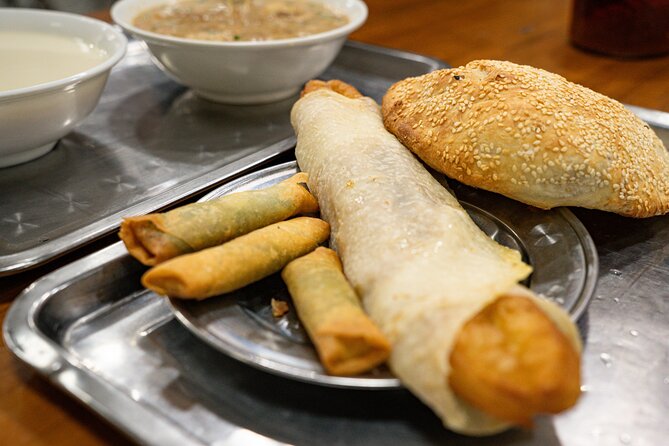
The middle part of the route covers neighborhood breakfast favorites. You may try savory soy milk, Suzhou-style spring rolls, and local donuts, followed by fried sesame balls associated with Tang Dynasty food traditions.
Savory soy milk is particularly useful for visitors who know soy milk only as a sweet breakfast drink. The savory version gives you a different idea of how soy products appear in Chinese morning food.
Spring rolls and donuts bring more familiar fried textures, but the Suzhou style is the point. A good guide can help you notice the seasoning and preparation rather than treating every fried item as interchangeable.
The sesame balls add a historical angle. Their connection to Tang Dynasty food traditions gives you a small link between the dish in front of you and a much older Chinese culinary record. They are also easy to enjoy as a shared sample, which is helpful when the tour already includes many dishes.
The route is billed as a brunch and includes far more than one meal’s worth of food and drinks. If you have dietary restrictions, allergies, or strong dislikes, tell the provider in advance rather than assuming every stop can be adjusted. The supplied tour details do not promise specific substitutions.
Bubble wontons in a rich broth
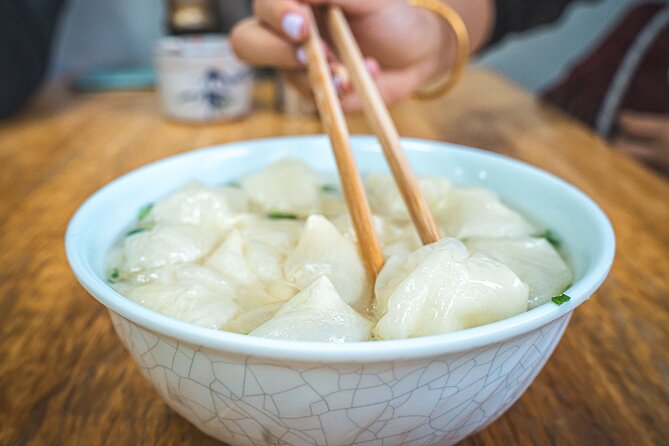
The wonton stop is one of the most distinctive food moments on the route. The specialty is a tiny, bubble-like wonton served in a full broth. It is described as a favorite among both local neighbors and public figures, but the more important point is the dish itself.
These are not the large, heavily filled dumplings you might know from other Chinese cuisines. Their small size and delicate shape make them feel almost weightless, while the broth supplies much of the flavor.
This stop also shows why a guide helps. A dish with an unfamiliar name or shape can be easy to overlook when you are ordering alone, especially if the restaurant uses Chinese-only menus. Here, the guide can explain what you are eating and how it fits into the local food scene.
Restaurant space may be compact, and the group will need to share a schedule across several places. That is part of the neighborhood character, but you should not expect every stop to offer a long, leisurely meal. The reward is trying several specialties in their proper setting.
Red-bean soup and chewy rice balls at the finish
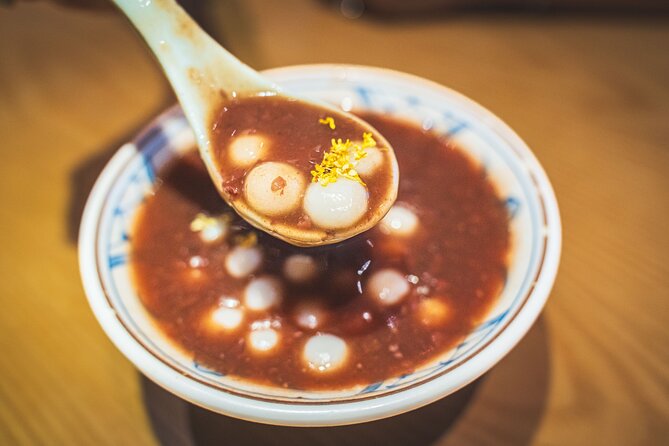
The final food stop moves into dessert at a shop popular with the current local crowd. You try a subtly sweet soup made with slow-cooked red beans and topped with chewy rice balls.
This is a gentler ending than a very sugary pastry. The red beans bring a soft, earthy sweetness, while the rice balls add bounce and texture. If you prefer desserts that are restrained rather than rich, this may be one of the most appealing stops.
The route also includes a traditional coffee house in its description, while the food schedule refers to a dessert shop. Since the exact order and stop count can vary, it is sensible to think of the morning as a series of food and drink tastings rather than a fixed restaurant menu.
After the last stop, the activity ends back at Beisita Subway Station. That makes onward planning simple. You can continue sightseeing from the same transit area or return to your hotel, though you may want a short break after the quantity of food.
What the $58 price really covers
At $58 per person, this is not the cheapest way to eat in Suzhou. Local dishes on their own can cost much less, especially if you order from small shops without a guide.
The value comes from the package. Your fee covers the food and drinks at multiple sit-down restaurants, cultural stops, an English-speaking local guide, and unlimited bottled water. The experience is also limited to 10 people, which gives it a more personal format than a large coach tour.
You are paying for access and interpretation as much as for the meal. The guide connects the noodles, tofu, temples, gardens, and dessert into one morning. Without that context, you could still eat well, but you might miss why the dishes matter or fail to find some of the cultural stops.
The price makes the most sense if you want to sample widely and would otherwise spend time researching restaurants and locating old religious or garden sites. It is less compelling if you already know Suzhou’s food scene, speak Chinese, and prefer to choose each dish independently.
The tour is normally booked about 12 days ahead. That suggests you should reserve before your trip rather than wait until the previous evening, especially since advance signup is required and the group has a small maximum.
Who will enjoy this Suzhou morning most
I would recommend this tour to first-time visitors who want an efficient introduction to Suzhou. In three and a half hours, you get food, neighborhoods, gardens, religious sites, and old architecture without having to plan each stop yourself.
It is also a good choice for solo visitors or couples who want company without joining a huge group. A maximum of 10 people is small enough for questions and practical restaurant movement, while still giving you the social feel of a guided outing.
Curious eaters will get the most from it. The route includes tofu, savory soy milk, noodles, wontons, sesame balls, and rice balls, so there is plenty to discover if your usual Chinese food experience is limited to familiar restaurant dishes.
Families may enjoy the variety, but the total food intake and walking should be considered. The tour is not presented as a children’s activity, and the narrow lanes may be tiring for very young children.
I would be more cautious if you need a highly controlled diet, dislike shared tastings, or want a slow garden visit with lots of time for photography. The route has several food commitments and a fixed morning schedule.
The English-speaking guide is central to the experience. Hilary is specifically praised for going beyond the basic route and making the food walk feel personal. Since individual guides can vary, the dependable point is that the tour is designed around English explanations and local historical detail.
Weather, cancellation, and simple planning tips
The experience requires good weather. If poor weather cancels the tour, you are offered another date or a full refund. It also requires a minimum number of participants, so a cancellation for that reason comes with the same choice of another date or a refund.
You can cancel for a full refund up to 24 hours before the start time. Changes or cancellations made inside that window are not accepted for a refund, so check your plans before the deadline.
Bring comfortable walking shoes and arrive ready for a substantial breakfast. Bottled water is included without limit, but you may still want a small bag for personal items because this is a walking route through old lanes rather than a bus-based excursion.
The mobile ticket is convenient, and the route begins and ends at a subway station. That reduces the need to arrange a taxi, though you should still allow time to find the correct station exit and meeting point.
Should you book the Suzhou Alleyway Walking Food Tour?
Book it if you want Suzhou explained through its everyday food and less obvious cultural sites. The combination of seasonal noodles, family-made tofu, bubble wontons, gardens, monasteries, and red-bean dessert gives you a broad first taste of the city in one morning.
Skip it if you want a light breakfast, a private itinerary, or a long, unhurried visit to one garden. At $58, the tour earns its price through the number of tastings, the guide, and the places you might struggle to find alone. For most first-time visitors who enjoy trying unfamiliar dishes, that is a fair trade.
FAQ
Where does the Suzhou food tour start?
It starts at Beisita Subway Station in Gusu District, Suzhou, China.
What time does the tour begin?
The tour begins at 9:30 a.m.
How long does the experience last?
The walking food tour lasts approximately 3 hours and 30 minutes.
Where does the tour end?
The activity ends back at the Beisita meeting point.
What food is included?
The tour includes Suzhou noodles, homemade silken tofu, savory soy milk, Suzhou-style spring rolls and donuts, fried sesame balls, bubble wontons, red-bean soup, chewy rice balls, and other traditional food and drinks described along the route.
Does the tour include cultural sights?
Yes. The route includes multiple cultural stops, including a Buddhist nunnery, a Ming Dynasty garden with Taihu Lake stones, old monasteries, and approximately 800-year-old pagodas.
Is a guide included?
Yes. A local English-speaking guide is included. Hilary is one guide associated with the experience.
How large is the group?
The tour has a maximum of 10 travelers.
Is bottled water included?
Yes. Unlimited bottled water is included.
Can I cancel for a full refund?
Yes. You can cancel at least 24 hours before the local start time for a full refund. Cancellations made less than 24 hours before the start are not refunded.
What happens if bad weather cancels the tour?
You will be offered a different date or a full refund if poor weather causes cancellation.
More Walking Tours in China
- Private Beijing Walking Tour of the Forbidden City with 7 Options
★ 5.0 · 675 reviews - Dark Side of Hong Kong – Kowloon Caged Homes Walking Tour
★ 5.0 · 418 reviews - Forbidden City Private Walking Tour with Optional Sights
★ 5.0 · 400 reviews - Beijing Private Hutong Food Walking Tour
★ 5.0 · 299 reviews
Just added around China
- Hong Kong Airport to Hong Kong City Private Arrival Transfer★ 4.5 · 3 reviews
- Hong Kong Observation Wheel Ticket★ 5.0 · 3 reviews
- Hong Kong Palace Museum Ticket★ 5.0 · 3 reviews
- Hong Kong Peak Tram and Sky Terrace 428 Tickets (Optional)★ 3.5 · 22 reviews
- Hong Kong Private Walking Tour with a Local★ 5.0 · 6 reviews
- Hong Kong Market Walking Tour & Chinese Cooking Class★ 5.0 · 24 reviews
- Hong Kong : Must-See Attractions Walking Tour With A Guide★ 5.0 · 7 reviews
- Hong Kong: Lantau Island & Tai O Cruise, Skip The Line Cable Car★ 3.5 · 4 reviews
Food & Drink, compared.

Authentic Local Food Tour in Central Shanghai
Read our review →
Beijing Hutong Walking Food and Beer Tour at Hidden Restaurants
Read our review →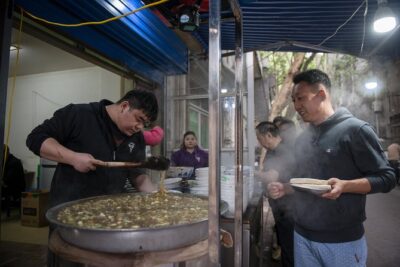

Hong Kong’s Tin Hau Hidden Eats Food Tour with 7+ Local Tastings
Read our review →

Hong Kong Food Tour: Central and Sheung Wan Districts
Read our review →Browse the lists this tour appears in