
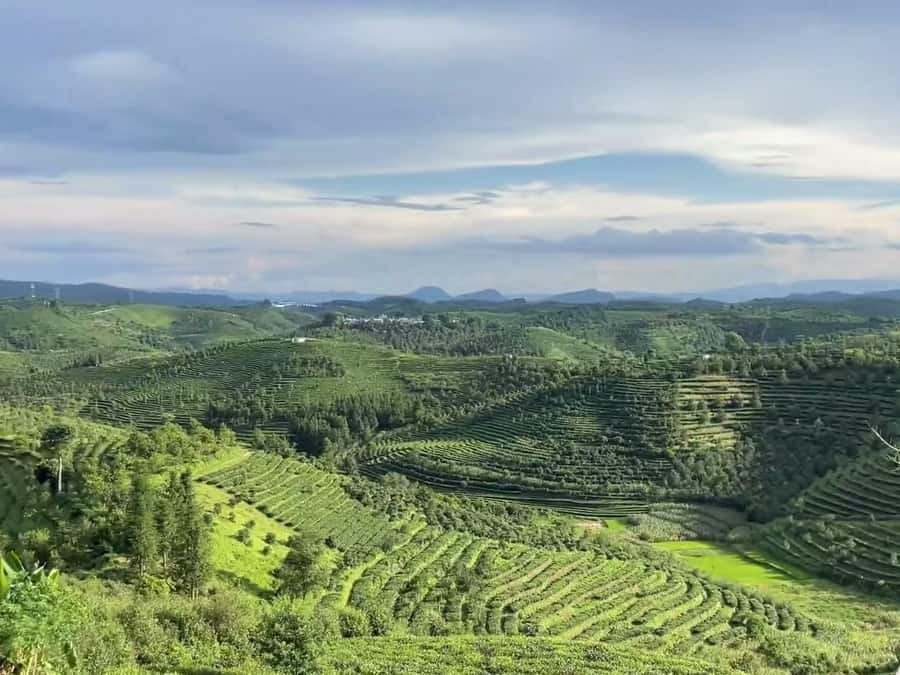
Reviewed · FOOD & DRINK
Puer Tea Picking and Tasting | 6 Hour Morning Trip
Pu’er tea makes the most sense when you see it at the source. This morning trip takes you from Jinghong or Pu’er into Yunnan’s tea country, where you can pick leaves, help process them, and taste the finished tea in a working farm setting. The personal touch is the 300 grams of tea you pick and process yourself.
I like the small group size, which is capped at six, and I like the way guide Maxime acts as a bridge between international visitors and local tea producers. The scenic drive, tea tasting, and local meal also give the trip a pleasant rhythm. The main consideration is timing: five to seven hours is a broad range, and the optional lunch and possible coffee-farm add-on can stretch the day.
Key points at a glance
- Pick and process your own 300 grams of Pu’er tea: You do more than watch a demonstration.
- Meet the tea farm at working level: Learn about withering, rolling, drying, and tasting from people involved in production.
- Ride from Jinghong or Pu’er: Pickup and return are included, in a VW ID.4 for up to three people or a six-seat minivan for larger groups.
- Taste several tea styles: The experience can include raw, aged, candy tea, red tea, and freshly processed Pu’er.
- Travel with a multilingual guide: Maxime leads in English, French, German, or Italian and helps translate questions.
- Expect a flexible country day: The core visit takes about five to seven hours, with lunch and extra coffee stops affecting the total time.
Why picking the leaves changes the way you taste Pu’er
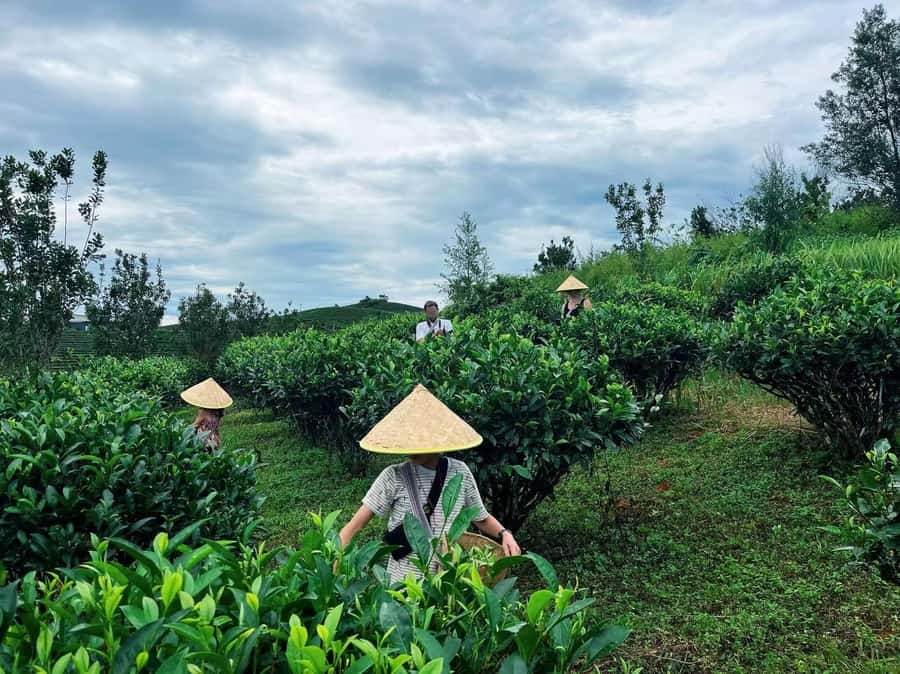
A tea tasting can be pleasant, but it can also feel removed from the work behind the cup. Here, you walk among the tea plants, learn which leaves to select, and then take part in several stages of production. That hands-on sequence gives you a clearer sense of why leaf quality, handling, and drying matter.
The activity is near Pu’er, in southwestern China, an area closely linked with Pu’er tea. Your guide explains the place of tea in local culture and farming, while the plantation staff show you how the leaves move from plant to finished drink.
You should not expect a polished museum display. The appeal is the farm setting and the chance to ask questions while tea is being made. For anyone who already drinks Chinese tea, this adds useful detail to familiar flavors. If you are new to Pu’er, it gives you a friendly introduction without requiring much prior knowledge.
A few more China trips to weigh up
- Authentic Local Food Tour in Central Shanghai
★ 5.0 · 1,382 reviews - Beijing Hutong Walking Food and Beer Tour at Hidden Restaurants
★ 5.0 · 1,132 reviews - Xi’an Evening Food Tour by TukTuk
★ 5.0 · 715 reviews
The drive from Jinghong or Pu’er sets the pace
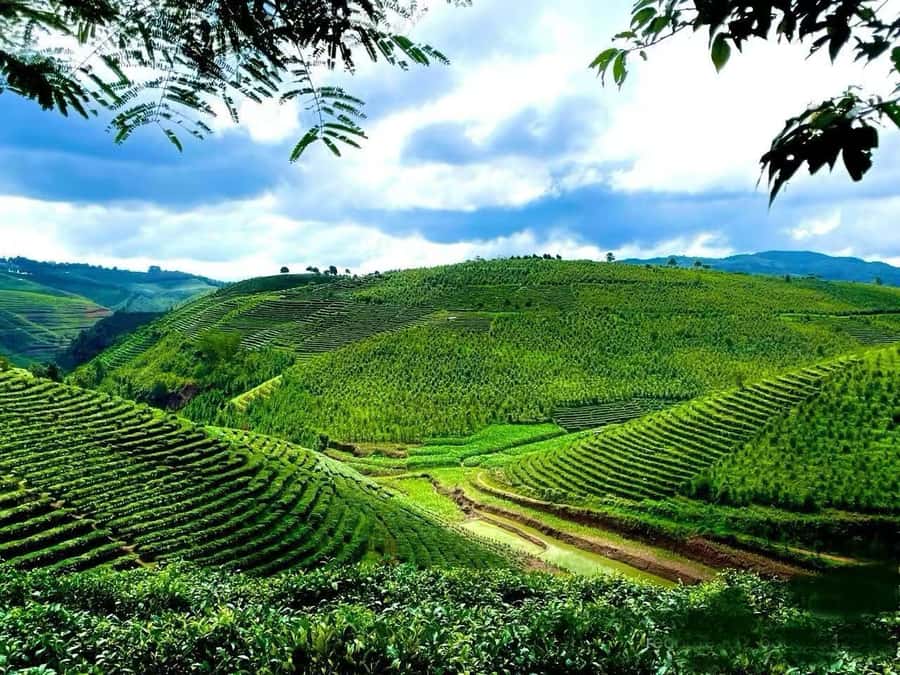
Pickup is provided from Jinghong or Pu’er, which makes this a useful choice if you do not have a car or prefer not to navigate rural roads yourself. For up to three people, transport is in a Volkswagen ID.4. Groups of more than three use a comfortable six-seat minivan.
The drive through Yunnan’s green countryside is part of the experience, not just a transfer. You get time to leave the city behind and see tea-growing country before reaching the farm. The exact drive time is not specified, so check the start time carefully if you have a train, flight, or another booking later that day.
A small group matters here. With no more than six participants, you have a better chance to ask questions, hear explanations, and get enough space during the leaf-picking and processing work. It also keeps the visit more personal than a large coach outing.
Walking the tea fields near Pu’er
At the plantation, the first stage is a guided walk through the tea fields and nearby area. You learn about the importance of Pu’er tea, how it is grown, and how local producers work with the plants.
Comfortable shoes are essential. The activity takes place outdoors in a working plantation, so you should expect walking rather than a purely seated tasting. The provided information does not specify the ground conditions or weather protection, so sensible outdoor clothing is a good idea.
The best part of this section is that it gives you a visual reference for the flavors you taste later. You have seen the plants and the leaves before sitting down with a cup. That connection makes the tasting more useful than a simple series of samples.
The visit can also touch on Dai culture and local farming. Maxime has been praised for explaining both tea and the surrounding culture, and for helping communicate detailed questions to the plantation manager. That is especially useful for English-speaking visitors, since rural farm visits can otherwise be hard to arrange independently.
Picking tea leaves with local guidance
The picking session is not just a photo stop. Local staff show you how to choose suitable leaves and how to handle them. You then collect tea yourself, with the tea you pick and process forming part of your souvenir.
The exact picking season and amount of time spent in the fields are not given, so the experience may vary with weather and farm conditions. Still, the core promise is clear: this is a practical activity, not only a talk about tea.
You should also keep your expectations realistic. You are not leaving with a commercial production run made entirely by your own hands. The advertised amount is 300 grams, and the farm staff guide the work. But that is enough to give you a real connection to the finished tea and a story to bring home.
Same country, a completely different kind of day:
- From Beijing: Mutianyu Great Wall Tours with Options
★ 4.9 · 9,216 reviews - Beijing: Forbidden City Tour(Group/Private)-Tickets Included
★ 4.8 · 7,974 reviews - Beijing: T-Square & Forbidden City Group or Private Tour
★ 4.8 · 4,446 reviews - Beijing: Mutianyu Great Wall Daily Tour with Ticket & Lunch
★ 5.0 · 3,056 reviews
From fresh leaf to finished tea
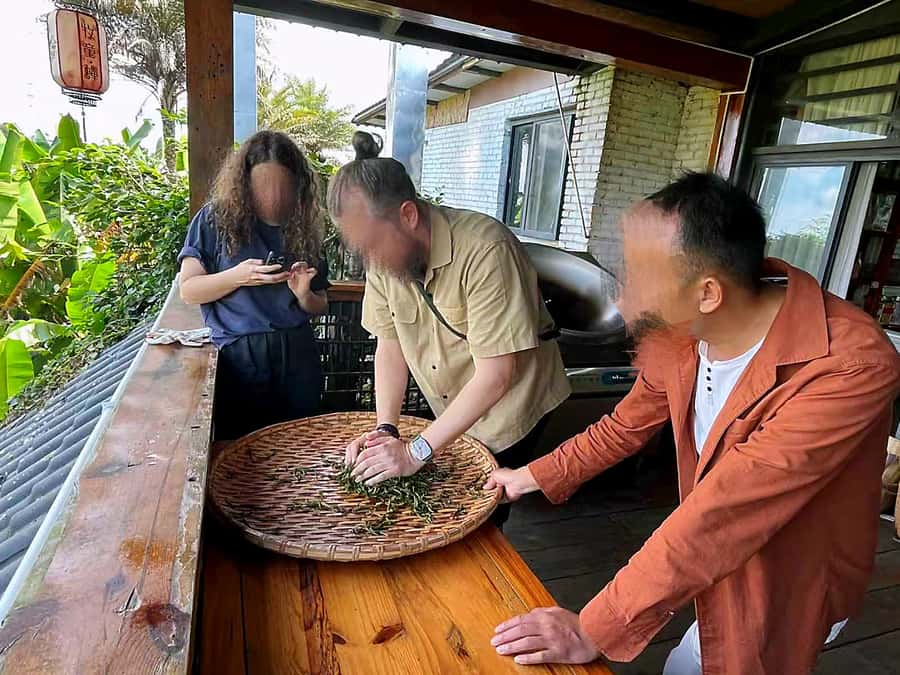
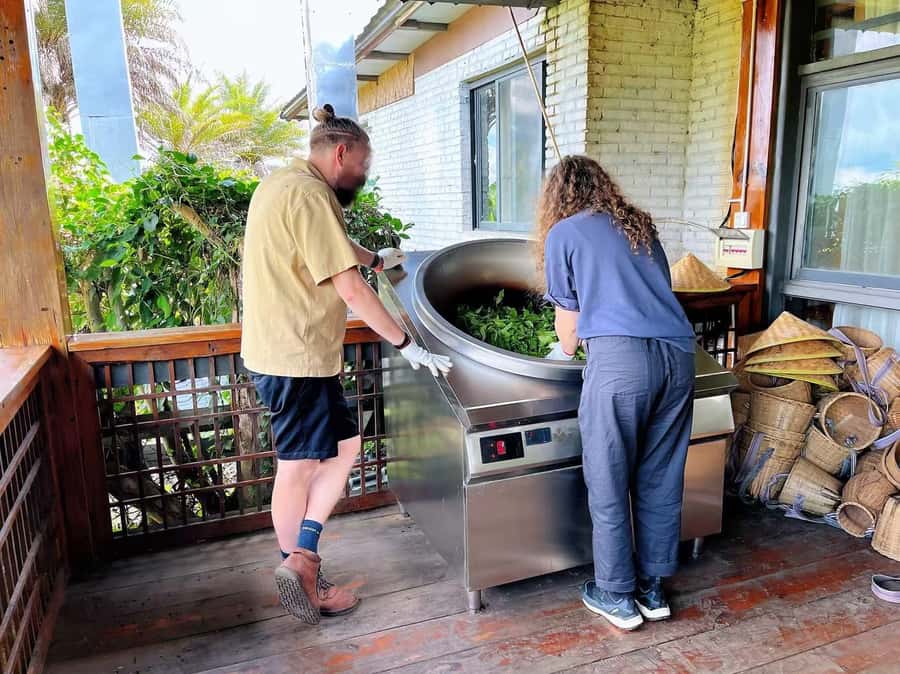
After picking, you visit the processing area. The process includes withering, rolling, and drying. These steps show how fresh leaves lose moisture, change texture, and develop the character associated with tea.
Depending on the day, you may try some of the processing yourself. Watching skilled workers is useful, but handling the leaves makes the process easier to remember. You can see that tea production is not one single action. Small choices at each stage affect the result.
The experience focuses on Pu’er tea, but the tastings can cover more than one style. A full day described by the provider included raw tea, aged tea, candy tea, red tea, and freshly processed tea. The exact selection may change, so treat those varieties as possible examples rather than a fixed tasting menu.
This is also the point where a guide who can translate becomes valuable. You can ask how the tea is processed, what makes one style different from another, and how the farm handles its leaves. Maxime has also been praised for taking time with many questions, rather than rushing visitors through the facility.
Tasting raw, aged, and freshly processed tea
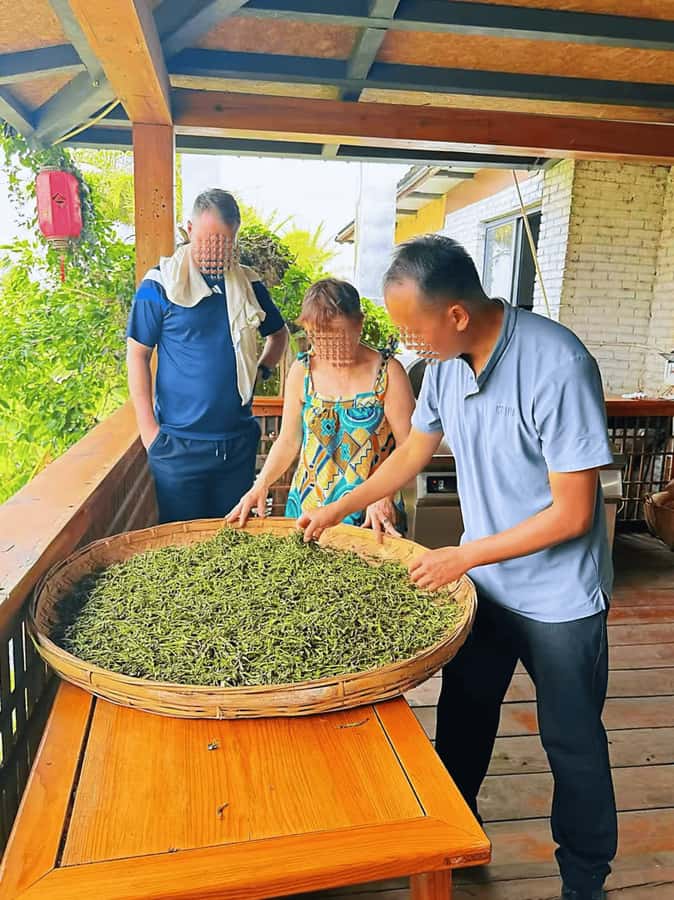
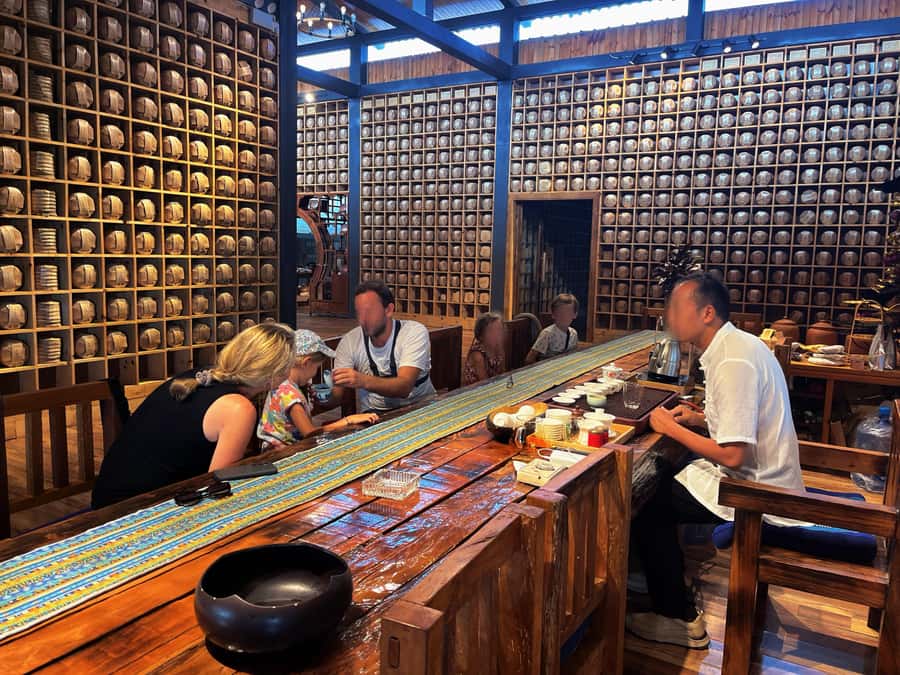
The tasting is the heart of the visit for serious tea drinkers. You sample Pu’er made at or connected with the farm, then learn about differences in style and brewing. The tasting can include several rounds, known in tea service as multiple pulls, so you can notice how flavor changes as the leaves are brewed again.
The setting matters. You are tasting after seeing the plants and production steps, so aromas and textures have a clearer context. You may find that a tea you would have passed over in a shop becomes more interesting after you understand how it was made.
Aged and raw Pu’er offer different points of comparison, while red tea and candy tea broaden the session. The supplied details do not give the exact brewing equipment or tasting length, so do not assume a formal tea ceremony. Think of this as an educational farm tasting with traditional elements.
You can buy additional tea if you wish, but there is no pressure to do so. A 20 percent discount has been available on tea bought at the end of the visit, though you should confirm the current offer before booking. The practical advantage is that you can taste before deciding, rather than buying a sealed package with no idea what is inside.
Your own 300 grams of tea to take home
The included tea souvenir is one of the strongest reasons to choose this trip. You receive the Pu’er tea you picked and processed, up to 300 grams. It is more meaningful than a generic gift from a shop because you took part in making it.
The description also says gifts and souvenirs are not included, so the wording is a little unclear. The 300 grams of tea is specifically listed as included, while extra purchases are not. I would confirm this point with the provider before departure, especially if the take-home tea is central to your decision.
You may also buy more of the teas tasted at the farm. Since you have sampled them first, you can make a better choice based on flavor rather than packaging or sales talk.
Local food at the farm
Lunch adds another layer to the morning. The meal features local Yunnan specialties, and the food can include Dai cuisine. Eating at the farm keeps the day connected to the place instead of sending you back to town for a standard restaurant meal.
There is conflicting information about the cost. The main description calls lunch optional and gives a price of 60 yuan per person, while the included section lists lunch at the farm. I would ask for confirmation when you book. That small check avoids a surprise and helps you plan the total cost.
The meal is worthwhile if you have enough time and want more than tea. If you have a train to catch, you may prefer to shorten the visit or skip lunch. One solo visitor specifically wished for more time, but had to leave early for a train, so build in a buffer rather than treating the five-hour estimate as a strict guarantee.
The possible coffee connection
Some versions of the day have included a visit to a coffee farm south of Pu’er. There, you may taste locally grown coffee, see on-site processing, enjoy Dai food, and drive through the area known for coffee production.
This sounds like a strong addition for anyone interested in Yunnan agriculture, but it is not presented as a fixed part of the core tea itinerary. The main activity is the Pu’er plantation, tea processing, and tea tasting. Ask whether the coffee stop is planned for your date before counting on it.
If it is included, expect the day to feel closer to a full agricultural tour than a quick tea excursion. That can be excellent value for curious food and drink enthusiasts, but less suitable if you want a tightly timed half-day.
Price, group size, and overall value
At $82 per person, the price is reasonable if you use the included transport, guided farm visit, processing activity, tasting, and tea souvenir. Independent transport to a rural plantation, a private interpreter, and several tastings could easily make the comparison less favorable.
The value is strongest for solo visitors and couples who want a personal introduction to Pu’er tea. Pickup from Jinghong or Pu’er removes the need to arrange a car, and a multilingual guide helps with questions that could otherwise be lost in translation.
For families, the picture is mixed. The activity has worked well with children, and Maxime has adapted to groups with three children. However, babies under one year are not accepted, and the experience is not suitable for people over 70. Those restrictions may reflect the walking, transport, and outdoor work involved.
The price does not include extra gifts or souvenirs. Lunch also needs clarification because the details give both included and optional versions. Ask about these two points before paying, then judge the $82 against the total you expect to spend.
Who will enjoy this most
I would choose this for:
- Tea drinkers who want to understand Pu’er beyond a shop tasting
- Food and farm enthusiasts interested in local production
- Solo visitors who want pickup and a guide who can translate
- Couples or small groups who prefer a personal outing
- Visitors staying in Jinghong or Pu’er without a rental car
- People who enjoy hands-on activities and rural scenery
It is less suitable if you want a quick, fixed two-hour stop, dislike outdoor walking, or need to return at an exact time. It is also not designed for babies under one year or people over 70.
The multilingual format is a major practical benefit. English, French, German, and Italian are available, and Maxime has been particularly effective at translating questions between visitors and the tea-farm host. That makes the visit easier for anyone who wants real conversation rather than a memorized presentation.
Practical advice before you go
Wear comfortable shoes, as requested by the provider. You will be walking through tea fields and taking part in farm work, so neat city footwear is not the best choice.
Allow flexibility in your schedule. The duration is listed as five to seven hours, and lunch or a coffee-farm visit may add time. If you have a train, tell Maxime before the day begins and confirm the return estimate.
Ask these questions in advance:
- Is lunch included on my booking, or is it 60 yuan per person?
- Is the coffee-farm visit part of my specific itinerary?
- Does the 300 grams of tea definitely come home with me?
- What pickup time applies from my hotel?
- How much time will be spent at the tea plantation?
Pets are not allowed. Cancellation is free up to 24 hours before departure, and you can reserve now and pay later, which helps if your Yunnan plans are still changing.
Should you book the Pu’er tea trip?
Book it if you want to connect the drink in your cup with the people, plants, and work behind it. The best features are the small group, the chance to pick and process 300 grams of tea, the broad tasting, and Maxime’s ability to explain local culture while translating your questions.
Skip it if your schedule cannot handle a flexible five to seven hours, or if you want only a formal tea ceremony with no farm work. Before booking, confirm the lunch charge, the exact return time, and whether coffee is included.
For most tea enthusiasts, this is a strong-value day from Jinghong or Pu’er. You leave with new knowledge, a clearer palate, and tea that carries a personal story rather than just a shop receipt.
FAQ
How long does the Pu’er tea experience last?
The activity lasts about five to seven hours. The final duration may depend on the schedule, lunch, and any additional farm visit.
Where does pickup take place?
Pickup and return are available from Jinghong or Pu’er. Transport is provided in a Volkswagen ID.4 for up to three people, or a six-seat minivan for groups of more than three.
What languages does the guide speak?
Guiding is available in English, French, German, and Italian. Maxime is the named guide associated with the experience.
Is tea included to take home?
The experience includes 300 grams of Pu’er tea picked and processed by participants. Extra gifts and souvenirs are not included.
Is lunch included?
The information gives two versions. One section lists lunch at the farm as included, while the main description calls it optional at 60 yuan per person. Confirm the current lunch arrangement before booking.
What should I bring?
Bring comfortable shoes for walking around the plantation and taking part in tea picking and processing.
Can I cancel the booking?
You can cancel up to 24 hours in advance for a full refund. The experience also offers a reserve-now, pay-later option.
Just added around China
- Hong Kong Airport to Hong Kong City Private Arrival Transfer★ 4.5 · 3 reviews
- Hong Kong Observation Wheel Ticket★ 5.0 · 3 reviews
- Hong Kong Palace Museum Ticket★ 5.0 · 3 reviews
- Hong Kong Peak Tram and Sky Terrace 428 Tickets (Optional)★ 3.5 · 22 reviews
- Hong Kong Private Walking Tour with a Local★ 5.0 · 6 reviews
- Hong Kong Market Walking Tour & Chinese Cooking Class★ 5.0 · 24 reviews
- Hong Kong : Must-See Attractions Walking Tour With A Guide★ 5.0 · 7 reviews
- Hong Kong: Lantau Island & Tai O Cruise, Skip The Line Cable Car★ 3.5 · 4 reviews
Food & Drink, compared.

Authentic Local Food Tour in Central Shanghai
Read our review →
Beijing Hutong Walking Food and Beer Tour at Hidden Restaurants
Read our review →

Hong Kong’s Tin Hau Hidden Eats Food Tour with 7+ Local Tastings
Read our review →

Hong Kong Food Tour: Central and Sheung Wan Districts
Read our review →Browse the lists this tour appears in