
Reviewed · CITY TOURS
Historia and Entertain Tour of the Youngest City of China
Shenzhen’s story begins at Luohu Port, the border gateway that helped connect the young city with Hong Kong. From there, Timo Xu links streets, buildings, business districts, and hilltop views into a clear account of how Shenzhen grew from fields and lakes into one of China’s most important cities. I like the focus on stories that many foreign visitors miss, and I like the small group size, which leaves room for questions and conversation. The main drawback is value: at $40 for two hours, the price may feel high if you want a long sightseeing route or several included attractions.
I also like that Timo brings personal experience from five years working in both Hong Kong and Shenzhen, along with visual aids and maps to explain the city’s past and present. The tour includes transportation fees and a carefully researched list of restaurants, bars, cocktail spots, and live music venues, but food itself costs extra. Plan on a compact, discussion-led introduction rather than a full-day tour.
Key points at a glance
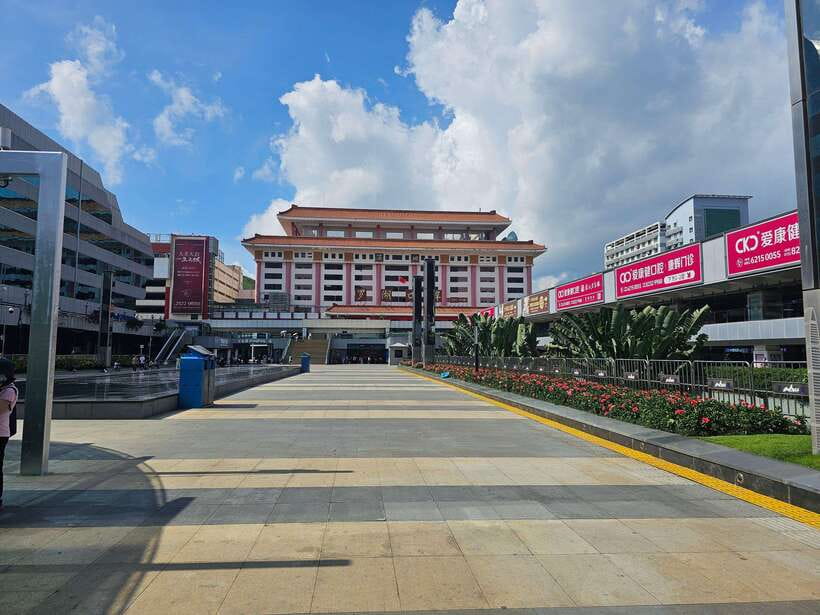
- Luohu Port begins the story: See the border area where Shenzhen’s modern development took shape.
- Huaqiang adds the business drama: Walk through a district where intense commercial activity and costly leases reveal the scale of Shenzhen’s economy.
- A modest hill provides the big picture: Gain a bird’s-eye view of the city axis and connect the skyline to its recent past.
- Timo Xu leads in English: His Hong Kong and Shenzhen work experience helps connect local history with current affairs.
- A snack may be part of the route: Food is not included, but the tour can stop at a traditional local restaurant depending on weather and time.
- Small groups keep it conversational: No more than seven participants makes questions and individual interests easier to accommodate.
Why Shenzhen makes such a good history walk
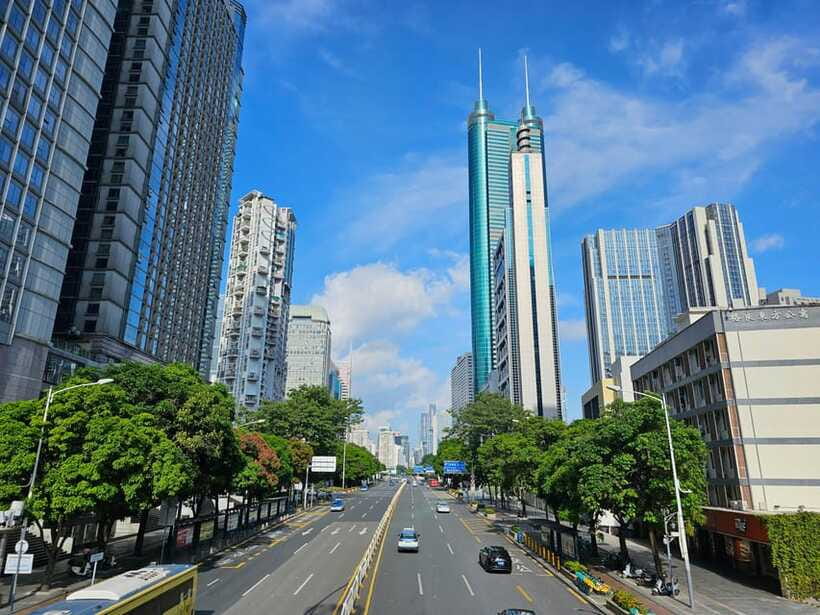
Shenzhen can seem too new to have much history. That is exactly what makes this tour useful. The city’s dramatic change happened within a short period, so its past is often hidden behind towers, shopping streets, transport hubs, and office blocks.
Timo frames the city as a place that moved at remarkable speed. The point is not simply to look at modern buildings. You learn to read them as signs of economic policy, migration, business ambition, and the close link between Shenzhen, Hong Kong, and Beijing.
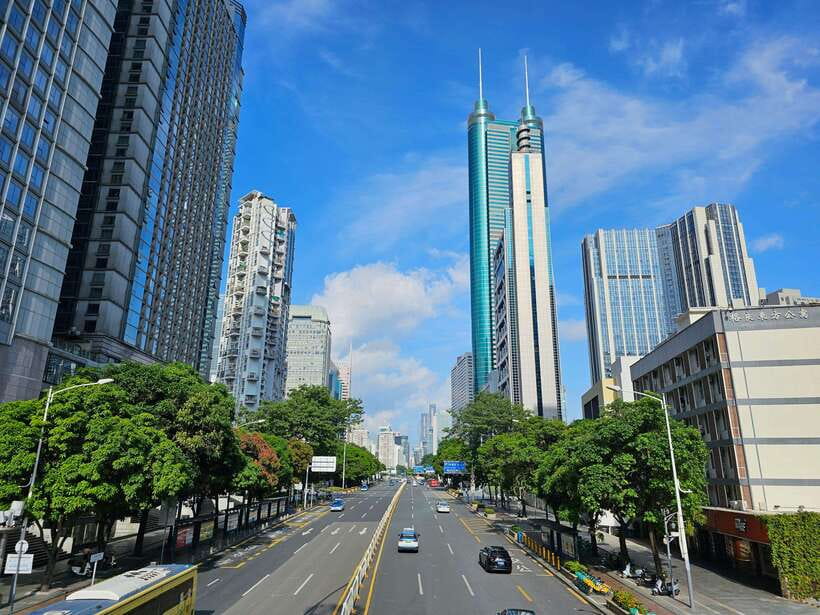
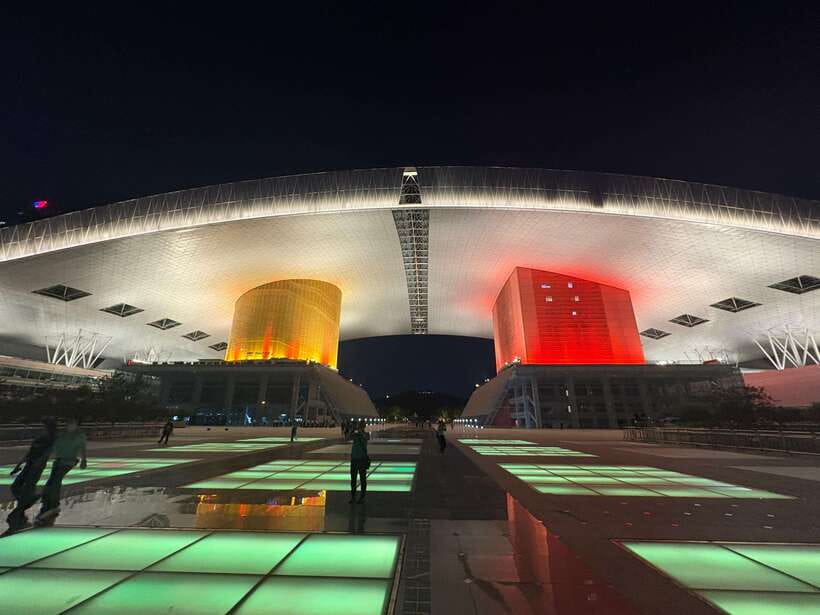
The Citizens Plaza area offers a striking example. It is now associated with civic buildings and a broad urban axis, yet Timo explains that the area was once open land and lakes. That contrast gives you a better sense of the city’s scale of change than a list of dates would.
I find this approach especially helpful if you have already seen Shenzhen’s polished surface and want to understand what made it possible. The tour does not treat the city as a collection of shopping districts. It asks you to consider how people, companies, and political decisions reshaped the area.
A few more China trips to weigh up
- Beijing: Forbidden City Tour(Group/Private)-Tickets Included
★ 4.8 · 7,974 reviews - Beijing: T-Square & Forbidden City Group or Private Tour
★ 4.8 · 4,446 reviews - All-Inclusive Tour: Tiananmen Square, Forbidden City, Great Wall
★ 5.0 · 2,873 reviews
Starting at Luohu Port, where the modern story takes shape
The meeting point is Starbucks at China Bank Garden, 1006 Fuzhong 1st Road in Futian District. The Chinese address is 深圳市福田区 福中一路1006号 星巴克(中银花园店). From there, the route begins with the story of Luohu Port, one of China’s only two land ports at the time described by the tour.
That starting point matters. A port is not just a place to cross a border. It represents movement, trade, employment, family ties, and the close relationship between Shenzhen and Hong Kong. Timo uses Luohu to explain how the city’s position helped shape its future.
You should expect interpretation rather than a long stop filled with formal exhibits. The value comes from understanding why this location matters and how it fits into the city’s growth. Timo’s explanations connect the physical border area with larger political and economic changes.
This part should suit you if you like seeing modern cities through their turning points. If you want a famous monument with a neatly packaged story, Luohu may feel less dramatic. Its importance is easier to grasp with context, which is why the guide’s role matters so much.
Reading Shenzhen’s skyline through its early landmarks
The route includes buildings that once shocked the nation, along with skyline views and stories from the period when Shenzhen was changing rapidly. The provided details do not name every building, so you should not expect a fixed architectural checklist. Instead, the focus is on how specific structures represented the city’s ambitions at the time.
That perspective can make familiar towers more interesting. A building is no longer just a place for offices or shopping. It becomes evidence of the confidence and speed of Shenzhen’s development.
Timo also explains the links between Shenzhen and Hong Kong, as well as the role of Beijing in the city’s present political setting. This is one of the tour’s strongest features because it keeps the story from becoming a simple rags-to-riches tale. Shenzhen’s rise is presented as part of a larger national and regional relationship.
The result is a useful introduction for first-time visitors and a fresh angle for anyone who has spent time in the city already. You may not leave with every fact memorized, but you should have a clearer framework for understanding what you see afterward.
Huaqiang and the business of every square meter
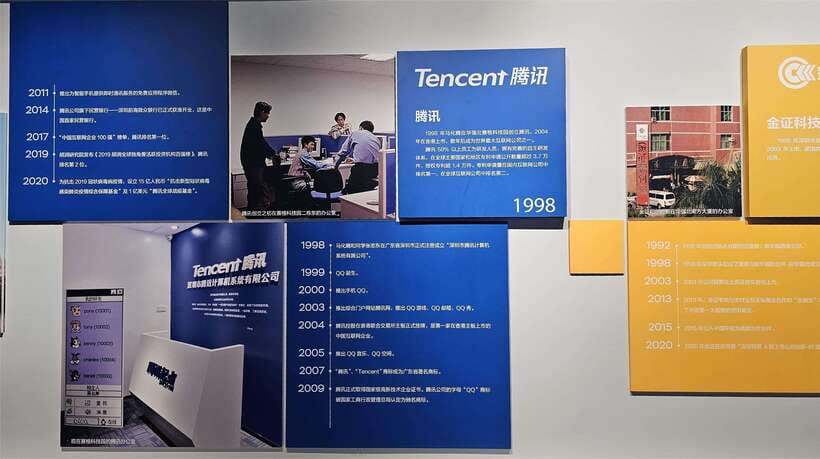
The route continues into Huaqiang District, an area known for intense commercial activity and for having some of China’s most expensive lease prices. Timo uses this setting to discuss companies, entrepreneurs, and famous people connected with the district.
The appeal here is economic history at street level. Instead of hearing only about government plans or headline figures, you look at a district where the value of space became part of the story. The claim that each square meter can create millions in value gives you a sense of the pressure and opportunity packed into the area.
Huaqiang also helps explain why Shenzhen feels so different from an older Chinese city. Its identity is tied strongly to business, innovation, enterprise, and rapid change. Timo’s account gives those broad ideas a local setting.
Keep your expectations in check. This is not described as a shopping tour, and the price does not include purchases. If your main goal is electronics shopping or retail browsing, you may prefer to use the district on your own. If you want to understand how commercial energy shaped the city, the stop has more to offer.
Same country, a completely different kind of day:
- From Beijing: Mutianyu Great Wall Tours with Options
★ 4.9 · 9,216 reviews - Beijing: Mutianyu Great Wall Daily Tour with Ticket & Lunch
★ 5.0 · 3,056 reviews - MuBus: Mutianyu Great Wall ENG/ESP/RUS Guided Bus Tour
★ 5.0 · 2,361 reviews - 4-Hour Small Group Tour to Forbidden City with Entry Tickets
★ 5.0 · 1,863 reviews
The short climb that puts the city in perspective
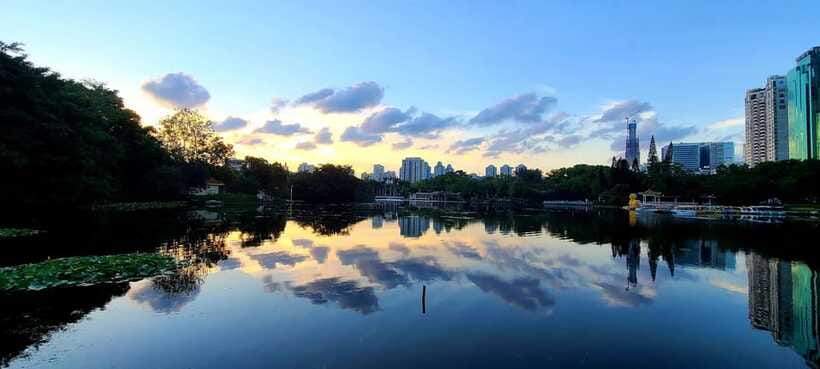
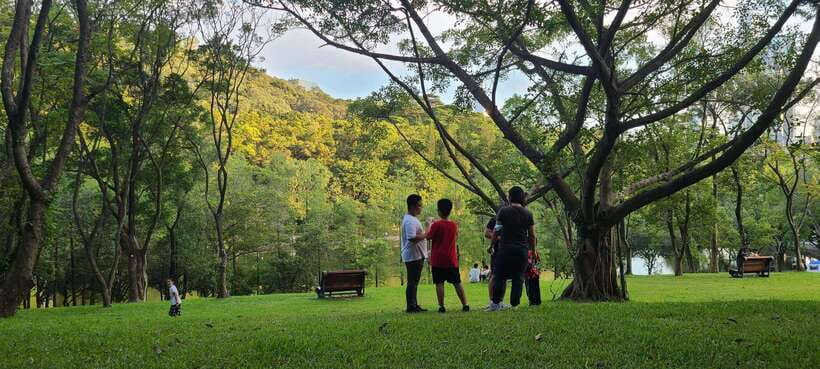
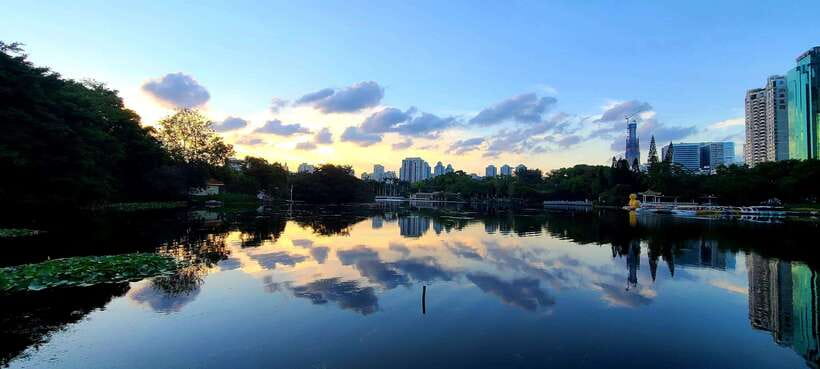
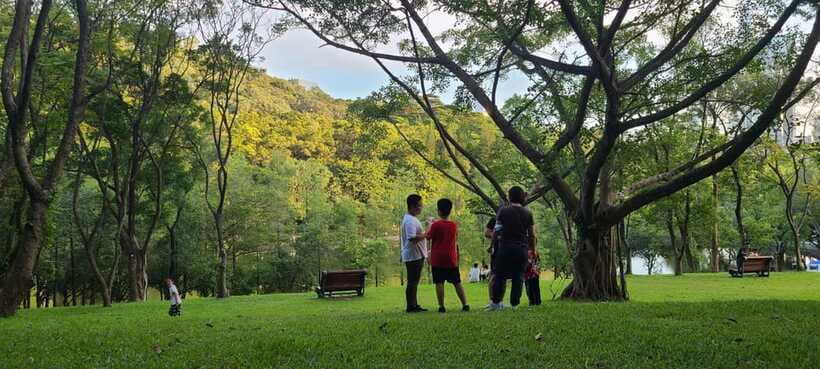
One of the tour’s more active sections is a hike up a park and a hill. The hill is described as not very high, but it provides a bird’s-eye view of the city axis. That change in viewpoint is valuable after walking through dense urban districts.
From above, you can connect the parts of the story: the border area, commercial zones, civic spaces, and the modern skyline. The city’s growth becomes easier to picture when you can see its form rather than only move through its streets.
The climb also adds a little variety to a history-focused route. You are not sitting through a lecture or walking beside buildings the whole time. Still, the tour lasts only two hours, so this should be understood as a modest hike, not a major outdoor excursion.
Wear comfortable shoes. The information provided does not give a detailed fitness rating, so anyone with concerns should ask Timo before booking. Weather may also affect the food stop and possibly the walking rhythm.
Timo Xu’s guiding style and what it adds
Timo worked in Hong Kong and Shenzhen for five years. His professional background includes engineering and finance, and he currently works as a manager involved in the IPO progress of companies. At spare time, he guides and travels.
That mix is well suited to this particular tour. Shenzhen’s story involves infrastructure, finance, business, urban planning, and politics. Timo can speak about the city not only as a sightseeing subject but also as a place shaped by companies and investment.
His style is built around conversation. He uses visual aids and maps, explains major developments, and welcomes questions. The small group, capped at seven people, supports this format. You are more likely to have a real exchange than on a large bus tour.
Several strong ratings focus on his warmth, patience, passion, and ability to adjust to individual interests. One person specifically valued the chance to discuss history, customs, world views, and current life rather than focus on shopping. Another noted that personal requests were accommodated.
That does not mean the tour is a formal academic seminar. It is better seen as an informed conversation led by someone who cares about the city. If you enjoy asking questions, this is a strong match. If you prefer a strict script with exact timing at every stop, the flexible style may feel less predictable.
The food stop, with an important price detail
Depending on weather and time, the route may pause for a snack at a traditional local restaurant. This is a welcome touch because food can make a short city tour feel more connected to daily life. It also breaks up the walking and gives you another chance to talk with Timo.
Food is not included in the $40 price. You should bring extra money if you want to eat. The exact restaurant and snack are not fixed in the information provided, so do not book this expecting a guaranteed tasting menu or a particular dish.
The included recommendations are useful beyond the two-hour route. Timo provides a list of restaurants, bars, cocktail venues, and live music places. That can add real value if you have just arrived in Shenzhen and want help choosing where to go next.
I would treat the food element as a possible bonus, not the main reason to book. The historical walk and conversation are the core experience.
Is two hours enough for Shenzhen’s story?
Two hours is enough for an introduction, but not enough to explore every district in detail. The route covers Luohu, Futian, Huaqiang, civic spaces, skyline views, and a hill, so the pace may be purposeful.
The included transportation fees help make the short duration more practical. Still, you should expect some movement between areas rather than a slow, detailed examination of every stop. The tour works best as a first orientation that helps you decide where to return later.
Its compact length also suits a stopover or a spare morning or afternoon. You can learn the city’s basic story without giving up an entire day. On the other hand, the same short format is the main reason some people may question the price.
At $40 per person, you are paying for Timo’s preparation, English explanations, transportation fees, a small group, and access to his local recommendations. You are not paying for meals, souvenirs, or a long list of entry tickets. The value is strongest if you want a personal guide and thoughtful context. It is weaker if you mainly want a low-cost walk between public sights.
Who will get the most from this experience?
I would choose this tour if you:
- Prefer history and conversation to shopping
- Want to understand Shenzhen’s connection with Hong Kong and Beijing
- Like modern cities and the forces that shape them
- Appreciate maps, visual aids, and personal explanation
- Want recommendations for restaurants and nightlife after the tour
- Prefer a group of no more than seven people
- Have only two hours for a city introduction
You may want to skip it if you are looking for a food tour with included tastings, a full-day city tour, or a visit built around ticketed attractions. The route is also not presented as a specialist architecture tour, so building enthusiasts should confirm the exact stops before booking.
English is the tour language. That makes Timo’s ability to explain local developments clearly an important part of what you are buying.
Practical planning for the meeting point and booking
Meet at the Starbucks in China Bank Garden on Fuzhong 1st Road in Futian District. Use the Chinese address if you need to show the location to a driver or ask for directions.
The group is limited to seven participants. That is small enough for questions, but the final experience can still depend on the mix of people and the weather. Since the food stop changes with weather and time, keep your plans afterward slightly flexible.
The tour offers free cancellation up to 24 hours before departure for a full refund. You can also reserve now and pay later, which is useful if your Shenzhen schedule is still shifting.
Should you book Timo’s Shenzhen history tour?
Book it if you want the city explained rather than simply displayed. Timo Xu’s strongest asset is the human conversation, supported by maps, personal experience, and a clear interest in Shenzhen’s remarkable rise.
The tour is especially worthwhile for curious first-time visitors who do not want to spend their limited time shopping. The Luohu opening, Huaqiang business story, hilltop view, and possible local snack form a compact route with a clear theme.
At $40, I would book with the right expectations. This is a short, guide-led history experience, not an attraction-packed sightseeing day. If that sounds like your kind of afternoon, the small group and thoughtful local recommendations make the price easier to justify. If you want more time, more included food, or a larger number of sights, choose a longer tour instead.
FAQ
Where does the tour meet?
The meeting point is Starbucks at China Bank Garden, No. 1006 Fuzhong 1st Road, Futian District. The Chinese address is 深圳市福田区 福中一路1006号 星巴克(中银花园店).
How long does the tour last?
The tour lasts two hours.
What language is the tour given in?
The tour is given in English.
Who leads the tour?
The guide is Timo Xu. He worked in Hong Kong and Shenzhen for five years and has engineering and finance degrees.
How many people can join the group?
The group is limited to seven participants.
Is food included in the price?
No. Food is not included. The tour may stop for a snack at a traditional local restaurant, depending on the weather and available time.
Are transportation fees included?
Yes. Transportation fees are included.
What other recommendations does Timo provide?
You receive a list of researched recommendations for restaurants, bars, cocktail venues, and live music venues.
Can I cancel for a full refund?
Yes. You can cancel up to 24 hours in advance for a full refund. You can also reserve now and pay later.
Just added around China
- Hong Kong Airport to Hong Kong City Private Arrival Transfer★ 4.5 · 3 reviews
- Hong Kong Observation Wheel Ticket★ 5.0 · 3 reviews
- Hong Kong Palace Museum Ticket★ 5.0 · 3 reviews
- Hong Kong Peak Tram and Sky Terrace 428 Tickets (Optional)★ 3.5 · 22 reviews
- Hong Kong Private Walking Tour with a Local★ 5.0 · 6 reviews
- Hong Kong Market Walking Tour & Chinese Cooking Class★ 5.0 · 24 reviews
- Hong Kong : Must-See Attractions Walking Tour With A Guide★ 5.0 · 7 reviews
- Hong Kong: Lantau Island & Tai O Cruise, Skip The Line Cable Car★ 3.5 · 4 reviews
City Tours, compared.

Forbidden City Tour(Group/Private)-Tickets Included
Read our review →
All-Inclusive Tour: Tiananmen Square, Forbidden City, Great Wall
Read our review →
4-Hour Small Group Tour to Forbidden City with Entry Tickets
Read our review →
Mini Group Xian Day Tour to Terracotta Army, City Wall, Pagoda and Muslim Bazaar
Read our review →
Tianmen Square, Forbidden City & Royal Museum Tours
Read our review →
Beijing Forbidden City Ticket Booking (Optional: guide service)
Read our review →
Zhujiajiao Water Town and Shanghai City Private Day Tour
Read our review →
Forbidden City and Tian’anmen Square Waking Tour
Read our review →Browse the lists this tour appears in