
Reviewed · FOOD & DRINK
Chengdu: City Walking Tour with Food and Culture Stops
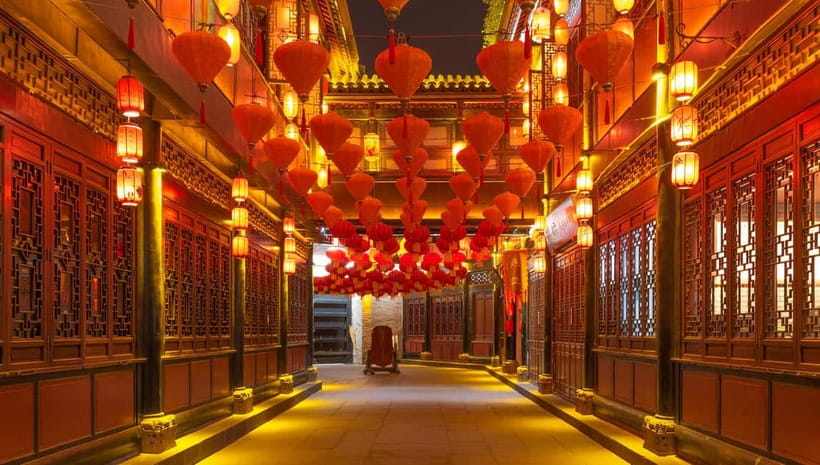
Chengdu’s best moments often come from the quick shift between old and new: a red temple wall beside a sheet of modern glass, a quiet teahouse beside a designer shop, or a bamboo chair beside a blind date noticeboard. This four-hour private walk puts those contrasts at the center, moving from historic courtyards to tea tables, museum exhibits, and fashionable shopping streets.
I like the way the route connects Kuanzhai Alleys and People’s Park, where you get both Chengdu’s built history and its everyday social life. I also like the food stops, especially the chance to try Zhong’s Dumplings, orange-fragranced cherry pork, and a rice wine iced Americano rather than simply looking at famous sights.
The main consideration is the pace. Four hours covers a lot of ground, and the route involves plenty of walking and standing. Transportation and personal expenses are not included, so you should budget extra for food, drinks, metro rides, and any purchases.
Key points at a glance

- Kuanzhai Alleys show three old social districts: Wide Alley was linked with officials, Narrow Alley with bannermen, and Well Alley with common residents.
- People’s Park offers real Chengdu life: Try the bamboo chair, gaiwan tea, and ear-cleaning combination at Heming Teahouse.
- The museum visit is hands-on: You can operate Three Kingdoms shadow puppets and make short videos.
- Daci Temple creates the tour’s sharpest visual contrast: Red walls meet the glass facades of Taikoo Li.
- The food is part of the route: Expect local specialties such as Zhong’s Dumplings and orange-fragranced cherry pork.
- The tour is private and flexible: English and Chinese guides are available, with named guides including Belinda and Teresa mentioned in recent bookings.
Why this Chengdu walking tour works
At $109 per person, this is not a bargain sightseeing stroll. You are paying for a private four-hour guide, a carefully linked route, cultural explanation, and several food and drink experiences. The value improves if you are new to Chengdu and want someone to explain what you are seeing instead of simply pointing out old buildings.
A private tour also matters here because Chengdu’s appeal is not limited to grand monuments. A guide can explain why a tea ritual matters, what people are doing at the Blind Date Corner, and how the three sections of Kuanzhai Alleys once served different groups. Those details are easy to miss on your own.
The tour has received a 4.7 rating from four bookings. Valerie praised its mix of ancient and modern Chengdu, while Sébastien enjoyed seeing several parts of the city and tasting local specialties with Belinda. Dante specifically praised Teresa and said he would take the tour again. The sample is small, but the repeated praise points to the guides and the variety of stops as the strongest parts.
A few more Chengdu trips to weigh up
- Tuktuk Food Tour Through Chengdu’s Local Eats
★ 5.0 · 435 reviews - Private Leshan Giant Buddha and Local Food Tasting Trip
★ 5.0 · 46 reviews - Chengdu: Eat Like a Local! Food Tour in the Hidden Alleys
★ 4.7 · 15 reviews
Starting at Kuanzhai Alleys
You meet your guide at Exit B of Kuanzhai Alleys Station on Subway Line 4. The guide arrives 15 minutes early, which gives you a clear meeting point and a little breathing room if you are still finding your way through the station.
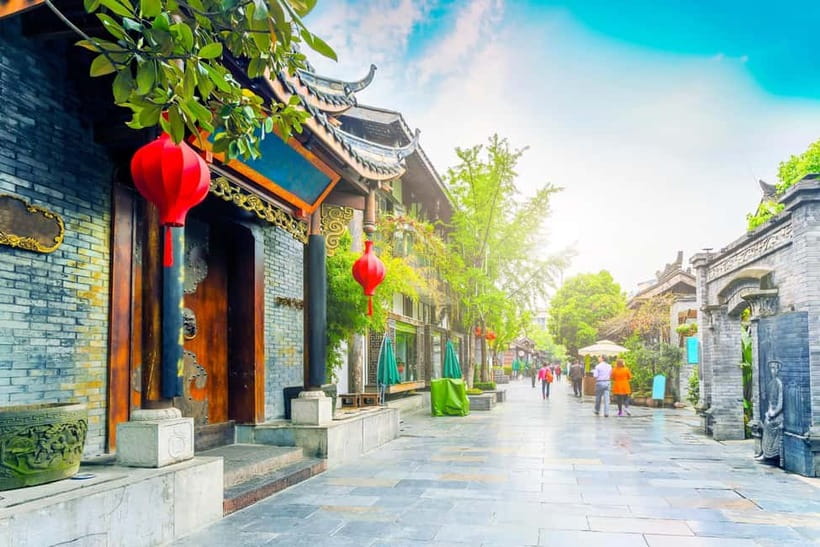
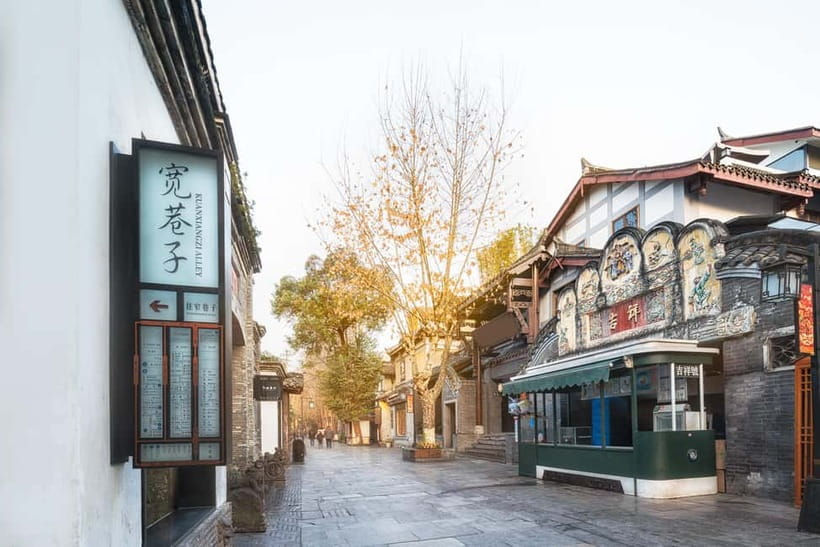
Begin at Wide Alley, where the old courtyard architecture gives the tour its first sense of place. At No. 19 Demen Renli, look for the relief carvings around the Western Sichuan courtyard gate. This is a good opening stop because the details are architectural rather than grand. You are looking at gateways, walls, and small decorative touches that help explain how traditional homes were arranged.
Your guide introduces the philosophy of width and narrowness behind the neighborhood. Wide Alley was associated with officials, Narrow Alley housed bannermen, and Well Alley, also called Jingxiangzi, served common residents. The names are not just labels for tourists. They give you a simple way to understand how the area was divided and who once used it.
Kuanzhai Alleys also has a modern side. In Narrow Alley, you can sit in a bamboo chair at Sanlian Taofen Bookstore, where an English copy of Three Cities may help connect the setting with Chengdu’s literary culture. At %Arabica, coffee drinkers can pause beside the old blue brick walls and watch traditional architecture meet a polished modern cafe.
You can also send a postcard from the Panda Post Office. It is a small, practical stop, but it gives the first hour a personal touch. If you want to buy a souvenir, this is the kind of place to consider before the tour moves into museums and commercial districts.
The drawback is that Kuanzhai Alleys can feel more commercial than residential. Cafes, shops, and photo stops are part of the experience, but you should not expect an untouched old neighborhood. The guide’s explanation is what gives the alleys extra value.
People’s Park and the social life of tea
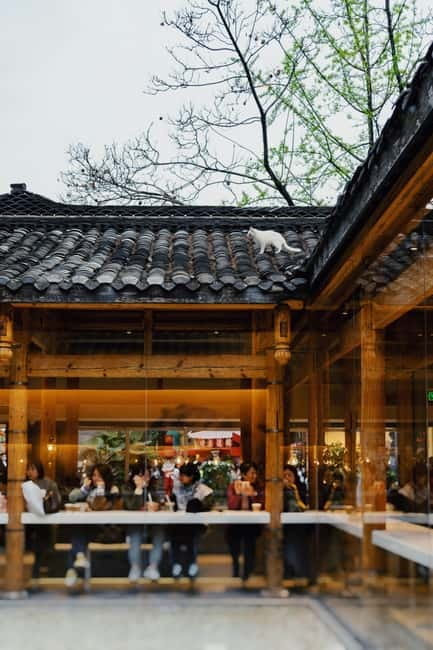
The next hour shifts from restored lanes to a public park used by Chengdu residents. People’s Park is the place to watch daily habits rather than admire a single landmark.
At Heming Teahouse, you can try Chengdu’s famous three-piece set: a bamboo chair, a lidded gaiwan tea cup, and ear cleaning, known as cai’er. The ear-cleaning service is a cultural experience, not simply a spa treatment. If you are curious, ask your guide what to expect before agreeing to it, since not everyone will be comfortable with the sensation.
Tea is the main reason to slow down here. You might watch a long-spouted teapot performance, in which the server pours from a distance, or learn the basics of mahjong. Even a short introduction helps you understand why teahouses are social spaces in Chengdu rather than places used only for a quick drink.
Another unusual sight is the Blind Date Corner, known in Chinese as xiangqin jiao. Families use these public areas to share information about unmarried relatives and seek possible matches. Your guide can provide the cultural context, which is important because the scene may look puzzling if you encounter it without explanation.
I like this part of the tour because it shows how people use the city, not only what the city preserves. The pace is also welcome after walking through Kuanzhai Alleys. Still, tea, ear cleaning, and mahjong are participatory stops. If you prefer a purely historical tour, this hour may feel less structured than a museum visit.
Chengdu Museum and the shadow-puppet stop
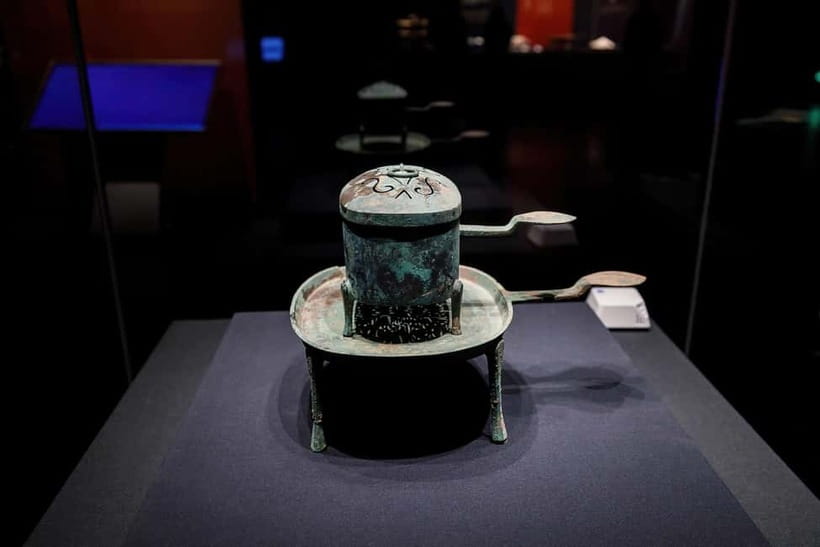
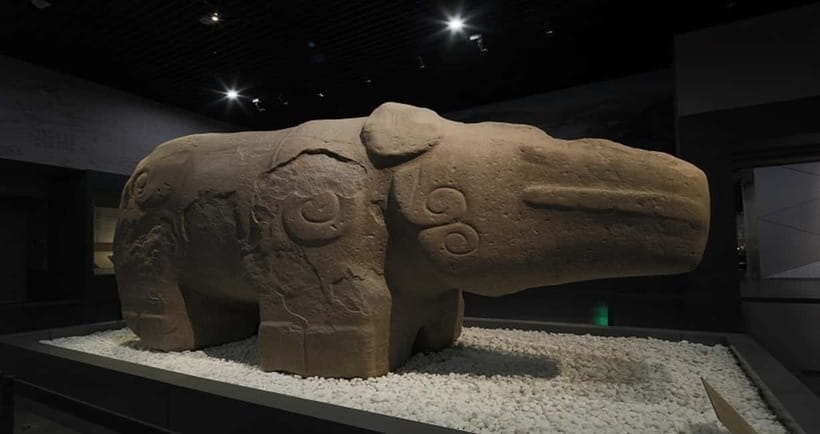
The Chengdu Museum adds a more formal cultural layer to the afternoon. The stated route includes the Qin-Han Gallery, the Folk Culture Gallery, and the Shadow Puppetry Exhibition.
The Qin-Han section gives you a window into early Chinese eras, while the Folk Culture Gallery shifts attention toward everyday traditions. The route does not treat the museum as a long, exhaustive visit. Instead, the guide helps you focus on selected displays within the available hour.
The most playful part is the shadow-puppet activity. You can operate Three Kingdoms themed puppets and make short videos. That is useful for families, younger visitors, or anyone who learns better by doing than by reading exhibit labels.
The museum stop also provides shelter and a change of pace if Chengdu is hot. Bring a charged smartphone if you want to record the puppet activity. A camera is also listed as a useful item, although a phone is enough for most pictures.
Keep your expectations realistic. This is one segment of a four-hour walk, not a full museum day. If the Qin-Han period, folk traditions, or shadow theater are major interests, you may want to return independently for a longer visit.
Same country, a completely different kind of day:
- Chengdu: Giant Panda Breeding Research Base Ticket
★ 4.5 · 580 reviews - Half-Day Chengdu Cooking Class with a Local Market Visit
★ 5.0 · 465 reviews - Private Half-Day Chengdu Panda Breeding Center Tour with Optional Volunteer
★ 5.0 · 353 reviews - Chengdu: Sichuan Opera Shu Feng Yan Yun Evening Show Ticket
★ 4.7 · 185 reviews
Daci Temple beside Taikoo Li
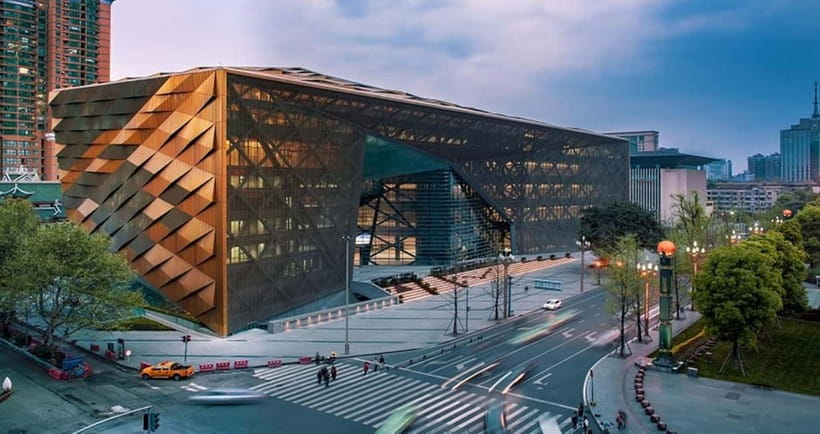
The route then reaches Taikoo Li, where one of Chengdu’s most striking city views appears. Daci Temple’s red walls sit beside modern glass facades, creating the kind of contrast that explains Chengdu better than a single old building could.
The temple brings color, age, and a sense of ceremony. Taikoo Li supplies open modern spaces, fashion stores, cafes, and sleek architecture. You can take photos here without needing a long explanation to see the visual effect, but the guide can add context about how an old religious site fits into a modern commercial district.
Fangsuo Bookstore is a worthwhile stop for readers. Under its dome, you can browse English original books and look at Shu embroidery notebooks. This is a better souvenir option than a generic trinket if you want something tied to local craft or Chengdu’s book culture.
Food becomes more central at this point. At Chaimen Fan’er, the suggested dish is orange-fragranced cherry pork. The name alone signals a regional specialty with a sweet citrus note, but personal food costs are not included. Plan to pay separately for lunch, snacks, and drinks.
You may also try Zhong’s Dumplings and a rice wine iced Americano during the wider food portion of the route. These are useful tastings because they show two very different sides of Chengdu eating: a traditional dumpling specialty and a modern cafe drink with a local twist.
Tangpa Street and a cup of gaiwan coffee
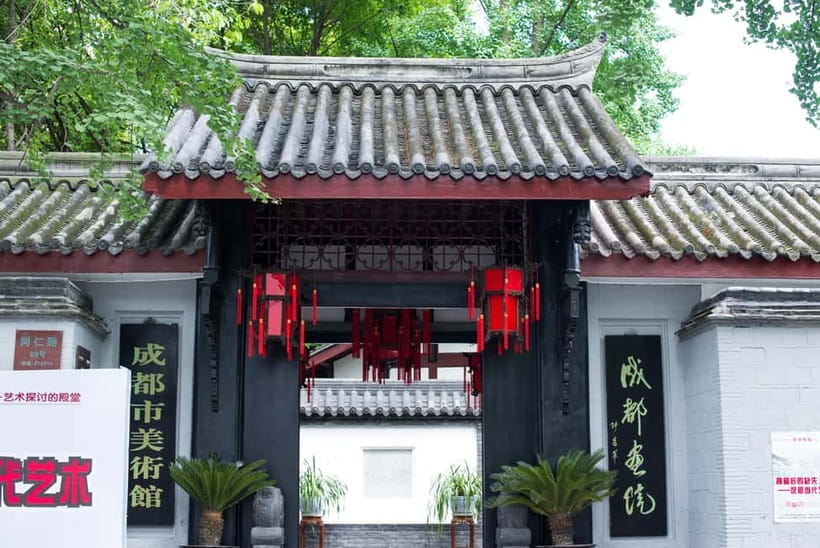
Tangpa Street was included among the World’s 50 Coolest Neighborhoods in 2018. That label is less important than what you actually find there: a historic setting being used for cafes, restaurants, and creative businesses.
At Chongdeli Ruins Restaurant, you can try gaiwan coffee. The drink borrows the familiar lidded tea bowl format and applies it to coffee, making a neat bridge between Chengdu’s tea customs and its newer cafe habits.
The restaurant occupies a renovated historic space, so this is another place where old and new meet. I like that the route does not stop at the best-known shopping district. Tangpa Street gives you a smaller-scale look at how older buildings can be reused without turning the whole visit into a history lecture.
The final 30-minute food and drink segment is short. You will have time for a taste, a few photographs, and some conversation with your guide, but not a leisurely meal at every stop. If you want to sample everything listed, confirm with your guide how the food portion will be arranged and bring extra money.
What you are really paying for
The $109 price should be judged against the private format, not against the cost of entering a single attraction. The experience joins five separate Chengdu areas in four hours and adds a guide who can explain cultural behavior, architecture, food, and local customs.
That arrangement is most valuable on a first visit. You do not have to work out how Kuanzhai Alleys, People’s Park, the museum, Taikoo Li, and Tangpa Street fit together. You also avoid spending your limited time walking past places without understanding why they matter.
The price is less attractive if you already know central Chengdu well, speak Chinese comfortably, or prefer to explore at your own pace. Personal expenses are separate, and transportation is not included. You should also remember that this is a walking tour, not a private car tour.
The private group format is a clear advantage for questions and food preferences. You can ask for extra explanation at the museum, spend longer at the bookstore, or clarify a tea custom without holding up a large group. The tradeoff is that a private tour usually costs more than a shared group outing.
Practical advice for the four hours
Wear comfortable shoes and clothing suitable for walking. The route includes alleys, a park, museum galleries, shopping streets, and food stops, so you will switch between indoor and outdoor settings.
Bring sunscreen, a camera, cash, and a fully charged smartphone. Cash is still listed as useful, while Alipay and WeChat Pay are important for local purchases. Before arriving, bind an international card to Alipay if you plan to use the metro or Didi taxi.
The meeting point is simple, but allow time to reach Exit B of Kuanzhai Alleys Station. Your guide waits there 15 minutes before the appointed start. The tour is offered in English or Chinese, so confirm your preferred language when booking.
You should be ready for local interaction. Tea service, ear cleaning, blind-date notices, mahjong, and shadow puppets are not passive sightseeing. They work best if you ask questions and take part at a level that feels comfortable.
The tour is not suitable for people with mobility impairments or heart problems. The organizers also ask that you bring no pets and avoid smoking. Since transportation is not part of the experience, the food and vehicle restrictions are unlikely to affect most participants, but the walking requirement matters.
Free cancellation is available up to 24 hours before the start for a full refund, and you can reserve now while paying later. That flexibility helps if your Chengdu schedule is still changing.
Who should book it?
I would choose this tour for a first-time Chengdu visit, especially if you want a broad introduction in half a day. It gives you architecture, social customs, museum displays, local snacks, tea culture, and modern city life without focusing only on pandas or famous monuments.
It also suits couples, families with older children, and small private groups who want to ask plenty of questions. The shadow puppets and food stops add variety, while guides such as Belinda and Teresa have received especially positive personal praise.
I would think twice if you want a slow food tour, a detailed museum study, or a route with minimal walking. Four hours moves quickly, and you will need extra money for anything you eat, drink, or buy. If you are comfortable with that pace and want Chengdu’s old and new sides in one outing, the tour makes a practical first-day choice.
FAQ
How long does the Chengdu walking tour last?
The tour lasts four hours. Starting times vary, so you need to check availability when booking.
Where does the tour meet?
The meeting point is Exit B of Kuanzhai Alleys Station on Subway Line 4. The guide arrives 15 minutes before the appointed start time.
Is the tour private?
Yes. It is a private group experience with an in-person guide.
Which languages are available?
The tour is available with a Chinese or English-speaking guide.
Are food, drinks, and transportation included?
No. Transportation and personal expenses are not included. You should pay separately for meals, snacks, drinks, shopping, and transport.
What should I bring?
Bring comfortable shoes, sunscreen, cash, a camera, and a charged smartphone. You should also have Alipay or WeChat Pay ready for local purchases, and bind an international card to Alipay if you plan to use the metro or Didi taxi.
More Walking Tours in Chengdu
- 6-Hour Private Chengdu City Walking Tour with Tea Tasting
★ 4.5 · 10 reviews - Half-Day Walking Tour with a Vegetarian Lunch at a Nunnery
★ 5.0 · 6 reviews - Beijing Hutong Walking Food and Beer Tour at Hidden Restaurants
★ 5.0 · 1,132 reviews - Private Beijing Walking Tour of the Forbidden City with 7 Options
★ 5.0 · 675 reviews
Just added around Chengdu
- Visiting Chengdu Panda Base in a Half Day★ 5.0 · 4 reviews
- Classsic sichuan Opera at sichuan Provincial Theater★ 5.0 · 4 reviews
- Tea Village in lost Town and Buddha 1 day tour★ 5.0 · 32 reviews
- Sichuan Opera with face-changing at Sichuan opera theater★ 4.5 · 6 reviews
- Sichuan Opera Show with Hotel Pickup★ 5.0 · 3 reviews
- Mini Group: Half-Day Chengdu Pandas Guided Tour★ 5.0 · 3 reviews
- Panda, Leshan, and Emei Mountain 2-day tour★ 5.0 · 4 reviews
- Shu Feng Ya Yun Sichuan Opera Ticket★ 5.0 · 13 reviews
Food & Drink, compared.

Authentic Local Food Tour in Central Shanghai
Read our review →
Beijing Hutong Walking Food and Beer Tour at Hidden Restaurants
Read our review →

Hong Kong’s Tin Hau Hidden Eats Food Tour with 7+ Local Tastings
Read our review →

Hong Kong Food Tour: Central and Sheung Wan Districts
Read our review →Browse the lists this tour appears in