
Reviewed · CITY TOURS
Pingyao Ancient City Scenic Area Pass Ticket Only
Pingyao’s great appeal is that its old city still works as a place rather than a single monument. With one QR ticket, you can walk the ancient wall, step into former banks and guard agencies, and wander streets lined with traditional homes now used as hotels, restaurants, tea rooms, and wine houses. The QR entry is quick and simple, with no paper ticket required.
I like the freedom to set your own pace, especially since the pass covers a long list of sites and the core visit takes about three hours. I also like the focus on local commercial history, from the Rishengchang draft bank to the old bodyguard agencies. The main drawback is clear: you get no guide, transport, meals, or hotel pickup, so you need to plan your route and make sense of the exhibits yourself.
Key points to know before you book
- A QR code replaces the paper ticket: Show the image at the entrance and scan in.
- The pass covers 20 attractions: Highlights include the city wall, county government, temples, banks, museums, and former residences.
- Plan for a self-guided visit: The suggested sightseeing time is about three hours, with no guide included.
- The ticket validity needs checking: The headline information says three days, while another activity detail says one day.
- The best material is commercial and civic history: Pingyao’s banks, merchant houses, and government buildings explain how the city functioned.
- Shuanglin Temple and Zhenguo Temple are separate: Neither is included in this pass.
Why Pingyao works best as a walking history lesson
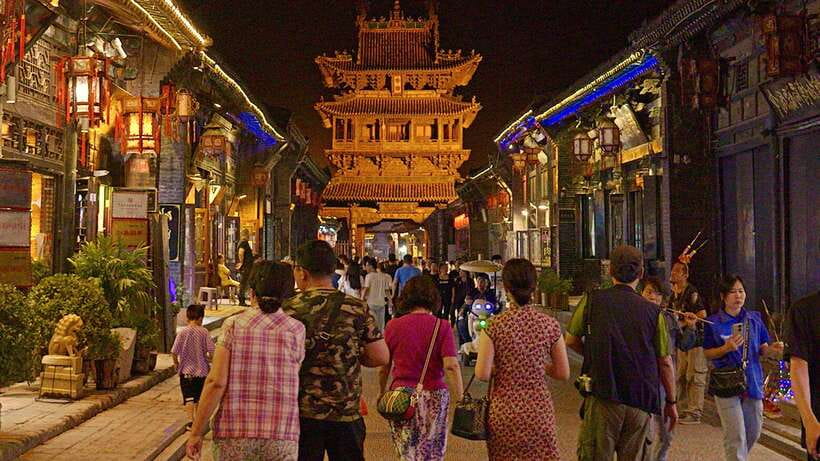
Pingyao is in Jinzhong, Shanxi Province, roughly 600 kilometers from Beijing. The city’s story reaches back about 2,700 years, although its most important period for the buildings you see today came during the Ming and Qing dynasties.
The old city was named a Historic and Cultural City of China in 1986 and entered the UNESCO World Cultural Heritage list in 1997. Those labels matter here because Pingyao is not simply a reconstructed tourist street. Its traditional residences, temples, shops, offices, and defensive walls form a connected historic town.
You can use the pass as a checklist, but I suggest treating it as a route through the city’s daily life. Start with defense, move through government and religion, then spend time with the banks and merchant institutions. That order helps you understand why Pingyao became important.
The ticket gives you access to the main attractions inside the ancient city. It does not provide transportation between them, and no pickup or drop-off is included. Since the visit is self-guided, you will get the most from it if you are comfortable reading signs, using your own guidebook, or simply taking time to look closely.
A few more China trips to weigh up
- Beijing: Forbidden City Tour(Group/Private)-Tickets Included
★ 4.8 · 7,974 reviews - Beijing: Mutianyu Great Wall Daily Tour with Ticket & Lunch
★ 5.0 · 3,056 reviews - 4-Hour Small Group Tour to Forbidden City with Entry Tickets
★ 5.0 · 1,863 reviews
The city wall gives you the right opening view
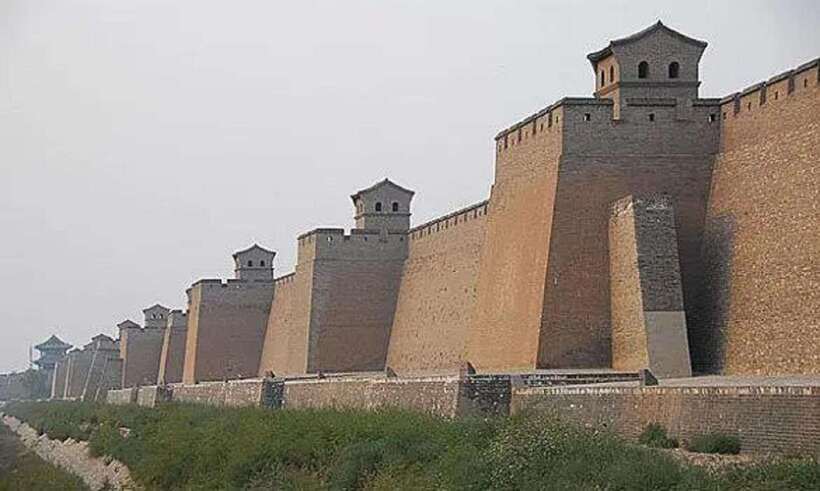
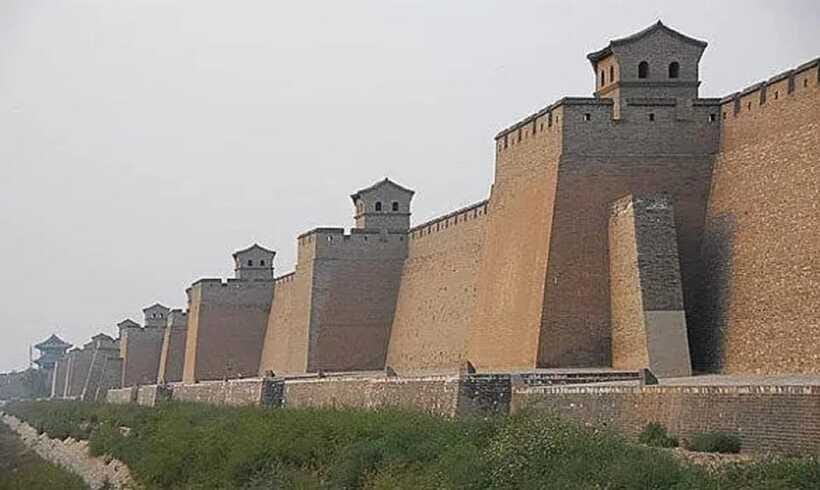
The Pingyao Ancient City Wall is the natural first stop. It lets you see the old city as a planned defensive town instead of a collection of attractive alleys.
From the wall, you can look down toward the tiled roofs, lanes, courtyards, and commercial streets inside the historic center. You also get a clearer sense of the city’s compact design, which is harder to grasp from street level.
I would begin here before visiting the smaller museums. The wall provides the broad picture, while the later stops fill in the details. It is also one of the pass’s most important inclusions, since the city’s enclosed form is central to its identity.
The ticket does not list a separate guided explanation on the wall, so you should not expect a tour leader to identify every feature. Take your time and use the view to orient yourself before heading into the lanes.
Rishengchang explains the birth of Chinese banking
Rishengchang Ancient Draft Bank is one of the strongest reasons to buy an attraction pass rather than simply walk the streets. It introduces Pingyao as a financial center, not just an old walled town.
The term draft bank refers to the institutions that handled money transfers and financial transactions over long distances. At Rishengchang, you can look at the former offices and courtyards where this system operated. The building gives meaning to Pingyao’s merchant wealth and explains why so many grand residences and commercial compounds appeared here.
The pass also includes Weitaihou, Weishengchang, Baichuantong, and Xietongqing draft banks. These sites can begin to look similar if you rush through them, so I would not try to inspect every room with equal intensity.
Choose one or two for a careful visit, then use the others to compare layouts, signs, courtyards, and displays. That approach makes the group of banks more useful. You are not simply collecting entrances. You are seeing how a financial trade was organized across several institutions.
Mr. Lei Lutai’s former residence adds a personal side to the banking story. Instead of focusing only on business operations, it connects Pingyao’s financial success with the people who built and managed these enterprises.
Government and religious sites round out the old city
The Ancient Government Buildings, also called the county government, show how local administration worked. This is a useful counterpoint to the banks because it shifts your attention from private commerce to official authority.
The complex includes the kind of spaces associated with county administration and justice. Even without a guide, you can read the arrangement of courtyards and offices as a reminder that Pingyao was a functioning regional center, not just a merchant district.
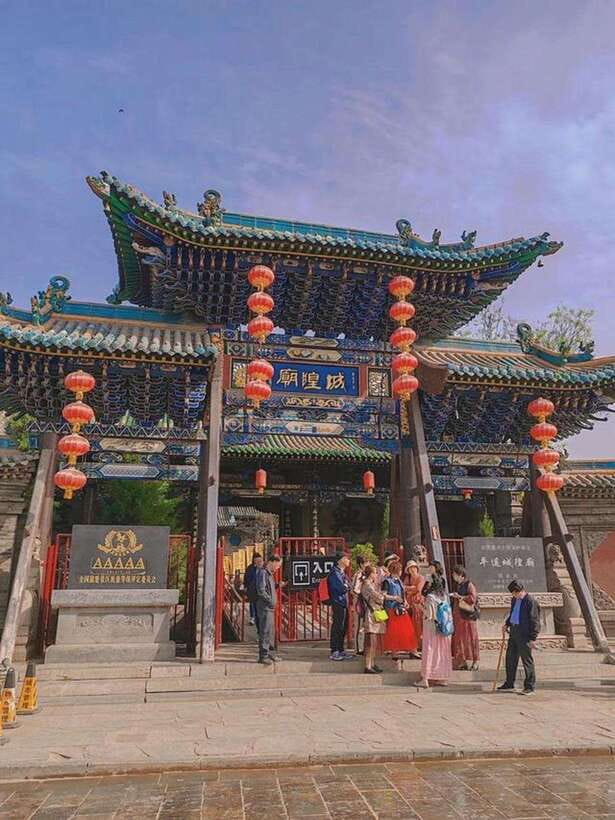
The City God Temple presents a different side of civic life. City God temples connected local worship with the protection of the town, so this stop helps explain how religion was woven into public identity.
Pingyao Confucian Temple is another important inclusion. Confucian institutions were linked with learning, ethics, and official culture. If you are interested in how education and government influenced traditional Chinese society, this is one of the pass’s more meaningful stops.
Qingxu Taoist Temple and Erlang Taoist Temple add variety to the religious circuit. You may find the difference between the temples more interesting than trying to decide which is best. Together, they show that Pingyao’s spiritual life included several traditions.
Same country, a completely different kind of day:
- From Beijing: Mutianyu Great Wall Tours with Options
★ 4.9 · 9,216 reviews - Beijing: T-Square & Forbidden City Group or Private Tour
★ 4.8 · 4,446 reviews - All-Inclusive Tour: Tiananmen Square, Forbidden City, Great Wall
★ 5.0 · 2,873 reviews - MuBus: Mutianyu Great Wall ENG/ESP/RUS Guided Bus Tour
★ 5.0 · 2,361 reviews
Ming and Qing Street is the easiest place to feel the old town
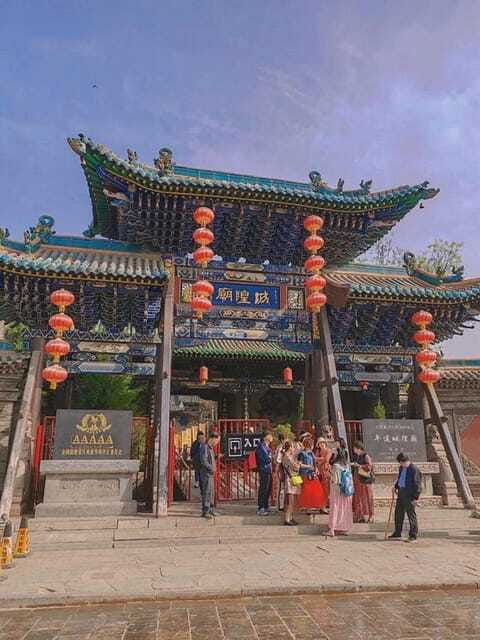
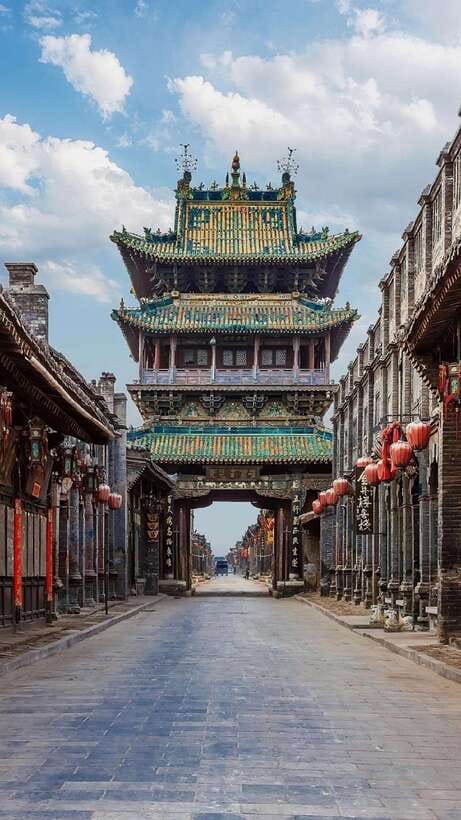
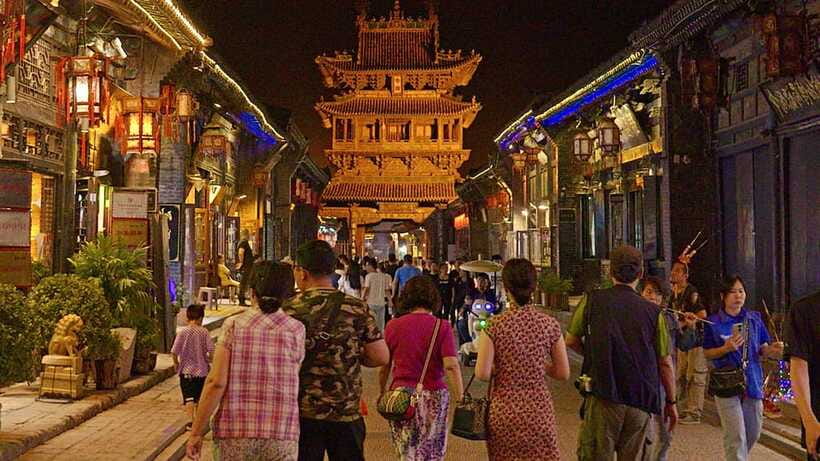
Ming and Qing Street is the most straightforward stop for getting a sense of Pingyao’s public face. It is the historic commercial street where traditional buildings have been adapted for modern use.
You can expect shops, restaurants, tea rooms, wine houses, and other businesses inside old residences and commercial buildings. That mix is useful because it keeps the street connected to present-day life rather than turning it into a silent museum.
The tradeoff is that a commercial street can feel less focused than a formal museum. I would use it as a walking link between the ticketed sites, not as the only reason to visit Pingyao.
Look up as you walk. The street’s value comes from the combination of façades, doorways, courtyards, and signs. The pass gives you access to the named attractions, but the street itself is where the historic town becomes easiest to understand as a complete place.
Museums reveal the city’s working professions
The Huiwuli Bodyguard Agency Museum, Tongxinggong Bodyguard Agency, and North China First Bodyguard Agency introduce another part of Pingyao’s commercial world. Merchant wealth needed protection, and these institutions show that trade depended on more than banks and shopfronts.
The names may sound similar, but do not dismiss them as duplicates. Visit at least one with enough time to understand the role of a bodyguard agency, then compare the others for displays and building layouts.
Tianjixiang Museum, Pingyao Chamber of Commerce Museum, and China Rare Newspaper Exhibition Hall broaden the story. They move beyond banking and security into commerce, organization, and printed information.
The Chamber of Commerce Museum is especially useful for seeing how merchants worked together. The newspaper exhibition adds a different kind of evidence, showing how printed material can preserve the concerns and interests of an earlier period.
Wentaofang Museum of Ancient Weapons shifts the focus again. It may appeal most to visitors interested in military objects, practical technology, and the tools used to defend people and property. You can keep this stop short if your main interest is architecture and finance.
Ma Family Courtyard shows how merchants lived
Ma Family Courtyard gives you a look at domestic life. After seeing banks, government offices, and agencies, a large residence helps connect Pingyao’s public institutions with the households that supported them.
Traditional homes in Pingyao have been adapted into hotels, restaurants, tea rooms, and wine houses. Historical homes have also become museums, allowing you to see how prominent families are presented through their buildings and possessions.
Courtyards are worth your attention here. The plan of a residence can tell you about privacy, family structure, status, and movement through the home, even when English explanations are limited.
You should not expect the pass to turn every building into a fully explained tour. Its value is access. You still need to bring curiosity and allow time for the architecture to speak for itself.
A three-hour route is possible, but not the only way to use the pass
The listed self-guided tour takes about three hours. That is realistic for a brisk visit to the wall, one temple, one government site, several commercial buildings, and a handful of museums.
I would use three hours as a minimum planning figure, not a strict schedule. The pass covers 20 attractions, and you can easily spend longer if you read displays, compare the banks, or pause in the historic streets.
There is an important inconsistency in the stated ticket information. The highlights say the ticket is valid for three days, while another activity detail describes it as valid for one day. Because that affects your entire plan, confirm the actual validity before you rely on a multi-day visit.
If the three-day validity applies, the pass becomes more flexible. You could visit the wall and major institutions on the first day, then return for smaller museums and temples without forcing everything into one long walk.
If it is only valid for one day, you will need to prioritize. Begin with the wall, Rishengchang, the county government, Ming and Qing Street, the Confucian Temple, and the most appealing bank or museum. Treat the remaining sites as bonuses rather than obligations.
What the $36 price really buys you
At $36 per person, this is not a simple walk-through ticket. It covers the city wall and a large collection of individual historic attractions, including several banks, two Taoist temples, a Confucian Temple, a city temple, government buildings, museums, agencies, and a former residence.
The value is strongest if you plan to enter many of the included sites. A visitor who only wants to stroll Ming and Qing Street may not get as much from the pass, since the atmosphere of the street can be enjoyed without turning every stop into a museum visit.
The pass is also useful for avoiding the friction of buying separate admissions. You receive a QR image and show it at the entrance, with no need to use a paper ticket. A French booking note specifically describes the QR process as very easy, with no extra operation required. The practical lesson is simple: keep the QR image ready on your phone.
The pass does not include Shuanglin Temple or Zhenguo Temple. Those are separate attractions, so add them only after checking time, transport, and admission arrangements. They should not be treated as part of this $36 package.
Who will enjoy this ticket most
I would recommend this pass to independent visitors who like to set their own pace and choose their own subjects. It suits you if you enjoy architecture, merchant history, religious buildings, old government offices, or the practical story of how a historic city functioned.
It also works well for someone who wants a broad introduction in a short visit. The three-hour route gives you a workable first look, while the stated three-day validity, if confirmed, lets you return for a slower second visit.
Families and groups may appreciate the freedom to split up and regroup, though no guide is included to keep everyone moving together. Visitors who want detailed explanations, translation help, or an organized narrative should arrange a guide separately.
This is not the best choice if you expect hotel pickup, transport, meals, or a guided tour. The product is exactly what its basic format suggests: an entrance pass for self-guided sightseeing.
Photography is allowed, but flash photography is not. You must also provide each participant’s passport number and full name when arranging the ticket. That requirement is practical to handle before your visit, rather than at the entrance.
Free cancellation is available up to 24 hours in advance for a full refund, and reserve-now, pay-later booking is offered. The experience is listed as wheelchair accessible, though the information provided does not explain the conditions at each individual historic building.
Should you book the Pingyao pass?
Book it if you want to explore beyond the main street and prefer independent sightseeing. The QR entry is straightforward, the covered attractions are unusually varied, and the banking and merchant sites give Pingyao real substance.
Skip it if you only want a quick walk through the old streets, or if you need a guide and transport included. Before paying, confirm whether your pass is valid for one day or three, then make a short priority list. For most visitors, that list should include the city wall, Rishengchang, the county government, Ming and Qing Street, one or two draft banks, and at least one temple.
FAQ
What does the Pingyao Ancient City Scenic Area Pass include?
It includes admission to the Pingyao Ancient City Wall, Rishengchang Ancient Draft Bank, City God Temple, Pingyao Confucian Temple, Ming and Qing Street, Ancient Government Buildings, Qingxu Taoist Temple, Tianjixiang Museum, Huiwuli Bodyguard Agency Museum, Tongxinggong Bodyguard Agency, Weitaihou Draft Bank, Weishengchang Draft Bank, Mr. Lei Lutai’s former residence, Baichuantong Draft Bank, Ma Family Courtyard, North China First Bodyguard Agency, Xietongqing Draft Bank, Pingyao Chamber of Commerce Museum, China Rare Newspaper Exhibition Hall, Wentaofang Museum of Ancient Weapons, and Erlang Taoist Temple.
Does the ticket include a guided tour?
No. This is a self-guided ticket, and a tour guide is not included.
Is hotel pickup and drop-off included?
No. Hotel pickup and drop-off are not included.
Are meals included?
No. Meals are not included in the ticket.
Are Shuanglin Temple and Zhenguo Temple included?
No. The pass specifically excludes Shuanglin Temple and Zhenguo Temple.
How do I enter the attractions?
You receive a QR image and show it at the entrance for scanning. No paper ticket is needed.
Is the ticket valid for one day or three days?
The supplied activity details contain both statements. The highlights say the ticket is valid for three days, while another section says valid for one day. Confirm the exact validity before booking or planning your schedule.
Is photography allowed?
Yes, photography is allowed. Flash photography is not permitted.
Can I cancel for a refund?
Yes. You can cancel up to 24 hours in advance for a full refund. Reserve-now, pay-later booking is also available.
Just added around China
- Hong Kong Airport to Hong Kong City Private Arrival Transfer★ 4.5 · 3 reviews
- Hong Kong Observation Wheel Ticket★ 5.0 · 3 reviews
- Hong Kong Palace Museum Ticket★ 5.0 · 3 reviews
- Hong Kong Peak Tram and Sky Terrace 428 Tickets (Optional)★ 3.5 · 22 reviews
- Hong Kong Private Walking Tour with a Local★ 5.0 · 6 reviews
- Hong Kong Market Walking Tour & Chinese Cooking Class★ 5.0 · 24 reviews
- Hong Kong : Must-See Attractions Walking Tour With A Guide★ 5.0 · 7 reviews
- Hong Kong: Lantau Island & Tai O Cruise, Skip The Line Cable Car★ 3.5 · 4 reviews
City Tours, compared.

Forbidden City Tour(Group/Private)-Tickets Included
Read our review →
All-Inclusive Tour: Tiananmen Square, Forbidden City, Great Wall
Read our review →
4-Hour Small Group Tour to Forbidden City with Entry Tickets
Read our review →
Mini Group Xian Day Tour to Terracotta Army, City Wall, Pagoda and Muslim Bazaar
Read our review →
Tianmen Square, Forbidden City & Royal Museum Tours
Read our review →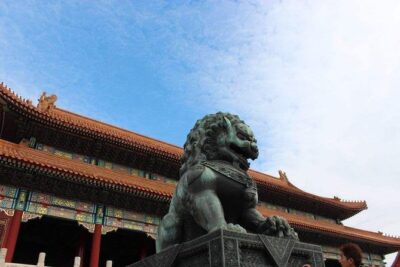
Beijing Forbidden City Ticket Booking (Optional: guide service)
Read our review →
Zhujiajiao Water Town and Shanghai City Private Day Tour
Read our review →
Forbidden City and Tian’anmen Square Waking Tour
Read our review →Browse the lists this tour appears in