
Reviewed · CHINA
Jiuzhai Valley National Park:Visit Colorful Fairy Tale World
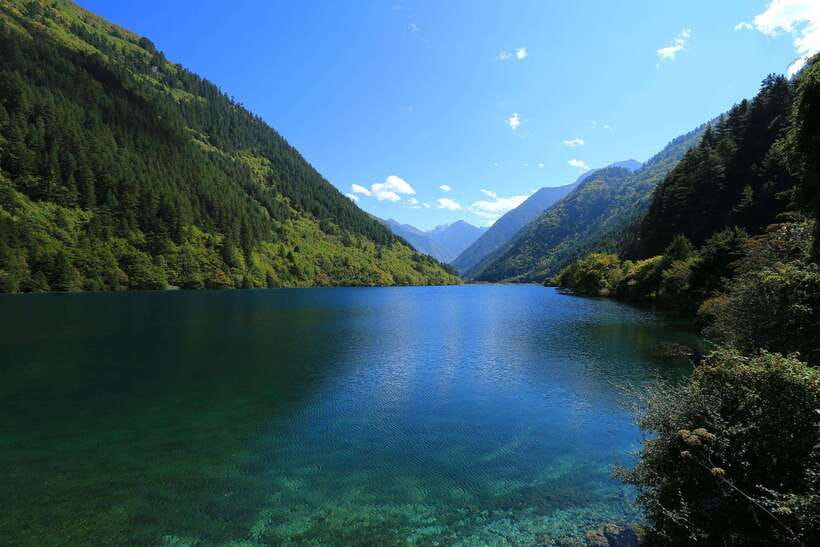
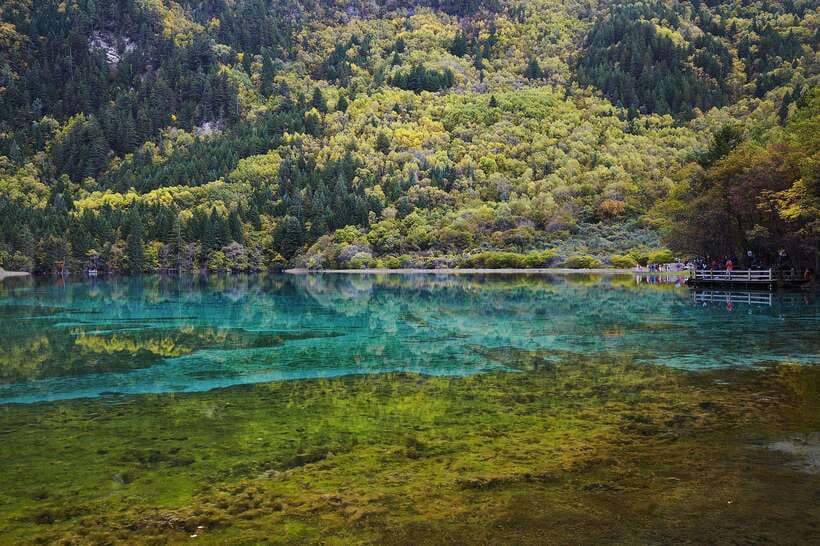
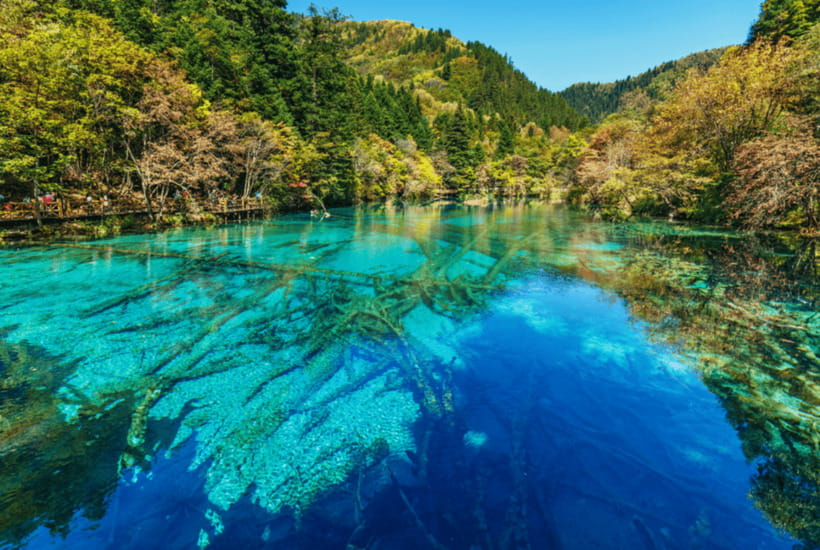
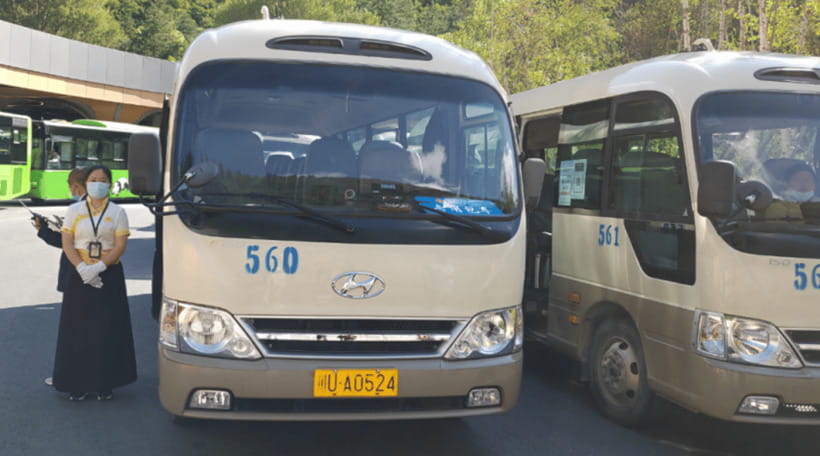
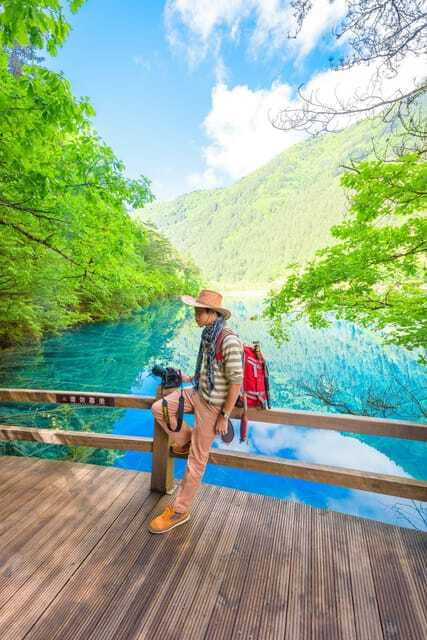
Jiuzhai Valley is the sort of place that makes a camera feel inadequate. More than 114 colorful plateau lakes, clear enough to show submerged trees and stones, sit among forests, narrow rock forms, and tiered waterfalls. The included park bus helps you cover this large mountain park in one day.
I like the simple ticket setup and the freedom to explore on foot rather than follow a guide with a flag. I also like the helpful booking support, especially for busy dates. The catch is time: one day gives you a fine introduction, but it may not be enough for the whole park, particularly in summer when crowded paths slow everyone down.
Key points at a glance
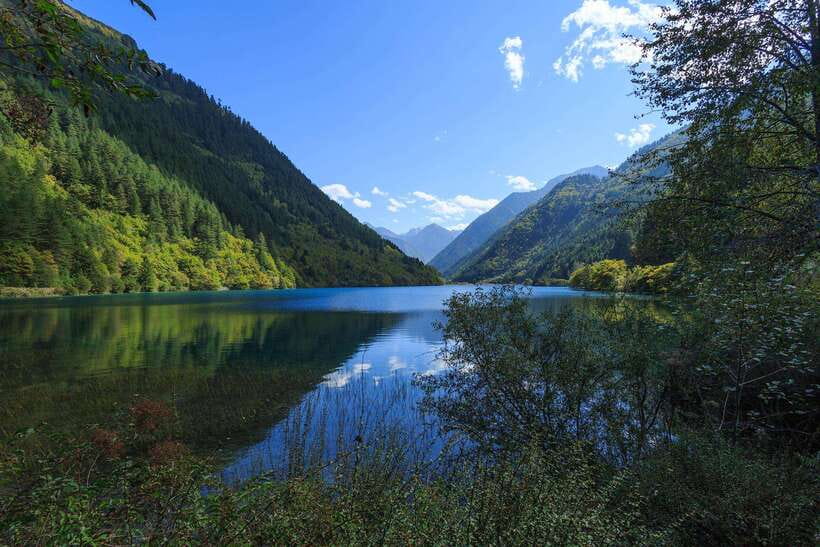
- More than 114 lakes: Expect blue and green water, wooded shorelines, and changing color as the light shifts.
- Included scenic bus: The bus makes a large, high-altitude park practical to visit in a single day.
- Tiered waterfalls: Crystal-clear water drops through several levels, creating some of the park’s best photo stops.
- Tibetan setting: Nine Tibetan villages give Jiuzhai Valley its name, while local music and dance add cultural context.
- Four-season scenery: Autumn brings colorful forest, while winter covers the park in snow.
- Flexible booking support: Cancellation is free up to 24 hours before the visit, and confirmation can arrive in as little as 10 minutes.
Why Jiuzhai Valley feels like a fairy tale
Jiuzhai Valley, also called Jiuzhaigou, lies in the Min Shan mountain range of northern Sichuan. The name means Nine Village Valley, referring to the Tibetan villages spread through the park.
The scenery comes in layers. At lower elevations, forests frame lakes and streams. Higher up, the mountains rise toward peaks above 4,500 meters. This change in height creates several forest zones, so the park can look completely different from one section to the next.
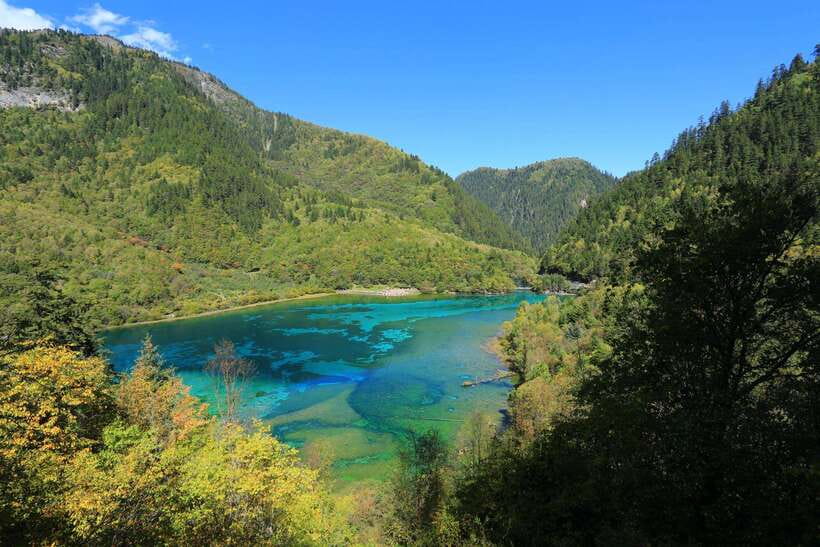
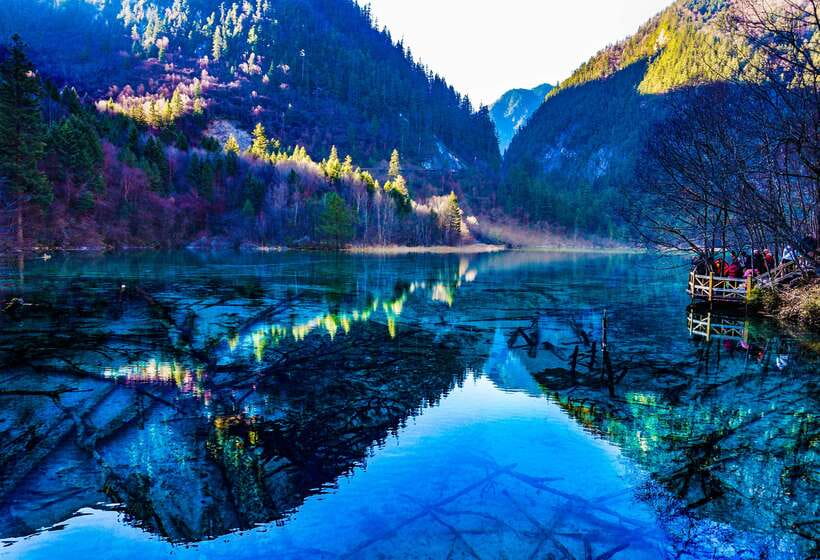
The lakes are the main attraction. Their blue and green shades come from clear water, minerals, depth, light, and the pale rock beneath the surface. You can expect broad pools, small wooded ponds, and long stretches of water connected by streams.
This is not a park where one famous viewpoint tells the whole story. The appeal comes from moving through a series of connected sights. A lake may be followed by a waterfall, then a forest path, then another pool with a different color and shape.
The park covers about 720 square kilometers, with a large additional buffer zone. That scale explains why the sightseeing bus matters. Without it, a one-day visit would be far less practical.
A few more China trips to weigh up
- Chongqing Wulong National Park Private Tour
★ 5.0 · 87 reviews - Zhangjiajie National Park: 2-Day Guided Tour w/ Glass Bridge
★ 4.8 · 57 reviews
Starting at the visitor center
Your day begins at the Jiuzhaigou Scenic Area Visitor Center. Look for the Chinese and English signs for Jiuzhaigou Valley at the entrance. If you have trouble locating the correct entrance, staff at the scenic area or the local customer service team can help.
The ticket includes entry to Jiuzhai Valley National Park and the park sightseeing bus. That is an important distinction. You are not simply buying access to a small walking garden. You are entering a large protected area where the bus connects the main sections.
You should arrive ready for a full day outdoors. Comfortable shoes matter because the plan includes several hours of walking, and warm clothes are wise even when the lower valley feels mild. The park ranges from roughly 2,000 meters at the entrance to much higher mountain terrain, so conditions can change.
The booking team needs each person’s full name, nationality, passport number, and contact details. Send those details after booking as requested. This may feel like extra paperwork, but it is tied to arranging the park entry ticket.
The first 3.5 hours: lakes, paths, and waterfalls
The first sightseeing period lasts about three and a half hours. You will use the park bus and then explore selected areas on foot, stopping for photographs and short visits along the paths.
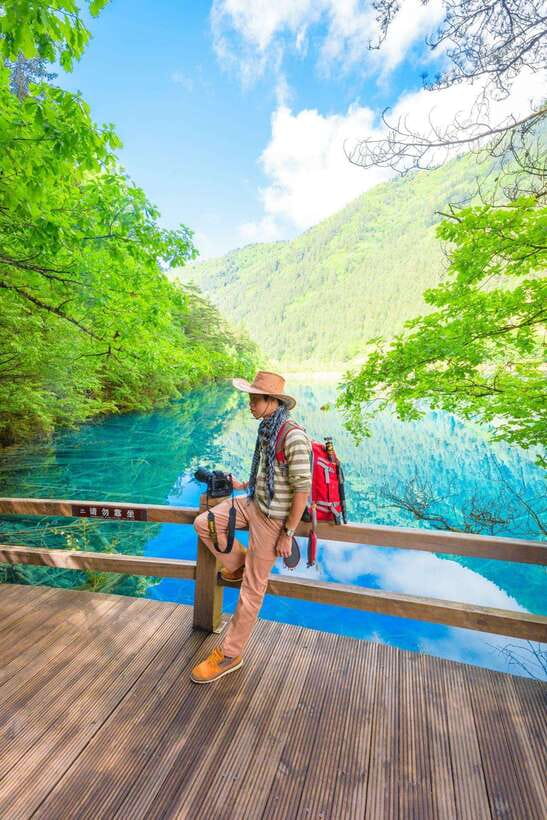
The walking routes are built around the water. This makes the day easy to understand: ride to a scenic area, walk along the boardwalks and paths, take photographs, and continue by bus when needed. You do not need a guide to appreciate the main sights, since the scenery itself is the focus.
The lakes are especially good for slow looking. Rather than rushing from one viewpoint to the next, give yourself time to notice the details around the edges: tree trunks under the water, pale stones, reflections, and the way the color changes in shade.
The waterfalls bring movement to the still lakes. Jiuzhai Valley is known for falls with several levels, where clear water spreads across rock shelves before dropping again. These are excellent places to stop because the sound and motion break up the quiet of the forest.
The paths are described as well laid out, with toilets and food and drink stalls available along different routes. Those facilities make the park easier to manage over a long day, though you should still carry what you need for the next stretch of walking.
Crowds are the main issue during summer vacation. The paths can become busy enough that you cannot keep a fast walking pace. That affects how much you can see, so do not treat the posted walking time as a promise that every section can be covered.
Lunch at Norilang Restaurant
The plan includes a one-hour break for lunch, rest, and free time. A buffet lunch at Norilang Restaurant is available as an optional addition.
A fixed lunch stop can be useful in a park this large. It gives you a chance to sit down, warm up or cool off, and reset before the afternoon section. If you prefer to keep moving or choose your own food, lunch is not presented as a required part of the base visit.
The sensible choice depends on your priorities. Add the buffet if you want a straightforward meal without spending time searching for food. Skip it if you prefer flexibility, have special food needs, or want to use every possible minute for scenery.
Keep the lunch hour in perspective. It is not just a meal break. After several hours at altitude and on your feet, a proper pause can help you enjoy the second half rather than simply endure it.
Same country, a completely different kind of day:
- From Beijing: Mutianyu Great Wall Tours with Options
★ 4.9 · 9,216 reviews - Beijing: Forbidden City Tour(Group/Private)-Tickets Included
★ 4.8 · 7,974 reviews - Beijing: T-Square & Forbidden City Group or Private Tour
★ 4.8 · 4,446 reviews - Beijing: Mutianyu Great Wall Daily Tour with Ticket & Lunch
★ 5.0 · 3,056 reviews
The final four hours: more forest and changing colors
The afternoon sightseeing period lasts about four hours. You will again combine the scenic bus with walking, photo stops, and self-guided exploration.
This longer section gives you time to see how the valley changes from one zone to another. Some areas feel open around the water, while others place you among dense trees and mountain slopes. The narrow conic rock formations add another shape to the scenery, making the park more varied than a simple chain of lakes.
Autumn is a particularly appealing season if you want color in the forest. Gold, red, and green foliage can frame the water, though exact conditions depend on the date. Winter offers a different mood, with snow covering the forest and mountains. The park is promoted as a year-round destination, but you should dress for the season and be prepared for cold conditions.
The bus remains important in the afternoon. It saves your legs and lets you reach more sections than walking the full distance would allow. At the same time, the bus means you have less control over the pace than you would on a private walking tour. You are working within the park’s transport system and the time available.
This is a self-guided day, not a lecture with a guide explaining every tree and rock. That suits you if you like choosing your own stops and taking photographs without a group waiting. If you want detailed interpretation of Tibetan customs, geology, or wildlife, guide fees are not included and would need to be arranged separately.
Tibetan villages and local culture
Jiuzhai Valley is not only a natural site. More than 110 families, with a total population of just over 1,000 people, live within the park. The valley has evidence of human settlement going back as far as 3,000 years.
The nine Tibetan villages are part of the area’s identity. The local Tibetan name is Dzitsa Degu, and traditional ways of life remain part of the setting.
The cultural element described for this experience includes warm Tibetan music and dance. These touches help you understand that the valley is a lived-in place, not simply a collection of viewpoints. Still, the main focus of the day remains the scenery, and the provided plan does not describe a separate village homestay or extended cultural workshop.
That balance is useful to know before booking. Choose this visit for its lakes, waterfalls, forests, and mountain setting first. Treat the Tibetan music and dance as a cultural layer rather than the central event.
Wildlife and protected status
Jiuzhai Valley was named a UNESCO World Heritage Site in 1992. It also joined the Man and Biosphere Conservation Network in 1997 and has received IUCN and ISO 14001 accreditations.
The Min Mountains are an important area for biodiversity in southwestern China. More than 220 bird species are found in the park, along with protected plants and animals such as the giant panda, Sichuan golden monkey, and Sichuan takin.
You should keep expectations sensible. This is not a dedicated wildlife-viewing trip, and there is no promise that you will see these animals during a one-day visit. The value lies in seeing the protected forest and water system where such species live.
The park’s elevation range also explains the need for warm layers. Even if you spend much of the day near the entrance elevation, mountain weather can be cooler and less predictable higher up.
What the $38 price really covers
At $38 per person, the base price is attractive because it includes the two costs you need most: the national park ticket and the sightseeing bus ticket.
That bus ticket is not a minor extra. It is what makes the large park manageable within one day. Paying for entry without transport would leave you facing a much harder planning problem.
The buffet lunch at Norilang Restaurant is optional, as is exclusive car pickup and drop-off from your hotel. Check the exact total before paying so you know which additions you have selected. Personal spending, including specialties and souvenirs, is not included.
There is no tour guide fee in the base arrangement. In Jiuzhai Valley, that can be good value because the main purpose is to see the scenery, and the self-guided format lets you set your own pace. You are paying for access and transport rather than for constant commentary.
The booking support adds practical value, especially for a busy travel date. Theo Du is identified as the Chinese contact who helped secure tickets during a very busy period and provided clear communication. After booking, you receive a dedicated service contact for product details, planning help, and questions about other attractions.
Who should book this day
I would choose this experience if you want a straightforward way to enter Jiuzhai Valley, use the official sightseeing bus, and explore without being tied to a guide. It suits photographers, independent sightseers, and anyone who prefers to pause at a beautiful lake instead of keeping up with a fixed walking group.
It also works well if you value booking flexibility. You can reserve now and pay later, and cancellation is allowed up to 24 hours before the visit for a full refund.
You should think twice if you dislike long outdoor days, cold conditions, or busy paths. The experience is not suitable for people over 80, and the amount of walking may feel demanding for anyone with limited stamina.
If you have only one day in the area, this is a practical introduction. But if your schedule allows, two days would be better. A single day may not reach even half of what the park offers, especially during the summer high season.
What to bring and how to prepare
Wear comfortable shoes with enough support for several hours of walking. Warm shoes, warm clothing, and an extra layer are specifically recommended, and they make sense given the elevation.
You should also bring your booking information and make sure the name and passport details used for the ticket are correct. Alcohol and drugs are not allowed.
Do not plan the day around a rushed schedule. The first sightseeing block lasts about 3.5 hours, lunch and free time take about one hour, and the final block lasts about four hours. Crowds, bus movement, and photo stops can all affect the exact pace.
English and Chinese support is available. If you need help at the entrance, ask scenic area staff or contact the service team.
Should you book Jiuzhai Valley?
Book it if your priority is spectacular natural scenery with park entry and internal transport handled for you. The $38 base price gives you the essentials, while the optional lunch and hotel transfer let you add convenience only where you need it.
I would not book it expecting a relaxed, complete tour of every corner in one day. For that, allow two days if possible. But for a well-organized first look at Jiuzhai Valley, with clear lakes, tiered waterfalls, mountain forests, and a little Tibetan culture along the way, this is a strong choice.
FAQ
Where is Jiuzhai Valley National Park?
Jiuzhai Valley National Park is in the Min Shan mountain range in northern Sichuan, southwestern China. It is in the Aba Tibetan and Qiang Autonomous Prefecture.
How long does the experience last?
The visit is valid for one day. The planned schedule includes about 3.5 hours of sightseeing, a one-hour lunch and free-time break, and about four more hours of sightseeing.
What does the $38 price include?
The price includes the Jiuzhai Valley National Park ticket and the park sightseeing bus ticket.
Is lunch included?
A buffet lunch at Norilang Restaurant is available as an optional addition. It is not part of the required base package.
Is hotel pickup included?
Exclusive car pickup and drop-off from your hotel to Jiuzhai Valley is optional. It is not part of the basic ticket and sightseeing bus package.
Do I need to hire a guide?
A tour guide is not included. The main purpose of the visit is to see the scenery, and you can explore the park independently using the sightseeing bus and walking paths.
What languages are available?
Host or greeter support is available in Chinese and English.
What information is needed to book the ticket?
You need to provide each person’s full name, nationality, passport number, and contact details after booking.
Can I cancel the booking?
You can cancel up to 24 hours in advance for a full refund. You can also reserve now and pay later.
Is the experience suitable for everyone?
It is not suitable for people over 80. You should also be ready for several hours of walking and bring comfortable, warm clothing and shoes.
Just added around China
- Hong Kong Airport to Hong Kong City Private Arrival Transfer★ 4.5 · 3 reviews
- Hong Kong Observation Wheel Ticket★ 5.0 · 3 reviews
- Hong Kong Palace Museum Ticket★ 5.0 · 3 reviews
- Hong Kong Peak Tram and Sky Terrace 428 Tickets (Optional)★ 3.5 · 22 reviews
- Hong Kong Private Walking Tour with a Local★ 5.0 · 6 reviews
- Hong Kong Market Walking Tour & Chinese Cooking Class★ 5.0 · 24 reviews
- Hong Kong : Must-See Attractions Walking Tour With A Guide★ 5.0 · 7 reviews
- Hong Kong: Lantau Island & Tai O Cruise, Skip The Line Cable Car★ 3.5 · 4 reviews