
Reviewed · XIAN TOURS
8-Day Small-Group China Tour to Beijing, Xi’an and Shanghai
China’s greatest hits arrive at a brisk pace here: the Forbidden City, Mutianyu Great Wall, Terracotta Army, and Shanghai’s Bund all fit into eight days. You also get smaller, more human moments, from a rickshaw ride through Beijing’s hutongs to Tai Chi at Xi’an’s City Wall Park. I like the way the tour links major sights with local food and traditional neighborhoods, rather than giving you monuments alone.
I also like the small maximum of 18 people, the included hotels and entrance fees, and the practical help of local guides. Candy in Beijing and Tracy in Xi’an are named guides associated with the trip, while Emily serves as a responsive trip contact. The catch is the pace: you cover three huge cities in one week, and the $1,619 price does not include international airfare, visa costs, gratuities, or your final airport transfer in Shanghai.
Key points to know before booking
- Mutianyu includes a round-trip cable car, making the Great Wall easier to reach, though you still need to walk on uneven sections.
- Beijing combines imperial sights and ordinary life, with Tiananmen Square, the Forbidden City, Temple of Heaven, and a hutong family visit.
- Xi’an brings the Terracotta Army and Tang-era culture, plus the Muslim Quarter, City Wall Park, and an evening show.
- Shanghai’s final day is packed, covering the Shanghai Museum, Yu Garden, Shanghai Tower views, the Bund, and a Huangpu River cruise.
- The group is capped at 18, with twin-share hotel rooms and a single-room supplement for solo visitors.
- Shopping detours are specifically excluded, so the schedule aims to keep its time for sightseeing rather than factory or tea stops.
Why this eight-day route works
I would choose this tour if you want a first look at China without arranging every hotel, ticket, transfer, and intercity connection yourself. Beijing, Xi’an, and Shanghai feel very different, and the route gives each city a clear role.
Beijing is the imperial capital, with grand gates, palace courtyards, ritual temples, and the Great Wall. Xi’an is the old dynastic crossroads, where the Terracotta Army and Tang-era sites provide the main historical weight. Shanghai then shifts the mood to museums, classical gardens, colonial-era streets, skyscrapers, shopping, and the river.
That range is the real value. You are not spending eight days looking at similar temples or palace halls. The downside is that the schedule leaves little room for unscripted wandering. You will see a lot, but you will rarely have a full free day to follow your own interests.
The tour costs $1,619 per person. For that price, you receive seven nights of hotel accommodation, seven breakfasts, three lunches, dinner, guides, air-conditioned vehicles, admission tickets, bottled water, and the scheduled transport between cities. That can be good value in China, especially when major tickets and long transfers are already handled.
Read the room arrangement carefully. The standard rate is based on two people sharing a room. A solo visitor must pay a required single-room supplement. The tour requires at least two people per booking and accepts a maximum of 18 participants, a useful middle ground between a private trip and a large coach group.
Other Xian days worth booking alongside this:
- Mini Group Xian Day Tour to Terracotta Army, City Wall, Pagoda and Muslim Bazaar
★ 5.0 · 1,320 reviews - Xi’an: Terracotta Army Mini Group or Private Tour
★ 5.0 · 926 reviews - Xi’an Evening Food Tour by TukTuk
★ 5.0 · 715 reviews
Day 1: A simple Beijing arrival
Your first day is mostly practical. After collecting your bags and clearing customs at Beijing International Airport, a local guide meets you and arranges the ride to your hotel. The guide also helps with check-in.
The listed airport meeting time is 8:00 pm, so check your flight details carefully before booking. This transfer matters more than it sounds after a long international flight, especially when you are arriving in a city as large as Beijing.
There is no sightseeing on arrival day. That is sensible. You get a room, settle in, and prepare for an early start instead of being pushed straight into a palace or temple.
Day 2: Tiananmen, the Forbidden City, and Temple of Heaven
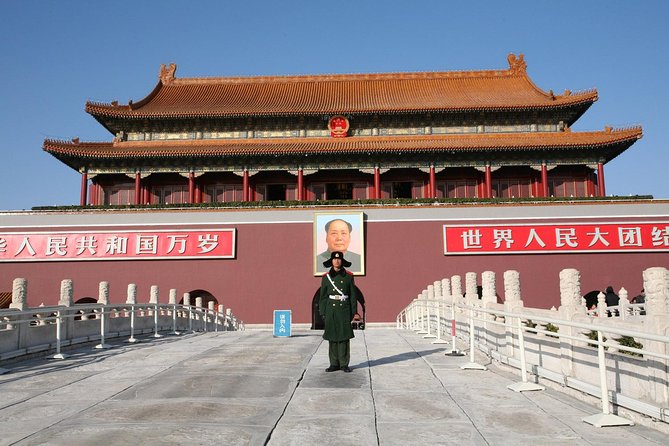
The morning begins at Tiananmen Square, one of the world’s largest urban squares. The scheduled visit is short, about 30 minutes, so think of it as an introduction and photo stop rather than a detailed historical visit.
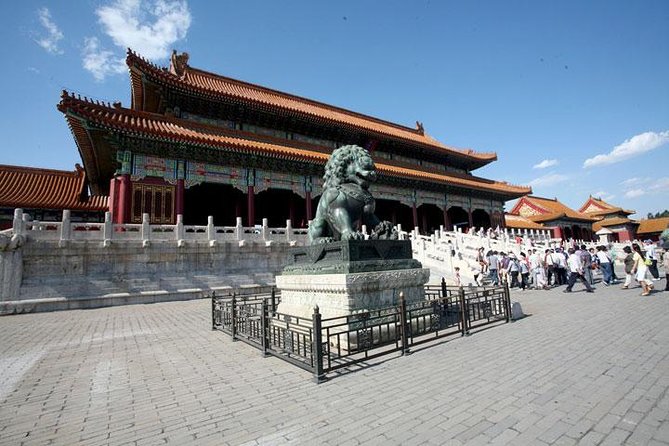
From there, you enter the Palace Museum, better known as the Forbidden City. Three hours gives you enough time to understand the scale of the former imperial complex, pass through its formal courtyards, and see the halls where emperors handled government business. The important thing here is not only the individual buildings. It is the strict sequence of gates, courtyards, and ceremonial spaces.
The Forbidden City can feel physically demanding because the complex is broad and the day continues after it. Wear shoes that can handle plenty of walking, and keep water close. Two bottled waters per person per day are included, which is helpful but not a substitute for planning your own supply.
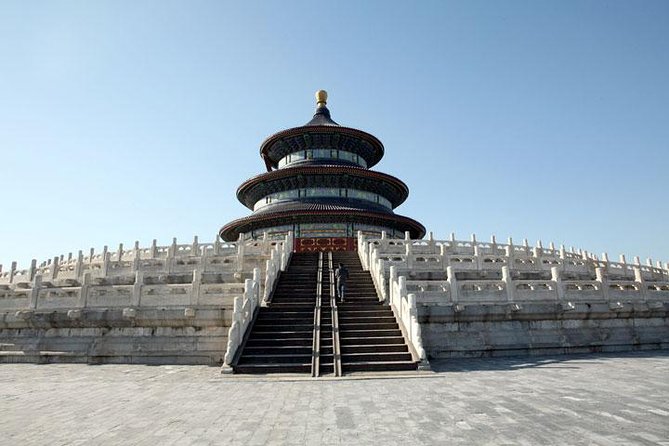
The final major stop is the Temple of Heaven. Its architecture was designed for imperial ceremonies connected with the heavens and the harvest. The visit lasts about 90 minutes, giving you time to see the unusual circular design and get a different view of imperial power, one based on ritual rather than government.
That evening, the Red Theater hosts an acrobatic show. It is a polished stage performance, not a street encounter, but it gives the day a lighter finish after several formal sites.
Day 3: Mutianyu and Beijing’s hutongs
Mutianyu is one of the strongest parts of the trip. It is a UNESCO World Heritage Site, and the setting lets you see the wall running across the hills rather than only viewing a restored gate or short urban section.
The tour includes a round-trip cable car. That saves energy on the climb, but do not mistake it for a fully effortless visit. You still walk along the wall, and the surface can be uneven. The scheduled time is about three hours, enough to look out across the wall’s long curves and get a solid sense of its scale.
After returning toward the city, you stop for a photo of the National Stadium, known as the Bird’s Nest. The stop lasts only about 10 minutes and admission is not included. Treat it as a quick look from outside, not a stadium tour.
The afternoon moves to Beijing’s hutongs, the old alley neighborhoods formed by low courtyard homes. A rickshaw ride gives you a quick view of these lanes, followed by a visit with a local family. This is one of the tour’s most useful contrasts: you move from the monumental Great Wall to the everyday shape of old Beijing.
The hutong portion is brief, about an hour. If you want extended neighborhood wandering, this will feel short. Still, it offers a personal scale that the Forbidden City cannot.
Same country, a completely different kind of day:
- Xian: Terracotta Army Ticket & Guided Bus Tour with Options
★ 4.6 · 579 reviews - Customized Private Day Tour of Terracotta Warriors and Xi’an
★ 5.0 · 513 reviews - Xi’an: Exclusive Terracotta Army Tour & Local Family Lunch
★ 4.9 · 484 reviews - Half-Day Mini Group Xian Tour to Terracotta Warriors Museum
★ 5.0 · 467 reviews
Day 4: Summer Palace and the fast route to Xi’an
The Summer Palace fills the morning with gardens, imperial buildings, and views around its broad lake. Three hours is a reasonable amount of time for the main areas, although the site is large enough that you will not see every corner.
I like placing this visit after the Forbidden City. The palace complex shows imperial authority in formal form, while the Summer Palace shows how the court used gardens and leisure spaces. It also gives you a change of pace before the long transfer.
After lunch, you travel from Beijing Railway Station to Xi’an by high-speed train. The listed journey takes about five hours, followed by hotel check-in. A train ride is a valuable part of the experience in its own right, but this is still a long travel block. Keep your expectations realistic: Day 4 is a sightseeing morning followed by an afternoon and evening in transit.
The tour information also describes intercity economy-class air travel as included between Beijing, Xi’an, and Shanghai, while the daily schedule specifically lists the Beijing to Xi’an journey by high-speed train and the Xi’an to Shanghai journey by air. Confirm the exact transport arrangements before departure, since the published details describe the segments differently.
Day 5: The Terracotta Army and Tang-era Xi’an
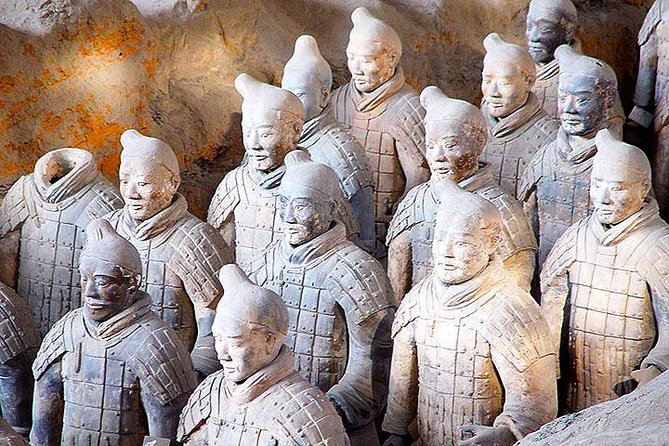
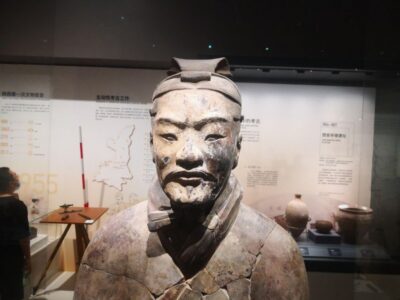
The Terracotta Army is the main reason many people come to Xi’an, and the visit receives about four hours. That is enough time to see the three excavated pits and understand how the clay soldiers, horses, and ancient weapons were arranged.
Pit 1 is usually the visual centerpiece, with rows of life-size figures under a huge roof. The value of having a guide here is context. Without an explanation, the soldiers can become a long line of similar figures. With one, you can better follow the excavation story, the military arrangement, and the differences in rank and position.
The day includes a family visit after the museum, adding another local element to a site that can otherwise feel like a large archaeological hall. The exact details of that visit are not specified, so ask your guide what you will see and how much time is planned.
In the afternoon, you visit the Big Wild Goose Pagoda. Built during the Tang dynasty to house Buddhist scriptures brought from ancient India, it connects Xi’an to the movement of ideas and religion across Asia. The visit lasts about an hour.
The evening brings a Tang Dynasty music and dance show, scheduled for about 90 minutes. It fits Xi’an well, since the city’s Tang-era identity is central to its cultural story. The show is not available in January, February, March, and December, and the tour price does not include it during those months. Check the seasonal schedule before you assume it is part of your booking.
Day 6: City Wall, Muslim Quarter, and Shanghai
The morning starts at Xi’an City Wall Park. This is less about a single monument and more about seeing local routines. The schedule includes a chance to practice Tai Chi with a master, an appealing change from racing through museums.
You then have lunch in the Muslim Quarter. This is where food becomes part of the tour’s cultural value. You can try local dishes in a lively market district, with the guide helping you understand what you are eating. Three lunches are included across the trip, and this one is specifically built around regional food.
In the afternoon, you fly to Shanghai. Your Shanghai guide meets you at the airport and takes you to the hotel. The transfer and flight make this another travel-heavy day, so do not plan on a long independent evening unless your flight timing allows it.
Day 7: Shanghai’s old, modern, and colonial faces
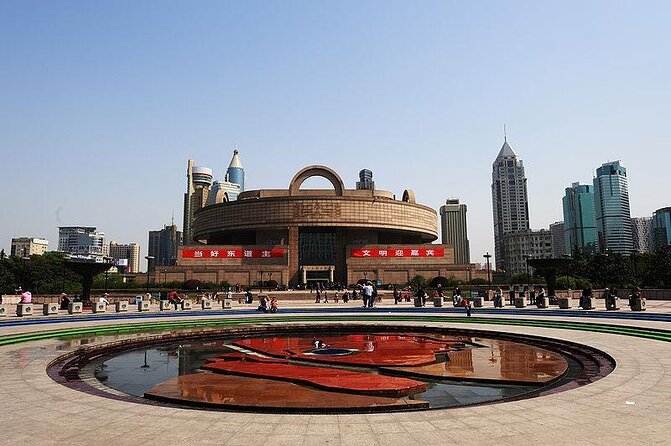
Shanghai’s sightseeing day packs several different experiences together. First comes the Shanghai Museum, one of China’s major museums for ancient art. The two-hour visit gives you a chance to see works from earlier periods before the city’s skyscrapers take over the day.
Yu Garden brings a very different mood. Its classical design includes the Nine Zigzag Bridge, a mid-lake pavilion, and carefully arranged stone and water features. The nearby traditional bazaar adds noise and movement around the quieter garden.
Next, you visit Duo Yun Bookstore on the 52nd floor of Shanghai Tower for a high view over the city. This is a strong way to understand Shanghai’s scale. The schedule then moves to the Bund, where colonial-era buildings face the modern skyline across the Huangpu River.
The day finishes with a one-hour Huangpu River cruise. The river is central to Shanghai’s identity, and viewing both banks from the water gives you a useful sense of how old commercial Shanghai and the newer tower district sit opposite one another.
The schedule lists about two hours for the Huangpu River portion, including the cruise and related sightseeing. This is a full day, with little room for extra shopping or independent museum time. Nanjing Road is included among the city’s cultural attractions and is known for modern stores and artsy shops, but the detailed stop list does not assign it a separate visit. Ask your guide how it fits into your day.
Food, hotels, and what the price covers
The package includes hotel accommodation in twin-share rooms, seven breakfasts, three lunches, and dinner. It does not promise every meal, so budget for additional lunches or dinners outside those inclusions.
Meals are not just a cost-saving feature here. The Muslim Quarter lunch and other regional dishes help break up the schedule of palaces and museums. Vegetarian meals are available if you request them when booking.
The tour also supplies two bottled waters per person per day. Guides, air-conditioned vehicles, entrance fees, and the scheduled intercity transport are included. Those items reduce the small costs that can add up quickly on a tightly planned route.
You still pay for international flights, a China visa, gratuities, personal expenses, excess luggage charges when applicable, and the Shanghai airport drop-off on Day 8. The final hotel-to-airport transfer is your responsibility, so allow enough time to arrange it after breakfast.
Who should choose this tour
This trip suits you if you want structure, major sights, English-speaking local guides, and a group small enough for questions. It is particularly useful for a first visit, when train tickets, domestic flights, hotel locations, and attraction reservations could otherwise become a project of their own.
It also suits families and couples who want support without booking a fully private itinerary. One family had a daughter who became ill, and guide Candy helped direct them to a hospital. That does not remove the need for travel insurance, but it shows why a reliable local contact can matter.
You should think twice if you prefer slow travel, long meals, or several free afternoons. The route is physically active and includes long transfers. It is not suitable for wheelchair users or people over 80, and the provider says a current passport is required on the day of travel.
Should you book it?
Book this tour if your priority is seeing China’s essential sights efficiently, with the main tickets, hotels, guides, vehicles, and much of the food already arranged. The group limit of 18, the no-shopping-detour policy, and the mix of major monuments with hutongs, Tai Chi, local food, and a family visit give it a practical edge.
Skip it if you want to linger in one city or make your own daily choices. At $1,619, the package offers solid value for a demanding eight-day route, but the price is only the beginning once you add flights to China, visa costs, tips, personal meals, and the final Shanghai transfer.
FAQ
How long is the tour?
The tour lasts approximately eight days, beginning with airport pickup in Beijing and ending after breakfast on Day 8 in Shanghai.
Which cities does the tour visit?
The route includes Beijing, Xi’an, and Shanghai.
What is the maximum group size?
The group has a maximum of 18 travelers.
Is airport pickup included?
Beijing airport pickup is included on arrival. A Shanghai airport guide and hotel transfer are arranged when you fly into Shanghai. The airport transfer for your departure from Shanghai on Day 8 is not included.
What accommodation is included?
Hotel accommodation is included based on two people sharing a room. A required single-room supplement applies to solo visitors and is available on request.
Which meals are included?
The package includes seven breakfasts, three lunches, and dinner. Vegetarian food is available if requested when you book.
Is transport between Beijing, Xi’an, and Shanghai included?
The tour includes scheduled intercity transport. The daily schedule specifies a high-speed train from Beijing to Xi’an and a flight from Xi’an to Shanghai. The package details also describe included economy-class intercity airfare, so confirm the final transport plan before departure.
Is the Tang Dynasty show available all year?
No. The theater is closed in January, February, March, and December. During those months, the show is not included in the tour price.
Do I need to provide passport information?
Yes. Passport name, number, expiry date, and country are required for all participants at booking. You also need a current valid passport on the day of travel.
Is the tour suitable for wheelchair users or people over 80?
No. The tour is listed as unsuitable for wheelchair users and people over 80. Most other participants can take part, but the route includes substantial walking and several long transport days.
Just added around Xian
- Top 3 Xian Sites to Terracotta Army & Dinner Show w/ Options★ 4.7 · 11 reviews
- The Legend Of Camel Bell In Xi’An★ 5.0 · 4 reviews
- Terracotta Warriors And Xi’An DowntownTour★ 5.0 · 6 reviews
- Terracotta Army, Huaqing Palace & Song of Everlasting Sorrow★ 5.0 · 3 reviews
- Terracotta Army E Ticket with Optional Transfer or Guide★ 5.0 · 32 reviews
- Terracotta Army Day Tour from Xi’an-Tickets&Flexible Pickup★ 5.0 · 8 reviews
- Private Xian Mt. Huashan Adventure Tour: Explore in Your Own★ 4.9 · 6 reviews
- From Xi’an: Mt. Huashan Private Tour and Cable Car Ride★ 4.8 · 3 reviews
Xian Tours, compared.
Mini Group Xian Day Tour to Terracotta Army, City Wall, Pagoda and Muslim Bazaar
Read our review →
Terracotta Army Ticket & Guided Bus Tour with Options
Read our review →
Customized Private Day Tour of Terracotta Warriors and Xi’an
Read our review →
Exclusive Terracotta Army Tour & Local Family Lunch
Read our review →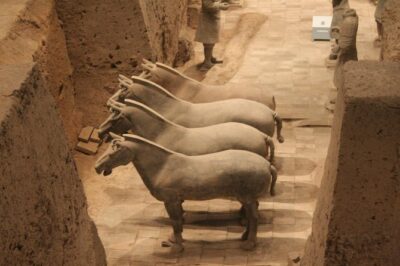
Half-Day Mini Group Xian Tour to Terracotta Warriors Museum
Read our review →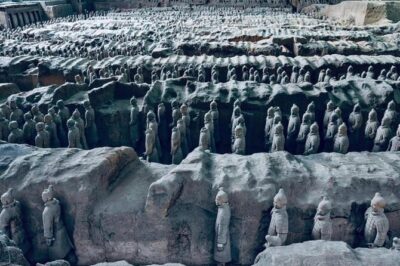
Browse the lists this tour appears in