
Reviewed · FOOD & DRINK
Private Food Tour: Hong Kong Island
Hong Kong’s best food stories are often served in small portions, from trolley-pushed dim sum in Sheung Wan to roast meats over rice and a flaky egg tart in Wan Chai. This private four-hour tour links those dishes with old markets, tea shops, dried seafood stalls, and neighborhood streets.
I like the personal pace, especially for families and older visitors, and I like that the food comes with context about Cantonese cooking and Hong Kong’s Chinese and British influences. The guides, including Mel and Andy, are praised for clear English, humor, and tailoring the route to the group.
The main drawback is the price: $236.69 per person is a serious spend for four hours of food. You also need to arrive hungry, and this is not a good fit for vegetarians, gluten-free diners, or anyone with seafood allergies.
Key points to know before booking
- Dim sum starts the day: Begin with a traditional trolley-served yum cha meal in a tea house with nearly a century of history.
- Five main tastings: Expect dim sum, wonton noodles, traditional milk tea, roast meats with rice, and a Cantonese egg tart.
- Private means flexible: Your guide can adjust the pace and, according to the tour details, customize the outing around group preferences.
- The route is part of the meal: You walk through Sheung Wan, Seafood Street, Graham Street Market, Central, and Wan Chai.
- Public transport is included in the sightseeing: A tram ride and the Mid-Levels Escalator add two classic Hong Kong experiences, though the tram fare is at your own expense.
- Come prepared to eat: Breakfast is not included before the tour because the first stop is a full dim sum tasting.
Starting with dim sum in Sheung Wan
The tour begins near 28 Des Voeux Road West in Sheung Wan, one of the most rewarding parts of Hong Kong Island for a first look at the city. The neighborhood mixes old Chinese businesses, traditional medicine shops, dried seafood stores, temples, narrow lanes, and newer cafés and boutiques.
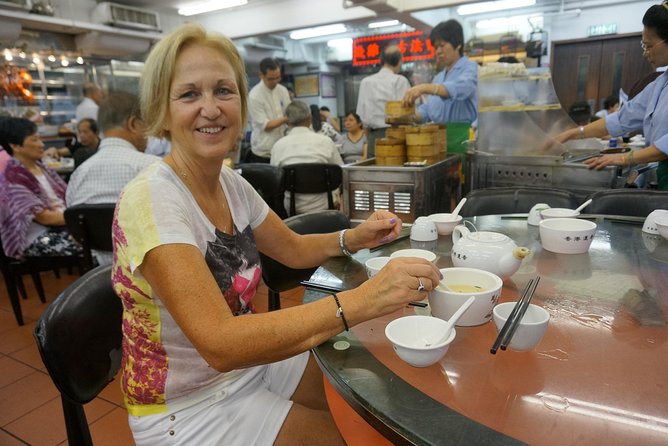
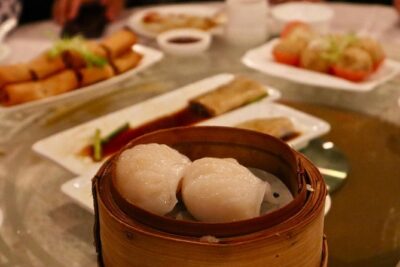
Your first food stop is a tea house where dim sum arrives by trolley. That detail matters. Instead of choosing from a modern menu in a quiet dining room, you get the classic yum cha setting, with dishes moving through the room and the restaurant’s long-running atmosphere all around you.
You will sample a variety of dim sum rather than one single dish. The tour is designed as a breakfast, so arrive ready to eat and pace yourself. There are several more tastings ahead, and it would be easy to fill up too soon.
For me, this is one of the strongest parts of the outing because dim sum is not just a plate of dumplings. It is a social meal, a morning ritual, and a useful introduction to Cantonese food. A guide can also help explain what you are eating and how it fits into local dining culture.
A few more Hong Kong trips to weigh up
- Hong Kong’s Tin Hau Hidden Eats Food Tour with 7+ Local Tastings
★ 5.0 · 352 reviews - Small-Group Hong Kong Island Food Tour
★ 5.0 · 343 reviews - Hong Kong Food Tour: Central and Sheung Wan Districts
★ 5.0 · 333 reviews
Sheung Wan’s dried seafood and tea shops
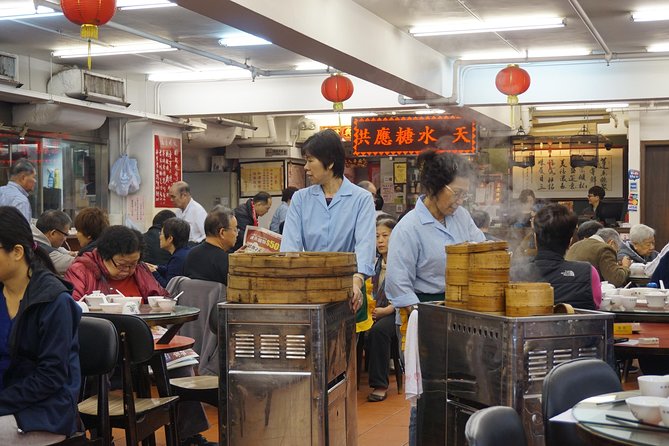
After breakfast, the route turns toward Seafood Street, the section of Des Voeux Road West known for its dried seafood trade. Displays of dried ingredients can be unfamiliar, even startling, if you have never seen them used in Chinese cooking or traditional tonics.
You are not simply passing through on the way to lunch. The stop helps explain why Hong Kong food can depend on preserved ingredients, careful preparation, and products with uses beyond everyday cooking. It is also a useful place to ask questions about ingredients you may later see in restaurants or markets.
The itinerary also includes Kai Fat Tea, a narrow-road shop selling tea, assorted candies, and Chinese sweets made from fruit and other natural ingredients. The visit adds a lighter taste to the route and breaks up the heavier meal stops.
The food here is part of the neighborhood’s character. Sheung Wan rewards slow walking, and a private guide can point out details that are easy to miss when you are moving from one major sight to another. Still, keep your expectations sensible. These are short visits, not extended shopping sessions or formal tastings with a detailed tea ceremony.
Wonton noodles and the craft of simplicity
The next major tasting is wonton noodle soup at a family-run shop dating from the 1960s and recommended in the Michelin Guide. Wonton noodles look modest, but that is exactly why they are such a useful test of a local kitchen. The quality depends on the noodles, broth, wontons, and balance of seasoning.
This stop gives your guide a chance to explain a dish that many visitors may otherwise treat as a quick bowl of soup. The tour description makes a point of the dish being simple but difficult to perfect, which is a fair lesson in Cantonese cooking. A short ingredient list leaves little room to hide mistakes.
The portion is also important in the larger rhythm of the tour. You are tasting several specialties, not ordering a separate full meal at every stop. Even so, dim sum and noodles can be filling, so I would avoid a large breakfast and bring water.
The food restrictions deserve attention here. The tour is not suitable for people with seafood allergies, and it is not designed for vegetarians or gluten-free diners. If someone in your group has an allergy or a serious dietary need, this is the wrong tour to book unless the operator confirms a workable alternative in advance.
Milk tea and the British side of Hong Kong
A cup of traditional milk tea follows the noodles. Milk tea is one of Hong Kong’s most familiar drinks, and the tour uses it to explain the city’s British colonial influence alongside its Cantonese food traditions.
This is a small tasting, but it gives the route a useful change of pace. You move from Chinese tea-house customs and noodle making to a drink associated with Hong Kong’s long connection to Britain. The point is not that the city’s food fits neatly into two categories. It is that local cooking often reflects both at once.
The guide’s role matters here. Andy is described as having excellent English and a background that helped him communicate comfortably with an older group. Mel is praised for combining food, history, and general orientation around Hong Kong. Those details suggest that the quality of the commentary may be one of the tour’s biggest advantages.
Because this is a private outing, you can ask basic questions without slowing down a larger group. That is useful if Hong Kong is your first stop in China, or if you want help understanding the difference between dishes, neighborhoods, and dining customs.
Same country, a completely different kind of day:
- Hong Kong: Dolphin Cruise, Big Buddha & Lantau Island Tour
★ 4.2 · 1,512 reviews - Ngong Ping 360: Cable Car Return Tickets & Combos
★ 4.6 · 1,431 reviews - Lantau Island Day Trip – Big Buddha & Tai O
★ 4.5 · 1,328 reviews - Big Bus Hong Kong Open Top Hop-On Hop-Off Sightseeing Tour
★ 4.0 · 1,077 reviews
Graham Street Market and Central’s old lanes
The walking route continues through places such as Graham Street Market and the Central District. Graham Street Market has more than a century of history and remains a practical place to see food stalls selling produce and live seafood.
A market visit adds something a restaurant cannot. You see the raw materials behind the dishes, the everyday shopping habits of local residents, and the tight relationship between food businesses and residential streets. It also provides plenty of photo opportunities, which is why bringing a camera is specifically recommended.
Central then brings a sharper contrast. The district has steep streets, narrow alleys, old temples, restored heritage buildings, boutiques, and office towers. The route may also include Gough Street and Tai Kwun, the restored former Central Police Station compound, which now includes heritage, art, performances, and lifestyle spaces.
Not every listed stop receives a long visit. The schedule includes several short segments, and the tour lasts about four hours, so some locations function mainly as walking points and neighborhood context. That is not a flaw if you want a food tour with sightseeing, but it would disappoint you if you expect full visits to every market, temple, or heritage building.
The Mid-Levels Escalator and a short tram ride
The Mid-Levels Escalator is one of Hong Kong’s signature pieces of public transport. The ride lasts about 15 minutes, covers roughly 800 meters, and climbs toward the Mid-Levels. It is a practical way to see the city’s steep urban layout while watching daily life pass by.
This section is especially helpful for first-time visitors because it turns transportation into sightseeing. You are not being driven between restaurants in a private vehicle. You are moving through Hong Kong as residents do, on foot and by public transport.
The tour also includes a ride on the Hong Kong tramway, known locally as Ding Ding. The electric tram system began operating in 1904, and its double-decker cars remain one of the city’s most recognizable ways to get around.
The tram fare is not included, so carry a little extra money for it. The route information also makes clear that hotel pickup, when offered, does not mean a car tour. You will still walk and use Hong Kong’s public transport system. That is a plus for an authentic city introduction, but it means you should wear comfortable shoes and be ready for streets, slopes, and changing weather.
Roast meats in Wan Chai
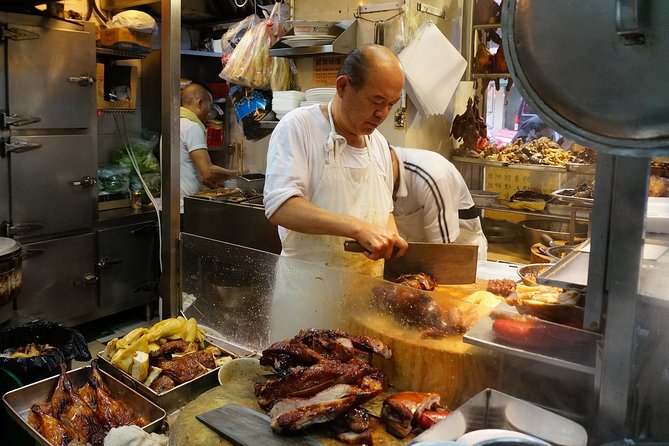
After Central, the route moves toward Wan Chai, a neighborhood where old tenement buildings, temples, restaurants, bars, and newer businesses sit close together. This mix gives the second half of the tour a different feel from Sheung Wan.
At a family-run restaurant with roots reaching back to the Qing dynasty, you taste a mixture of traditional roast meats, including char siu, served with rice and homemade sauces. The description connects char siu with English roast meat, another example of Hong Kong adapting outside influences into local food.
This is likely the heaviest tasting of the day. Roast meat, sauce, and rice can feel like a full meal after dim sum and noodles, so the tour works best when you treat each stop as a tasting and let the guide set the pace.
Southorn Playground may also appear near the end of the Wan Chai section. It is a local sports and recreation ground where people watch games, take a break, or eat nearby. This stop helps you see the district as a lived-in neighborhood rather than only a collection of restaurants.
Finishing with an egg tart on Hennessy Road
The final food stop is a bakery on Hennessy Road with a 60-year history. Here you finish with a dan tat, the Cantonese egg tart influenced by the English custard tart. It is a fitting dessert because it brings the tour’s main theme together: Cantonese technique shaped by contact with Britain.
The bakery was a personal favorite of a former Hong Kong governor, but the more useful reason to stop is that egg tarts are a familiar local bakery food and an easy final bite after a substantial morning. The pastry and custard also provide a clear contrast to the savory dishes before it.
The tour ends in Wan Chai after the egg tart. That location is convenient if you want to continue exploring the district, but it is not a hotel drop-off unless you have booked the longer five-hour option that includes pickup. Check the exact arrangement when booking, especially if you are visiting Hong Kong during a short port call.
Is $236.69 per person good value?
At $236.69 per person, this is not a budget food crawl. You are paying for the private guide, the planning, several tastings, neighborhood interpretation, and the ability to set a comfortable pace for your own group.
The value improves for families, couples, and small groups who want personal attention. Four older adults, for example, can benefit from a slower pace and help with directions, food choices, and public transport. One group also used the tour during a cruise port day and arranged comfortable transportation to and from the outing.
The price is harder to justify if your main goal is simply to eat five dishes. You could spend less by visiting restaurants independently, though you would lose the organized route, local explanations, and confidence that comes with a guide who knows where to go.
Group discounts are available, and the activity is private, so compare the total price for your group rather than judging only the per-person figure. If you value a strong first orientation to Hong Kong, the cost can make sense. If you already know the city and are comfortable ordering food on your own, look carefully at the budget.
Who should book this Hong Kong food tour?
I would recommend it most strongly to first-time visitors who want food and neighborhood sightseeing in one half-day. It also suits families with adult children, couples, cruise passengers, and older people who prefer a private pace rather than a crowded group tour.
The guide quality appears central to the experience. Andy is praised for humor, strong English, and a pace comfortable for people over 65. Mel is praised for making the tour personal and combining food with history and culture. You cannot choose a particular guide based on the supplied details, so treat those names as examples of the guide style you may receive, not a guarantee.
This is not the right choice for vegetarians, gluten-free diners, or people with seafood allergies. It is also a poor match if you want a seated restaurant tour with minimal walking. Families with children should notify the operator when booking.
Confirmation is provided at booking, and directions to the Sheung Wan meeting point are sent afterward. Free cancellation is available up to 24 hours before the start time. Since the tour is often booked about 60 days ahead, reserve early if your Hong Kong dates are fixed.
Should you book it?
Book this tour if you want a guided introduction to Hong Kong’s food culture, not just a list of restaurant stops. The combination of dim sum, noodles, milk tea, roast meats, and egg tart gives you a clear first taste of the city, while Sheung Wan, Central, the escalator, the tram, and Wan Chai fill in the setting.
Skip it if $236.69 feels too high for a four-hour outing, or if you have strict dietary limits. For everyone else, the private format, the strong guide feedback around Mel and Andy, and the use of ordinary public transport make this a practical first morning in Hong Kong Island.
FAQ
How long does the private food tour last?
The tour lasts approximately four hours.
Where does the tour begin?
The standard meeting point is 28 Des Voeux Road West in Sheung Wan, Hong Kong.
Where does the tour end?
The tour ends in Wan Chai after the egg tart tasting.
Is hotel pickup available?
Pickup may be offered, but a hotel pickup option does not turn the tour into a car tour. You will still walk and use Hong Kong’s public transport. Hotel pickup and drop-off are not included unless you book the five-hour option with pickup included.
What food is included?
The tastings include assorted dim sum, wonton noodles, traditional milk tea, barbecue roast meat with rice, an egg tart, assorted candies, and local snacks.
Is the tram ride included in the price?
The Hong Kong tram ride is part of the route, but the tram fare is at your own expense.
Is the tour suitable for vegetarians or people with food allergies?
No. The tour is not suitable for vegetarians, gluten-free diners, or people with seafood allergies.
Can I cancel for a full refund?
Yes. You can cancel at least 24 hours before the experience start time for a full refund. Changes or cancellations made less than 24 hours before the start time are not accepted for a refund.
Just added around Hong Kong
- Hong Kong Airport to Hong Kong City Private Arrival Transfer★ 4.5 · 3 reviews
- Hong Kong Palace Museum Ticket★ 5.0 · 3 reviews
- Hong Kong Peak Tram and Sky Terrace 428 Tickets (Optional)★ 3.5 · 22 reviews
- Hong Kong Observation Wheel Ticket★ 5.0 · 3 reviews
- Hong Kong Private Walking Tour with a Local★ 5.0 · 6 reviews
- Hong Kong Market Walking Tour & Chinese Cooking Class★ 5.0 · 24 reviews
- Hong Kong : Must-See Attractions Walking Tour With A Guide★ 5.0 · 7 reviews
- Hong Kong: Lantau Island & Tai O Cruise, Skip The Line Cable Car★ 3.5 · 4 reviews
Food & Drink, compared.

Authentic Local Food Tour in Central Shanghai
Read our review →
Beijing Hutong Walking Food and Beer Tour at Hidden Restaurants
Read our review →

Hong Kong’s Tin Hau Hidden Eats Food Tour with 7+ Local Tastings
Read our review →

Hong Kong Food Tour: Central and Sheung Wan Districts
Read our review →Browse the lists this tour appears in