
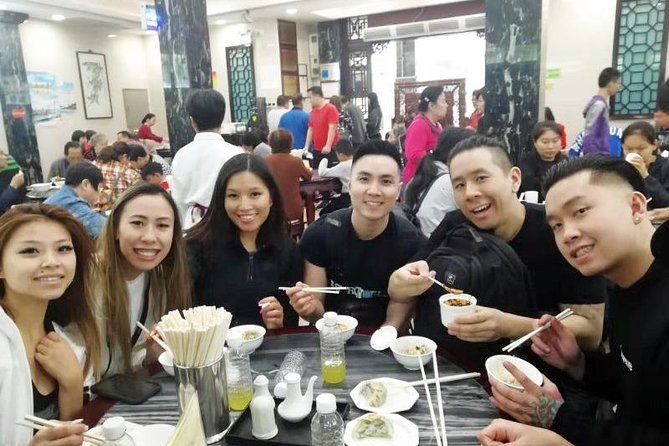
Reviewed · FOOD
Guangzhou Foodie Tour
Guangzhou’s best introduction may come on a plate, and this four-hour Liwan food walk gives you plenty of plates to consider. You move from herbal stalls and seafood counters to old streets, sampling prawns, roast duck, dim sum, wife cake, and sticky mango rice along the way.
I like two things here. First, the route connects food with local life rather than keeping you inside one restaurant. Second, the group size is capped at six, which makes it easier to ask questions and follow a guide such as Wei through narrow backstreets. The main drawback is simple: you need to be ready for a fair amount of walking, and the tour runs in all weather.
Key points at a glance
- Fresh prawns at Huangsha market: You explore a major seafood trading area and taste prawns during the visit.
- Qingping’s herbal market: The route opens with Guangzhou’s famous traditional medicine market, adding cultural context beyond food.
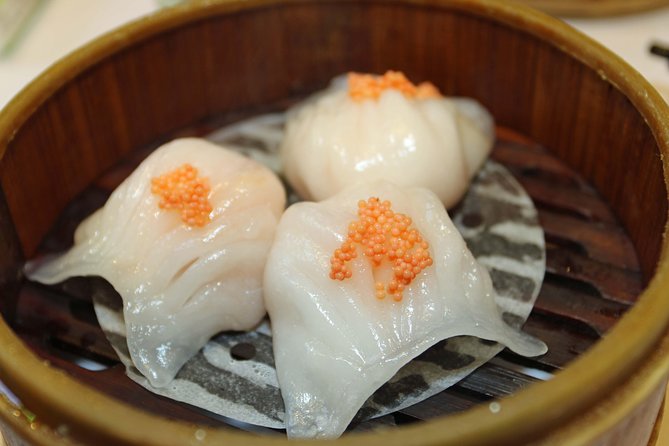
- A broad Cantonese tasting: Expect dim sum, roast duck, wife cake pastries, and glutinous rice with fresh mango.
- A small group of no more than six: This is a useful size for questions, food guidance, and moving through busy streets.
- A local Liwan finish: The walk ends with dim sum, leaving you near shops and local streets rather than at a hotel.
- A practical four-hour format: The 10:00 a.m. start gives you a full morning and early lunch without taking the whole day.
Why Liwan is the right place for a food walk
Liwan gives this experience its character. The district brings together old streets, food stalls, markets, restaurants, and long-running local trades. You are not simply checking off dishes in a dining room. You are walking through the setting where ingredients are sold and meals are part of ordinary city life.
That matters in Guangzhou, a city known for Cantonese cooking. A dish such as roast duck tells you something about technique and taste, but a seafood market shows you how freshness shapes the cuisine. A stop at the Qingping Medicine Market adds another layer, linking food traditions with the wider Cantonese habit of paying close attention to ingredients and their uses.
I also like the route’s mix of planned tastings and unscripted-looking street scenes. The oldest walking street on the route is described as a chaotic shopping area. That means you should expect noise, crowds, and plenty of visual distractions, not a polished museum visit. For many people, that is exactly the point. You get a sense of Guangzhou as a working city.
A few more Guangzhou trips to weigh up
- Private Guangzhou Food Tour Michelin Restaurant&Local Food Market
★ 5.0 · 32 reviews - Discovery more Guangzhou evening foodie tour with locals
★ 4.5 · 20 reviews - Guangzhou Evening Food Tour Through Local Neighborhood
★ 5.0 · 19 reviews
Starting at Huangsha Station at 10:00 a.m.
You meet at Huangsha Station in Liwan District at 10:00 a.m. The starting point is near public transportation, which makes it practical if you are arranging your own way across Guangzhou. Hotel pickup and drop-off are not included, so plan to reach the station yourself.
A morning meeting also makes sense for the food. You can begin with markets before the day has fully run on, then finish around dim sum and an early lunch. The tour lasts about four hours, so it should fit well into a day when you want to add more sightseeing later.
Since the tour operates in all weather, wear comfortable shoes and dress for the forecast. Guangzhou food walks are more enjoyable when you can focus on the next bite instead of worrying about wet pavement, heat, or uncomfortable clothing. There is no indication that the route is built around long indoor stays.
The group limit is six people. That is small enough for a guide to explain unfamiliar ingredients, help you decide what to try, and keep the route moving without the delays of a large party. A minimum of two people is required for a booking, so solo visitors should check availability before making plans.
Qingping Medicine Market: an unusual first stop
The first listed stop is the Qingping Medicine Market, where you spend about 30 minutes. Admission is free, and the visit gives you an early look at one of Guangzhou’s best-known traditional markets.
This is not a food tasting in the narrow sense. It is useful because it shows the importance of herbs and dried ingredients in local traditions. Your guide can help explain what you are seeing and connect the market to Cantonese food culture.
You should come with an open mind. A traditional medicine market can be more visually striking than immediately appetizing, with unfamiliar products and strong smells. That contrast gives the tour some balance. If every stop were a restaurant, you would miss part of the local context.
The 30-minute timing is also sensible. You get enough time to look around without letting the first stop use up the morning. Keep your phone ready if you enjoy market details, but stay aware of the group as the walk continues through active commercial areas.
Huangsha Seafood Market and the fresh prawn tasting
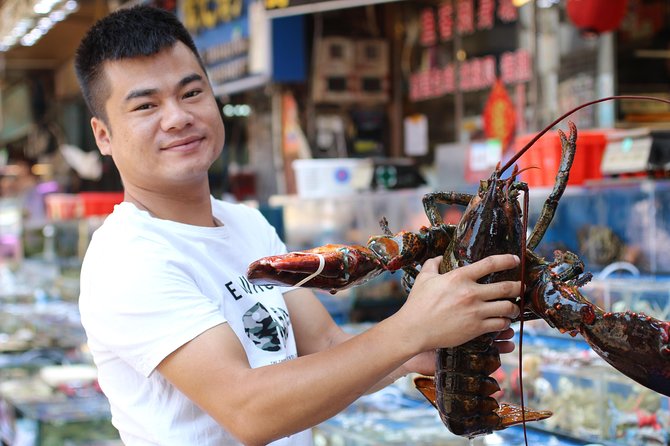
The next major stop is Huangsha Aquatic Product Trading Market. You spend about 45 minutes exploring this seafood center and tasting fresh prawns.
This is one of the tour’s strongest ideas. Cantonese cooking often places the ingredient front and center, and a seafood market lets you see that principle before you sit down to eat. Instead of hearing a general explanation about freshness, you encounter the trade itself, with seafood moving through a major market environment.
The prawn tasting makes the stop more than a sightseeing detour. You get a direct taste of what the market is about. The information provided does not promise a full seafood meal, so think of this as one tasting within a longer food route, not an all-you-can-eat stop.
Markets can be intense. You might find wet floors, strong odors, noise, and close quarters. That is part of the setting, but it may not suit anyone who wants a quiet or polished morning. Wear shoes with a good grip and keep your belongings secure in crowded areas.
I would pay close attention to the guide here. The value comes from understanding what you are seeing, not only from eating a prawn. With a small group, you have a better chance to ask about ingredients, buying habits, and the place seafood holds in Cantonese meals.
Same country, a completely different kind of day:
- Guided Cycle Tour of Guangzhou
★ 5.0 · 164 reviews - Customised Private Guangzhou City Tour with Flexible Itinerary
★ 5.0 · 107 reviews - Gulong Gorge Skywalk Glass Bridge and Waterfall View Private Tour
★ 5.0 · 103 reviews - Private Guangzhou Full Day City Tour with Old and New Highlights
★ 5.0 · 62 reviews
Old streets, food stalls, and the everyday side of Guangzhou
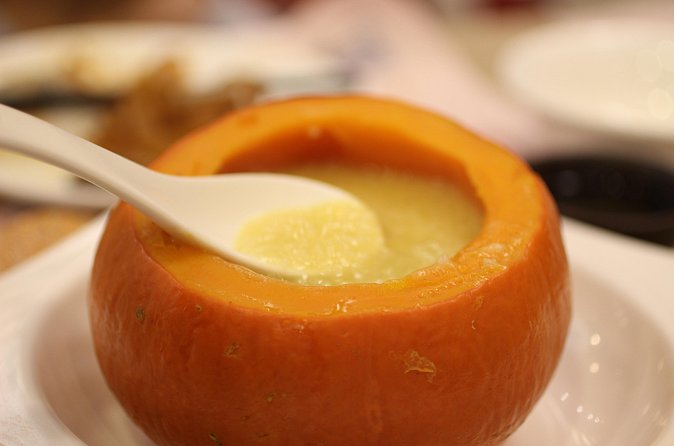
The walk continues through ancient sidestreets and the oldest walking street in Guangzhou. This part is described as a chaotic shopping frenzy, so you should expect a lively commercial stretch rather than a calm heritage lane.
That description helps set the right mood. You may pass food stalls, shops, and crowds while moving through streets that have long served local residents. The route lets you compare formal market spaces with smaller street businesses and food counters.
This is where the tour’s walking format earns its keep. You are not only sampling prepared food. You are seeing where people shop, how streets are used, and how old areas remain part of the current city. The guide’s comments about Guangzhou’s history and cuisine give the movement between tastings a clear purpose.
The tradeoff is pace. Four hours is enough for several stops, but not enough to linger everywhere. If you want extended shopping time or careful photography, you may need to return to the area later. The tour finishes in Liwan, so you can continue exploring after the formal route ends.
The Cantonese dishes you can expect to taste
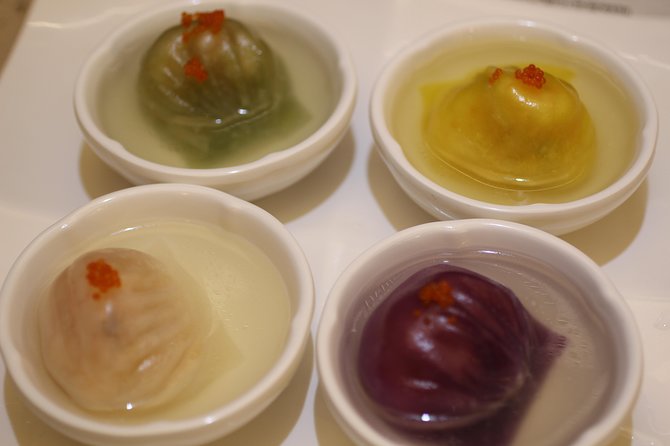
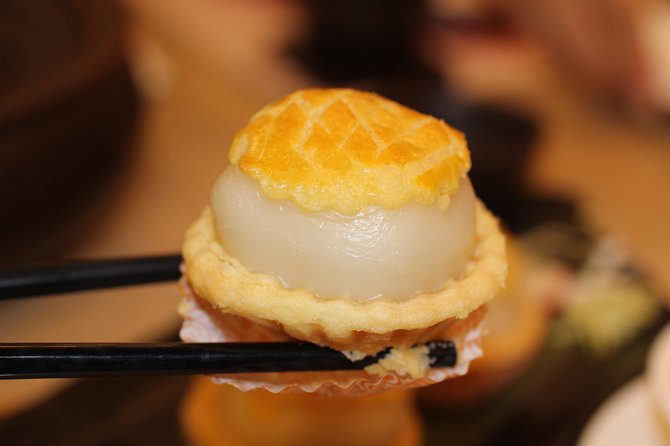
The food list covers both savory favorites and sweets. You may sample Cantonese dim sum, roast duck, fresh prawns, wife cake pastries, and glutinous mango rice.
Dim sum is the natural finish. Guangzhou is closely linked with the tradition of small dishes shared over tea, and ending with dim sum turns the final stop into a proper meal rather than a token bite. The exact dishes are not specified, so do not book expecting a particular dumpling or bun.
Roast duck brings a richer, meatier note to the route. The description highlights it as succulent, which suggests a tasting portion rather than a full roast duck dinner. It gives you a chance to compare the savory dishes with the lighter seafood and delicate dim sum.
The sweet stops make the route more varied. Wife cake is a flaky pastry with a sweet filling, while glutinous mango rice combines sticky rice with fresh mango. If you usually focus on savory food tours, these desserts are a useful reminder that Cantonese eating is not limited to dim sum and meat.
Alcoholic drinks are not included, though they can be purchased. Food tastings, the professional guide, and gratuities are included in the $65 price. Since the route includes several markets, walking, explanations, and a dim sum finish, the price is reasonable for someone who wants a guided introduction rather than a list of restaurants to find alone.
The value depends on your appetite and expectations. If you want a large meal with generous portions, $65 may feel less attractive. If you want help navigating unfamiliar markets, a planned range of tastings, and context about Cantonese cuisine, the cost is easier to justify.
What the four-hour pace feels like
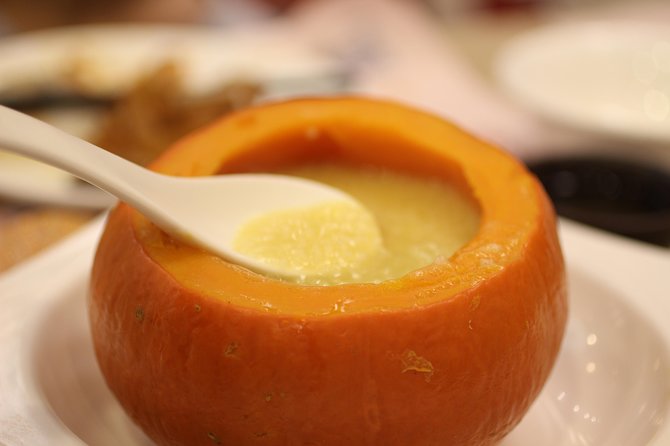
Four hours is long enough to create a proper food outing but short enough to leave room in your day. You move through markets and streets, stop for tastings, and finish with dim sum. The regular food breaks help, but this remains a walking tour.
One participant described the experience with Wei as informative and noted the amount of walking, balanced by regular food stops and time in the backstreets. That is a useful way to plan. Do not treat this as a seated tasting menu. Bring the energy for a morning on foot.
The route may also include food you have not tried before. The guide can help make the experience less awkward, particularly at market stops where you may not know what to look for. The small-group format matters here. A party of six or fewer is easier to gather around a stall or counter than a large tour group.
The tour is suitable for most people according to the available details, but the walking and market conditions still deserve attention. Comfortable footwear is the most practical choice. Dress for rain or heat, since the tour runs regardless of weather.
How the guide shapes the experience
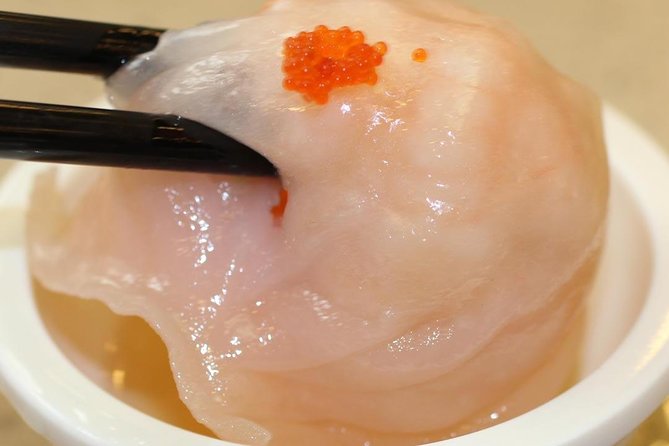
A food walk succeeds or fails on the guide. The guide needs to do more than lead you between stops. You want clear explanations, help with unfamiliar food, and enough local background to make the markets meaningful.
Wei is specifically named in one account of the tour and is described as informative and accommodating. That account also highlights the regular tastings and movement through Guangzhou’s backstreets. Guide assignments can vary, so you should not assume Wei will lead every departure, but the small group gives the guide room to work with your questions.
The tour includes a professional guide and gratuities. You are not left to interpret the markets alone, and you do not need to calculate a tip at the end. Alcohol remains your own expense, as does transportation to the starting point and away from the finish.
At the end, the guide can assist you in getting a taxi back to your hotel. You can also stay in the local area and continue shopping. That is a helpful finish because Liwan offers more to see after the four-hour route ends.
Who will get the most from this tour
I would choose this tour if you want your first Guangzhou food experience to include markets and streets, not just restaurant tables. It suits curious eaters who enjoy trying several small portions and learning why ingredients matter.
It is also a good fit for couples, friends, and small families who want a guide but do not want to join a large group. The maximum of six creates a more personal setting without making the tour private.
You may want another type of experience if you dislike seafood markets, crowded shopping streets, or food with unspecified menus. The route includes a range of tastings, but the exact dishes and serving sizes are not set out in detail. Anyone seeking a quiet, slow meal should also look elsewhere.
This is a particularly useful first-day activity if you want to understand Guangzhou’s food culture before eating on your own. After four hours of markets, street food areas, and dim sum, restaurant menus should feel less unfamiliar.
Practical details before you book
The price is $65 per person. Food tastings, the guide, and gratuities are included. Alcohol is extra, and hotel pickup and drop-off are not part of the arrangement.
You receive a mobile ticket, and booking confirmation is sent within 48 hours, subject to availability. The tour requires at least two people and accepts no more than six per booking.
Free cancellation is available if you cancel at least 24 hours before the 10:00 a.m. start time. Cancellations or changes made inside that 24-hour window are not refunded or accepted, with cut-off times based on Guangzhou local time.
The end point is in Liwan District, where the tour finishes with dim sum. The guide can help you arrange a taxi, or you can continue shopping nearby. That gives you more flexibility than a route that ends far from the area you have just explored.
Should you book the Guangzhou Foodie Tour?
Book it if you want a small-group introduction to Cantonese food with real market context. The strongest parts are the Huangsha seafood visit with fresh prawns, the range of savory and sweet tastings, and the chance to walk through Liwan’s older streets with a local guide.
Think twice if your priority is a long restaurant meal, fixed menu choices, or minimal walking. For everyone else, $65 buys a useful four-hour orientation to Guangzhou’s food culture, with enough variety to help you decide what to seek out next.
FAQ
Where does the Guangzhou Foodie Tour start?
It starts at Huangsha Station in Liwan District, Guangzhou, at 10:00 a.m. The area is near public transportation.
How long does the tour last?
The tour lasts approximately four hours.
What food is included?
Food tastings include Cantonese dim sum, roast duck, fresh prawns, wife cake pastries, and glutinous mango rice with fresh mango. The exact dishes and portions are not specified.
Does the tour include hotel pickup?
No. Hotel pickup and drop-off are not included. At the end, the guide can assist you in getting a taxi back to your hotel.
How many people can join?
A minimum of two people per booking is required, and each booking can have a maximum of six people.
What happens if I need to cancel?
You can receive a full refund if you cancel at least 24 hours before the experience start time. Cancellations or changes made less than 24 hours before the start are not accepted for a refund.
Just added around Guangzhou
- Big Buddha Mountain Martial Art Culture Countryside Private Tour★ 5.0 · 31 reviews
- Hong Kong One Day Private Tour from Guangzhou by Bullet Train★ 5.0 · 3 reviews
- Day Tour learning Kung Fu and Lion Dance in Bruce Lee’s Hometown★ 5.0 · 7 reviews
- Glass Bridge and Water Falls Private Car Service from Guangzou★ 4.5 · 3 reviews
- Seven Star Crag and Dinghu Mountain private day tour from Guangzhou★ 5.0 · 5 reviews
- Seven Star Crags Karst Cave Mirror Lake Bird Islands Private Tour★ 5.0 · 30 reviews
- Private Tour: Guangzhou City Sightseeing Including Yuexiu Park★ 3.5 · 3 reviews
- Private flexible Guangzhou City Sightseeing Tour with Dim-Sum Tasting★ 5.0 · 5 reviews
Food, compared.

Authentic Local Food Tour in Central Shanghai
Read our review →
Beijing Hutong Walking Food and Beer Tour at Hidden Restaurants
Read our review →

Eat Like a Local Through Shanghai’s French Concession
Read our review →
Hong Kong’s Tin Hau Hidden Eats Food Tour with 7+ Local Tastings
Read our review →
Browse the lists this tour appears in