
Reviewed · DUNHUANG TOURS
Your Private Gold Medal Tour Guide Service
Dunhuang makes an excellent base for exploring the old Silk Road, and Steven Kang’s private service gives you something many fixed tours cannot: a route shaped around your available days. He can help plan more than one day in Gansu and beyond, while his listed day includes Yumen Pass, the Han dynasty Great Wall, and Yangguan Historic Sites.
I like the small private format, with one group of up to 10 people, and I like Steven’s strong English and formal National Gold Medal Tour Guide title. The main catch is simple: $200 is only the guiding fee. You still pay for entrance tickets, transport, meals, and lodging.
Key points at a glance
- Steven Kang’s national guide title: He was awarded the honorary National Gold Medal Tour Guide title by China’s Ministry of Culture and Tourism.
- A private group of up to 10: You do not share the guide with strangers, and the route can be discussed around your schedule.
- Silk Road ruins beyond central Dunhuang: Yumen Pass, the Han Great Wall, and Yangguan bring the region’s frontier past into view.
- Flexible transport choice: The service can arrange a car, or you can rent one yourself.
- The $200 price is not all-inclusive: Entrance fees, vehicle hire, hotel stays, lunch, and dinner are separate.
- A useful option for longer journeys: Steven has arranged trips lasting six to nine days between places such as Xining, Qinghai, Dunhuang, Gansu, Sichuan, and Chengdu.
Why Dunhuang deserves more than a quick stop
Dunhuang is one of those Chinese destinations where the setting and the past work together. Sand dunes surround the city, while Buddhist grottoes, frontier gates, and old defensive walls point to the town’s place on the Silk Road.
You can use this service for a single day, but the wording of the offering also makes it suitable for a longer plan. You tell Steven how many days you have in the city, and he helps shape a route through western China. That matters here because the sights are spread out, and the best use of your time depends on which sites matter most to you.
I would not think of this as a standard sightseeing loop with every minute fixed. It is closer to hiring a private local guide who can help you decide how to divide your time. You should still ask for a written plan before booking, especially if you want to include the Mogao Grottoes, the Western Thousand Buddhas Grottoes, White Horse Stupa, or the desert sites in addition to the listed stops.
A few more China trips to weigh up
- Beijing: Forbidden City Tour(Group/Private)-Tickets Included
★ 4.8 · 7,974 reviews - Beijing: T-Square & Forbidden City Group or Private Tour
★ 4.8 · 4,446 reviews - Beijing:Mutianyu Great Wall Private Trip with English Driver
★ 5.0 · 1,263 reviews
What Steven Kang brings to the day
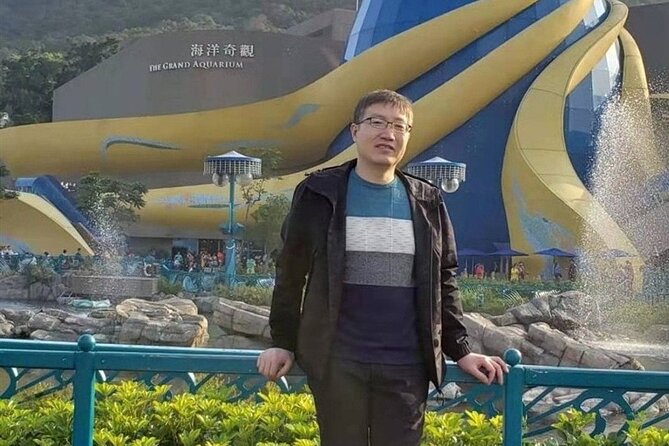
Steven Kang holds the honorary title of National Gold Medal Tour Guide, awarded by China’s Ministry of Culture and Tourism. That title does not tell you exactly how your own day will run, but it does give you a useful reason to expect a guide with serious professional experience.
English ability is another practical strength. Previous extended trips arranged and guided by Steven included a six-day journey from Xining through Qinghai to Dunhuang, as well as a nine-day trip beginning in Dunhuang and ending in Chengdu through Gansu and Sichuan. Those journeys included hotels, a car, and a driver, showing that his service can extend beyond a single day of guiding.
You should note the wording carefully. The $200 booking includes a local guide, not a complete tour package. Steven can arrange a car, but the vehicle is not included in the advertised price. This gives you control, though it also means you need to settle the transport cost and plan before departure.
The 8 a.m. start and a full 10-hour frame
The day begins at 8 a.m. and lasts about 10 hours. That is a useful amount of time for the outlying historic sites, but it is also a long day in a desert region. I would treat the start time as important rather than optional, since an early departure gives you more room for driving, visits, and questions.
The private format should make the pace easier to manage than a large group outing. You can spend more time on a site that interests you, or ask Steven to adjust the balance between ruins, museums, and Buddhist places. Still, the route details do not give exact driving times between stops, so ask how much time will be spent in the car.
The tour requires good weather. If poor weather causes cancellation, you can accept another date or receive a full refund. That is sensible for a route involving exposed historic sites, but it also means you should avoid building an unchangeable onward connection too close to this day.
Yumen Pass and the Han dynasty Great Wall
Yumen Pass is the day’s clearest link to frontier travel on the ancient Silk Road. Steven takes you to Yumen Pass and the Great Wall of the Han dynasty, with about two hours listed for this portion.
These are not the grand stone walls many people picture from later periods. The Han dynasty frontier works belong to a much earlier chapter of Chinese history, and their importance comes from what they reveal about movement, defense, and control along the western edge of the empire. At Yumen Pass, the appeal is the sense of distance and exposure, not a polished city monument.
I like this stop because it gives the day historical shape. The Mogao Grottoes tell you about religion and art, while Yumen Pass and the Han Great Wall show how people protected routes through difficult country. If you care about the Silk Road as a working network rather than just a phrase in a guidebook, this is one of the most useful parts of the itinerary.
The tradeoff is that the admission ticket is not included, and the car is also extra. You should confirm both costs before setting your budget. You should also ask Steven whether the two-hour estimate includes transport within the site area or only time at the historic remains.
Same country, a completely different kind of day:
- From Beijing: Mutianyu Great Wall Tours with Options
★ 4.9 · 9,216 reviews - Beijing: Mutianyu Great Wall Daily Tour with Ticket & Lunch
★ 5.0 · 3,056 reviews - All-Inclusive Tour: Tiananmen Square, Forbidden City, Great Wall
★ 5.0 · 2,873 reviews - MuBus: Mutianyu Great Wall ENG/ESP/RUS Guided Bus Tour
★ 5.0 · 2,361 reviews
Yangguan Historic Sites and the old passport souvenir
Yangguan Historic Sites form another important stop connected with the western frontier. The visit includes the site museum, and Steven’s office provides a special souvenir: a copy of what is described as the oldest passport from the Han dynasty.
That detail gives this stop a more personal angle. Instead of seeing only walls and ruins, you get a small object tied to the idea of movement across a controlled border. The passport copy is not included as a separate item in the price details, so confirm exactly how it is provided if it matters to you.
The listed itinerary gives two minutes for Yangguan. That is unusually brief for a museum and historic site, so I would treat it as a detail that needs clarification before booking. It may refer to a short segment of the day rather than the entire visit, but the supplied information does not explain it. Ask for the expected time at the museum and the ruins.
Entrance to Yangguan is not included. That is a recurring pattern on this service: the guide fee is clear, while the admission and transport budget must be added by you.
Buddhist grottoes and building the right route
Dunhuang is famous for Buddhist cave sites, especially the Mogao Grottoes and the Western Thousand Buddhas Grottoes. The overview also names White Horse Stupa among the historic places available in the wider area.
These sites are not listed as fixed stops in the three-part day, so do not assume the $200 service automatically includes their tickets or a visit. The strongest use of Steven’s flexibility may be asking him to build a route around the sites you most want to see, then confirming what fits into one 10-hour day.
I would tell him your priorities in advance. If the Mogao Grottoes are your main reason for coming to Dunhuang, ask whether your desired visit can be arranged alongside the western ruins, or if it deserves its own day. If you are more interested in Han frontier sites, you may prefer to give Yumen Pass, the Han Great Wall, and Yangguan most of your time.
The value of a private guide is greatest when your interests are specific. A group of ten history-minded people could make good use of this service. A couple wanting only a quick orientation might find a full private day more than they need.
How the $200 group price works
The advertised price is $200 per group, for up to 10 people. That is not $200 per person. For a full group, the guiding cost works out to $20 each. For two people, it is $100 each before transport and admissions, so the value changes sharply with group size.
I see the price as reasonable for a private guide with a flexible route, especially if you are splitting the cost among several people. The guide can help organize a longer western China itinerary, and the private arrangement avoids paying for seats or services you do not need.
The price is less attractive if you expect a vehicle, tickets, meals, and hotels to be included. They are not. The excluded items are:
- Entrance fees for the sites
- Air-conditioned vehicle
- Hotel accommodation
- Lunch
- Dinner
The transport question deserves special attention. Steven can arrange a car, or you may rent one yourself. If you rent your own vehicle, confirm whether the guide can meet you at the agreed starting point and whether any route restrictions or parking issues apply. Those details are not provided, so get them in writing.
Who gets the most from this private service
I would consider this service for a small group that wants an English-speaking guide and has more than one historic interest in Dunhuang. It suits people who want to combine Buddhist art, Han frontier remains, museums, and Silk Road geography rather than ticking off one famous attraction.
It also fits a wider western China trip. Steven has handled journeys linking Dunhuang with Xining, Qinghai, Gansu, Sichuan, and Chengdu. If you are building a route across several provinces, asking one guide to help with the overall plan may reduce the strain of arranging each section separately.
Families can participate, but children must be accompanied by an adult. Most people can take part, and the service is near public transportation. Since the day includes exposed historic sites and depends on weather, ask about the conditions expected for your date and how much walking is involved at each stop.
I would be more cautious if you want a fully packaged holiday. This is not advertised as a package with meals, accommodation, and transport bundled into one price. It is a guide service, and you need to make the other arrangements clear.
What the feedback tells me about service quality
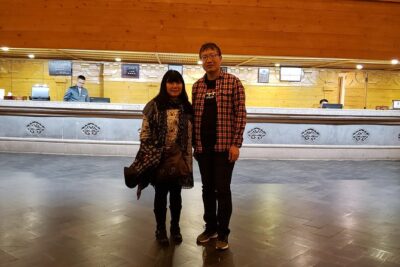
The strongest pattern in the available feedback is organization over several days. Steven is described as highly reliable, with strong English, and as someone who arranged hotels, a convenient car, and a good driver on longer journeys.
Another account describes Dunhuang as a magical setting, pairing its sand dunes with unusual historical and cultural importance. That matches the real appeal of the place: you are not visiting ruins in isolation. The surrounding desert gives every gate, wall, and cave site a sharper sense of place.
The sample is small, with three five-star ratings, so I would not treat it as a guarantee. I would treat it as a reason to ask Steven for the same level of planning shown in those longer journeys: a day-by-day schedule, transport details, ticket responsibilities, and a clear understanding of what your $200 covers.
Booking questions worth asking before you pay
I would send Steven a short list of direct questions before confirming:
- Can the Mogao Grottoes or Western Thousand Buddhas Grottoes be added?
- Does the 10-hour period include all driving time?
- What car options and prices are available?
- What is the expected admission cost for Yumen Pass and Yangguan?
- What exactly does the two-minute Yangguan entry mean?
- Where will pickup take place?
- Can the day be adapted for a longer stay in Dunhuang?
- If I rent a car, where should I meet the guide?
The booking confirmation is issued at the time of reservation. Free cancellation is available up to 24 hours before the local start time for a full refund. Changes made within 24 hours are not accepted, and a late cancellation is not refunded, except that bad weather may bring a new date or full refund.
Should you book Steven’s Dunhuang guide service?
I would book it if you want a private English-speaking guide, can share the $200 cost with a group, and care about shaping the day around Han frontier sites, Buddhist grottoes, or a wider western China route. Steven’s national guide title and experience arranging multi-day journeys add useful confidence.
I would not book it without first confirming transport and entrance fees. The service offers flexibility, not an all-in price. If you understand that distinction, it can be a practical way to make sense of Dunhuang’s widely spread historic sites and to give the city more than a rushed stop.
FAQ
How much does the private tour cost?
The price is $200 per group of up to 10 people.
What does the $200 price include?
The price includes a local guide.
Are entrance tickets included?
No. All entrance fees are excluded.
Is transportation included?
No. An air-conditioned vehicle is not included. The provider can arrange a car, or you may rent one yourself.
Does the tour include meals?
No. Lunch and dinner are not included.
Does the tour include a hotel?
No. Hotel accommodation is excluded.
What time does the tour start?
The stated start time is 8 a.m.
How long does the experience last?
It lasts approximately 10 hours.
Is this a shared group tour?
No. It is a private activity, and only your group participates.
Can I cancel for a full refund?
Yes, if you cancel at least 24 hours before the local start time. Cancellations made less than 24 hours in advance are not refunded. If poor weather causes cancellation, you can receive a different date or a full refund.
Just added around China
- Hong Kong Airport to Hong Kong City Private Arrival Transfer★ 4.5 · 3 reviews
- Hong Kong Observation Wheel Ticket★ 5.0 · 3 reviews
- Hong Kong Palace Museum Ticket★ 5.0 · 3 reviews
- Hong Kong Peak Tram and Sky Terrace 428 Tickets (Optional)★ 3.5 · 22 reviews
- Hong Kong : Must-See Attractions Walking Tour With A Guide★ 5.0 · 7 reviews
- Hong Kong Private Walking Tour with a Local★ 5.0 · 6 reviews
- Hong Kong Market Walking Tour & Chinese Cooking Class★ 5.0 · 24 reviews
- Hong Kong: Lantau Island & Tai O Cruise, Skip The Line Cable Car★ 3.5 · 4 reviews
Dunhuang Tours, compared.
8-Day Silk Road Trip of Dunhuang, Jiayuguan, Zhangye with Accommodation
Read our review →
3-Day Private Silk Road Tour of Dunhuang: Mogao Grottoes, Yulin Grottoes, Crescent Moon Pool
Read our review →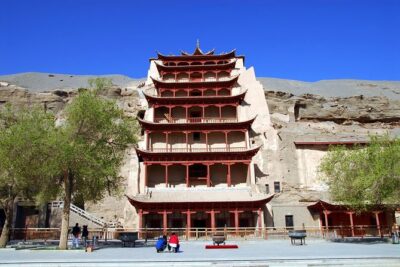
Dunhuang Private Silk Road Day Tour: Mogao Caves, Crescent Spring
Read our review →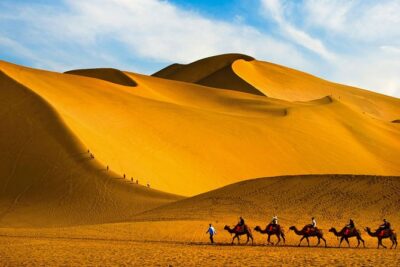
Dunhuang Private Day Tour Mogao Grottoes, Singing Dunes and Crescent Moon Spring
Read our review →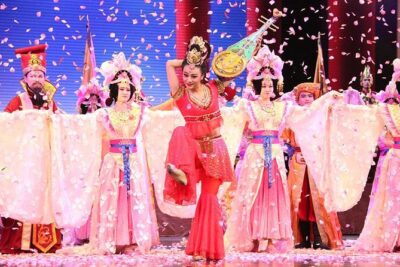
Dunhuang Day Tour: Mogao Grottoes, Singing Sand Dunes and The Silk Road Show
Read our review →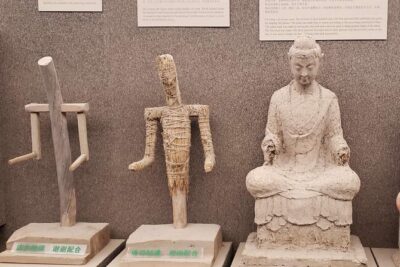
Classic The Silk Road Half Day Tour: The World Heritage –Mogao Grottoes
Read our review →Browse the lists this tour appears in