
Reviewed · DUNHUANG TOURS
8-Day Silk Road Trip of Dunhuang, Jiayuguan, Zhangye with Accommodation
The most memorable part of this 8-day private journey is its sweep through the Hexi Corridor, where desert, Buddhist art, ancient walls, and Silk Road ruins appear in one carefully arranged route. You move from Dunhuang’s Mogao Caves to the colored rock of Zhangye, with Jiayuguan and remote Guazhou in between.
I like the all-inclusive structure, with seven breakfasts, lunches, and dinners, plus hotels, bottled water, transport, and airport or railway transfers. I also like the access to less familiar places such as Yulin Caves and Suoyangcheng, not just the headline sights.
The main consideration is distance. Several days involve long drives and exposed outdoor sites, and the Silk Road dance show does not run from November through March. The schedule is private, but some timings, especially around Horse Hoof Temple, should be confirmed before you pay.
Key points at a glance
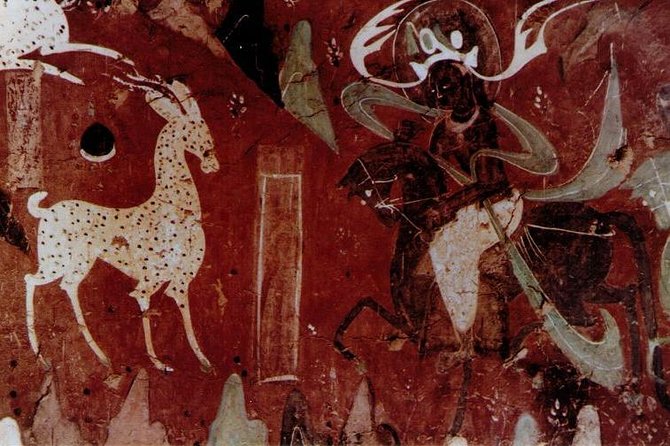
- Mogao Caves and Digital Film Center: Spend about four hours with Dunhuang’s finest Buddhist art, including murals and painted statues in a major cave complex.
- Desert by camel: Ride across Mingsha Shan, or Singing Sand Mountain, and see the Crescent Moon Spring on a three-hour visit.
- Remote Silk Road ruins: Reach Yumen Pass, the Han Great Wall, Yulin Caves, and Suoyangcheng, places that require more planning than a simple city tour.
- Jiayuguan’s western walls: Visit the Ming-era Jiayuguan Pass and climb the Overhanging Great Wall.
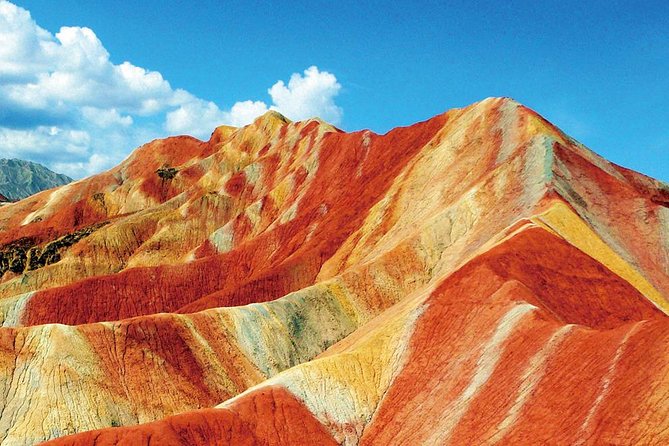
- Zhangye’s colorful rock: Allow a full day for Zhangye Danxia Geopark, then add Buddhist sites and Pingshanhu Grand Canyon.
- Easy trip planning: The $2,199 price includes seven hotel nights, all meals, private transport, a local guide, admissions, and transfers.
Why this route works for Silk Road history
The Hexi Corridor is a natural travel route through Gansu Province, linking China’s interior with the old roads toward Central Asia. This trip follows that corridor from Dunhuang toward Zhangye, so the sights fit together rather than feeling like unrelated day trips.
You see several layers of the past. Buddhist cave art shows how religion and trade moved through the region. Han and Ming walls show how rulers guarded the western frontier. Ruined towns such as Suoyangcheng help you picture the settlements that once supported merchants, soldiers, officials, and animals crossing the desert.
That variety is the tour’s greatest strength. If you only visit Dunhuang, you get the Mogao Caves and desert. If you only visit Zhangye, you get Danxia rock and Buddhist sites. Here, you see both, along with the harder-to-reach ruins between them.
The route also benefits from private touring. Steven Kang is identified as the organizer and guide contact, and the trip is designed for your own group rather than a mixed coach party. That matters in western China, where road transfers and site timing can make independent planning awkward.
Other China days worth booking alongside this:
- From Beijing: Mutianyu Great Wall Tours with Options
★ 4.9 · 9,216 reviews - Beijing: Forbidden City Tour(Group/Private)-Tickets Included
★ 4.8 · 7,974 reviews - Beijing: T-Square & Forbidden City Group or Private Tour
★ 4.8 · 4,446 reviews
Day 1: A simple arrival in Dunhuang
Your guide meets you at Dunhuang Airport or Dunhuang Railway Station and takes you by air-conditioned car, van, or bus to the hotel. The first day is intentionally light, giving you time to settle into a four-star Dunhuang property.
This is a sensible start after a long journey. There is no forced sightseeing, no rushed museum visit, and no need to find your own way from the station. Bottled water is provided during the trip, and the included hotel night gives you a firm base before the demanding sightseeing begins.
The accommodation is described as comfortable, with air-conditioning. Hotels in Zhangye and Jiayuguan are also included, though the specific names and room categories are not provided, so I would ask for those details if hotel quality is central to your decision.
Day 2: Mogao’s caves, a pagoda, and a seasonal stage show
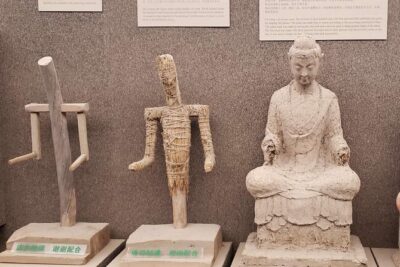
The Mogao Caves are the artistic center of the trip. The complex contains 492 caves, around 45,000 square meters of murals, and about 2,400 painted statues, although the caves open to the public can vary. Your visit includes the Digital Film Center and about four hours at the site.
The film center is useful because it provides background before you enter the caves. It also helps explain why access is managed carefully. These are not empty chambers with a few old paintings. They are fragile religious spaces, and the art spans centuries of changing styles, patrons, and beliefs.
You should expect a controlled visit rather than the freedom to wander into every cave. The value comes from having a guide explain what you are seeing, since a dark room with a painted figure can be hard to read without context.
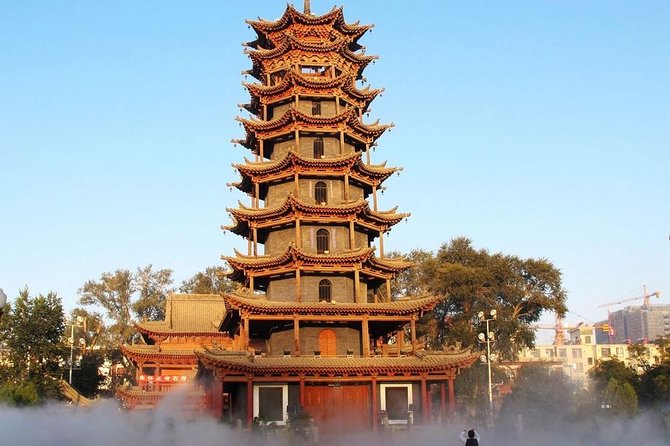
After lunch, you visit the White Horse Pagoda. The stop lasts about 30 minutes, so treat it as a compact cultural visit rather than a major afternoon attraction.
In the evening, the Silk Road dance drama at Dunhuang Theater lasts about two hours. It gives the day a more theatrical finish, with a staged presentation of regional history and culture. The important planning point is the season: the show is not available from November through March.
If you travel in winter, do not assume a substitute performance is included. Ask the operator what replaces it, if anything. In warmer months, the show adds variety after a day spent looking closely at murals and statues.
Day 3: Han frontier ruins and the Singing Sand Mountain
Yumen Pass and the Great Wall of the Han Dynasty offer a different view of Dunhuang. This is frontier country, and the remains show how the Han government protected its western edge while supporting trade routes toward the region beyond.
The two-hour visit is valuable because it takes you away from the polished presentation of a major attraction. The structures are tied to military control, communication, and movement across a difficult environment. The surrounding openness helps you understand why a pass or watchtower mattered.
Expect sun, wind, and little shade at outdoor ruins. A hat, water, sunscreen, and shoes with a good grip will make this day easier. Bottled water is included, but you should still carry what you need for the walk between stops.
The afternoon brings Mingsha Shan, also called the Echoing-Sand Mountain or Singing Sand Dunes. The three-hour visit includes Crescent Moon Spring and a camel ride in the dunes.
The camel ride is optional in practical terms, even though it is part of the planned desert experience. If you prefer to stay on foot, the dunes still provide the main attraction. If you ride, expect a slow route through the sand rather than a fast or adventurous excursion.
Crescent Moon Spring is the visual counterpoint to the dunes, with water set among the sand. This is one of the most accessible and photogenic parts of the route, but it can also be one of the busiest-feeling stops. The desert is not difficult to appreciate, though climbing sand is tiring, especially after the morning ruins.
Same country, a completely different kind of day:
- Beijing: Mutianyu Great Wall Daily Tour with Ticket & Lunch
★ 5.0 · 3,056 reviews - All-Inclusive Tour: Tiananmen Square, Forbidden City, Great Wall
★ 5.0 · 2,873 reviews - MuBus: Mutianyu Great Wall ENG/ESP/RUS Guided Bus Tour
★ 5.0 · 2,361 reviews - 4-Hour Small Group Tour to Forbidden City with Entry Tickets
★ 5.0 · 1,863 reviews
Day 4: Yulin Caves and the abandoned city of Suoyangcheng
Yulin Caves are often treated as a sister site to Mogao, sharing related Buddhist themes, artistic forms, and painting traditions. The visit lasts about two hours, making it shorter than Mogao but still important for anyone interested in the development of cave art along the Silk Road.
The contrast is useful. Mogao is the famous centerpiece, while Yulin helps show that Dunhuang’s artistic world was not limited to one cave complex. You get another chance to look at murals and religious images with the historical context already fresh from the previous day.
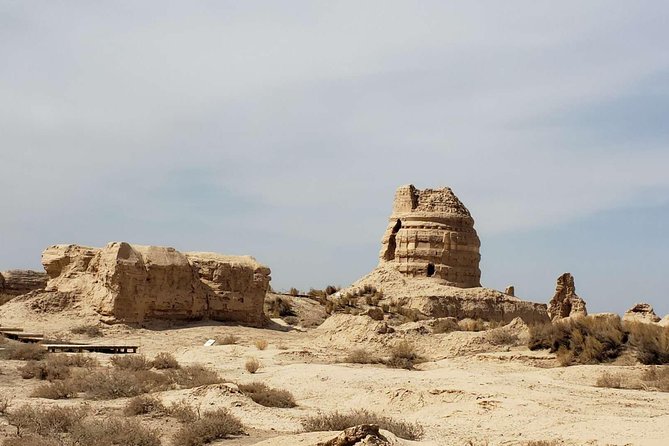
After lunch, the tour continues to Suoyangcheng Relic Site. This former Silk Road stop was important enough to be listed by UNESCO in 2015, and the visit takes about two hours.
Ruins require more imagination than intact monuments. You may see traces of a former settlement rather than a complete town, so this stop will appeal most to you if you enjoy archaeology and the shape of old routes. It also gives the tour a stronger sense of scale. The Silk Road was not only a line between famous cities. It depended on many smaller settlements that supplied and protected movement through the desert.
The day ends with transfer to Guazhou. Since the tour changes bases during this section, pack so that your essentials are easy to reach. The road time is part of the experience, but it can feel long if you prefer a slower holiday with fewer hotel changes.
Day 5: Jiayuguan Pass and the Overhanging Great Wall
The route reaches Jiayuguan, home to the western end of the Ming Dynasty Great Wall. At Jiayuguan Pass and the Great Wall Museum, you get a clear sense of how the Ming frontier system was organized.
This is not the same experience as seeing the wall near Beijing. The western end feels more connected to open desert and long-distance movement. The pass was a gateway, defensive post, and marker of where the fortified Ming world met the road farther west.
The visit lasts about two hours, followed by the Overhanging Great Wall for roughly 90 minutes. The second stop involves climbing, so you should be comfortable with stairs and uneven surfaces. The tour description says you climb the wall in western China, but it does not provide an accessibility route or difficulty grade.
I like having both sites in one day. The pass gives you architecture and museum context, while the Overhanging Great Wall supplies the physical challenge and views. The drawback is that outdoor conditions can make the climb tiring, especially in strong sun or wind.
Day 6: A full day at Zhangye Danxia
Zhangye Danxia Geopark receives about eight hours, which is appropriate for a major natural attraction reached after the previous transfers. The colored rock formations are the visual high point for many people, with bands and folds that give the area its famous painted appearance.
The tour information also refers to painted bricks from Wei and Jin Dynasty tombs, describing scenes tied to politics, economy, military life, and culture. That detail appears alongside the Danxia visit, so confirm the exact order and location of this portion with the operator. It may be an additional cultural stop within the day, but the published timing is not fully clear.
A full day is better than a quick photo stop here. You have time to take in several viewing areas and see how the rock changes with distance and light. At the same time, the park visit is largely about scenery, so anyone seeking long museum talks or detailed excavation work may find the balance tilted toward nature.
Good shoes matter. Viewing areas can involve walking and steps, and the itinerary does not promise a private vehicle inside every scenic section. The air-conditioned transport is especially useful in this part of Gansu, where road transfers and outdoor exposure can add up.
Day 7: Zhangye’s Giant Buddha and Horse Hoof Temple
Dafo Temple, or the Giant Buddha Temple, brings the route back to religious art. It is described as home to the biggest Nirvana Buddha in Asia, and the planned visit lasts about one hour.
This is a compact stop, but it helps connect Zhangye to the Buddhist network you have already seen at Mogao and Yulin. If your guide is able to explain the artistic links between the sites, the trip becomes more than a collection of impressive rooms and statues.
The itinerary also names Horse Hoof Temple Grottos, known for the deity horse footprints. However, the Day 7 timing lists only one hour for the combined stop, and it does not give a separate duration or clear transport time for Horse Hoof Temple. Ask how this visit is scheduled before booking, particularly if it is a priority for you.
That uncertainty is the one itinerary detail I would want clarified. The tour promises the site, but the time allocation may not tell the whole story. A private trip gives you a better chance to discuss priorities with Steven or your guide, though the final schedule will still depend on road conditions and opening arrangements.
Day 8: Pingshanhu Grand Canyon and departure
The final morning takes you to Pingshanhu Grand Canyon. The exact visit duration is not stated, but it takes place before lunch, followed by transfer to Zhangye Airport or Zhangye Railway Station.
This is a strong ending because it shifts the focus once more to natural scenery. It also avoids a final morning spent only packing and waiting for transport. If you need a high-speed train ticket, the operator can help arrange it, but the ticket itself is not listed among the included services.
Keep your departure timing in mind. The itinerary does not give a specific airport transfer duration or flight time, so do not schedule a tight onward connection without confirming the plan. A private transfer is convenient, but western China road distances can be substantial.
What the $2,199 price really covers
At $2,199 per person, this is not a budget sightseeing package. The value comes from what is bundled: seven nights of accommodation, a local guide, air-conditioned transport, bottled water, airport or railway pickup and drop-off, admissions, and 21 included meals.
Seven breakfasts, seven lunches, and seven dinners remove a practical burden. You do not need to decode every menu after a long drive, and the trip can sample local food through arranged meals. Vegetarian options are available if requested at booking, and you should provide other dietary needs in advance.
The package also avoids several costs that can surprise independent visitors, especially private transport to remote ruins and entrance fees at multiple major sites. The tradeoff is less independence. You are paying for a fixed route, arranged meals, and a guide-led schedule rather than choosing each restaurant or spending an extra day in one town.
The private format improves the value for a small group. You are not sharing the activity with unrelated participants, and the operator can discuss needs such as infant seats or wheelchair use. The information says most people can take part, but it does not promise full accessibility at every historic or outdoor site.
Who should book this journey
I would choose this tour if you want a broad introduction to western Gansu and prefer not to solve every transfer yourself. It suits people who care about Buddhist art, ancient frontier sites, desert scenery, and Chinese history, and who are comfortable with a busy eight-day schedule.
It also works well for families or small groups who value a private vehicle and arranged meals. Children must be accompanied by an adult, and infant seats are available if requested.
I would hesitate if you want slow mornings, independent dining, or long free periods. The route covers a lot of ground, several stops are outdoors, and some attractions involve climbing or walking on uneven ground. Winter visitors should also confirm the evening entertainment because the Silk Road show is unavailable from November through March.
Final verdict: a strong route for first-time western Gansu visitors
I recommend this tour for its range and practical design. In eight days, you get Mogao and Yulin, desert dunes, Han and Ming wall sites, Silk Road ruins, Zhangye’s colored rock, Buddhist temples, and a canyon, without having to arrange the long transfers on your own.
The strongest parts are the access to remote sites, the private format, and the fact that meals and accommodation are already handled. Before booking, I would ask for the hotel names, confirm the exact Horse Hoof Temple schedule, clarify the Day 6 tomb-brick stop, and check the winter replacement for the dance show.
If those details suit your priorities, the $2,199 cost is reasonable for a private, full-service route through a part of China that is difficult to cover efficiently on your own. If your main goal is just the Mogao Caves, a shorter Dunhuang stay will cost less and feel easier. If you want the full sweep of the Hexi Corridor, this is the more satisfying choice.
FAQ
How long is the tour?
The tour lasts approximately eight days and includes seven nights of accommodation.
Where does the tour begin?
It begins with pickup at Dunhuang Airport or Dunhuang Railway Station.
Where does the tour end?
The final transfer goes to Zhangye Airport or Zhangye Railway Station.
Is this a private tour?
Yes. Only your group participates in the activity.
Are airport and railway transfers included?
Port pickup and drop-off are included. The itinerary specifically provides arrival pickup in Dunhuang and departure transfer to Zhangye Airport or Railway Station.
Are meals included?
Yes. The package includes seven breakfasts, seven lunches, and seven dinners.
Is accommodation included?
Yes. Seven nights of accommodation are included. The tour describes a comfortable four-star hotel in Dunhuang and hotels in Zhangye and Jiayuguan.
Is a camel ride included?
The Day 3 visit to Mingsha Shan includes a camel ride in the sand dunes.
Does the Silk Road dance show operate all year?
No. The show is not available from November through March.
Can vegetarian meals be arranged?
Yes. A vegetarian option is available, but you must advise the operator when booking. Specific dietary requirements should also be provided in advance.
Just added around China
- Hong Kong Airport to Hong Kong City Private Arrival Transfer★ 4.5 · 3 reviews
- Hong Kong Observation Wheel Ticket★ 5.0 · 3 reviews
- Hong Kong Palace Museum Ticket★ 5.0 · 3 reviews
- Hong Kong Peak Tram and Sky Terrace 428 Tickets (Optional)★ 3.5 · 22 reviews
- Hong Kong Private Walking Tour with a Local★ 5.0 · 6 reviews
- Hong Kong Market Walking Tour & Chinese Cooking Class★ 5.0 · 24 reviews
- Hong Kong : Must-See Attractions Walking Tour With A Guide★ 5.0 · 7 reviews
- Hong Kong: Lantau Island & Tai O Cruise, Skip The Line Cable Car★ 3.5 · 4 reviews
Dunhuang Tours, compared.
3-Day Private Silk Road Tour of Dunhuang: Mogao Grottoes, Yulin Grottoes, Crescent Moon Pool
Read our review →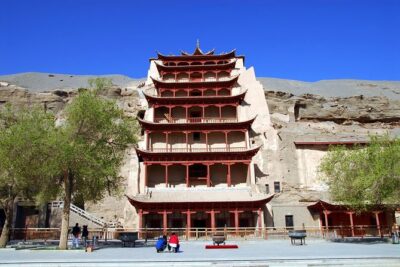
Dunhuang Private Silk Road Day Tour: Mogao Caves, Crescent Spring
Read our review →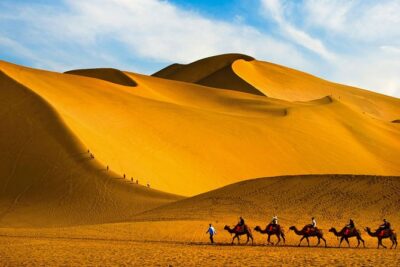
Dunhuang Private Day Tour Mogao Grottoes, Singing Dunes and Crescent Moon Spring
Read our review →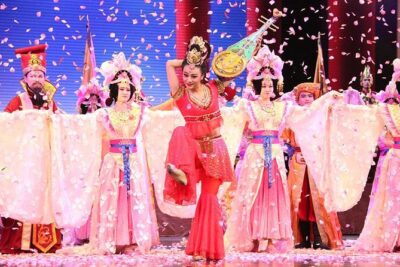
Dunhuang Day Tour: Mogao Grottoes, Singing Sand Dunes and The Silk Road Show
Read our review →
Classic The Silk Road Half Day Tour: The World Heritage –Mogao Grottoes
Read our review →
Browse the lists this tour appears in