
Reviewed · COOKING CLASSES
Half-Day Sichuan Cooking Class Experience in Chengdu
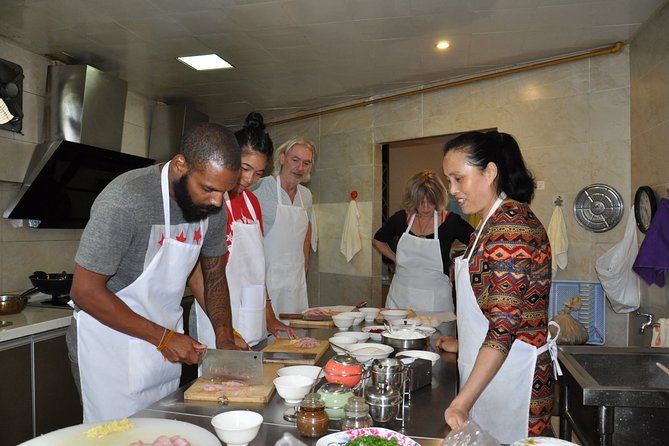
Chengdu’s fiery food makes more sense once you are standing at the stove, spooning in Sichuan pepper, chili, and fragrant sauces. This four-hour class takes you beyond ordering Kung Pao chicken by showing you how the flavors are built, then lets you eat the results for dinner.
I like the tiny group size, capped at five, and the fact that you cook several dishes rather than watch one demonstration. I also like getting recipe cards for home, plus the chance to request a different dish in advance. The main catch is uneven English instruction: some chefs speak good English, while others rely on gestures or a helper.
Key points at a glance
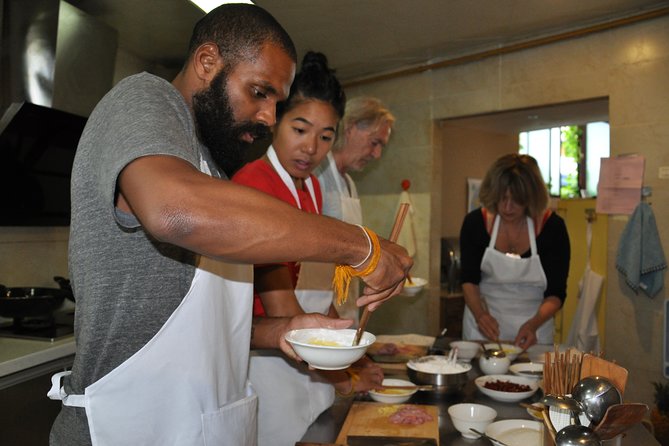
- Four hands-on dishes: Prepare local favorites such as Kung Pao chicken, sweet and sour pork, Sichuan-style eggplant, and dumplings.
- Smallest groups can become private lessons: The maximum is five people, and solo bookings or couples may have the chef to themselves.
- Dinner is the food you cook: There is no separate restaurant meal. You finish the dishes, sit down, and eat them together.
- The cooking venue can vary: Sessions have taken place in a hostel kitchen, family cafe, guesthouse kitchen, or the chef’s home.
- Recipes go home with you: The English recipe cards make this more useful than a one-night meal.
- Request a menu change early: The chef may accommodate a requested dish, but it must be asked for when booking and is not guaranteed.
Four hours of Sichuan cooking in Chengdu
This is not a polished culinary school with rows of stainless-steel workstations. It is a small, practical lesson built around the way local cooks prepare food at home or in a modest cafe kitchen.
The basic plan begins with pickup from your Chengdu hotel at about 4 pm. Your guide or driver takes you to the cooking venue, where the local English-speaking chef introduces the ingredients, tools, and dishes. The published menu includes four traditional preparations, followed by dinner and a return to your hotel.
The class length is about four hours, although the exact time depends on how many people join. With one or two students, you can expect more direct attention. With a full group of five, you will still be in a small setting, but you may spend more time waiting for a turn at a cutting board or wok.
The timing works well for a Chengdu evening. You cook through the late afternoon, eat what you have made, and return to your hotel at night. Since the meal is part of the class, avoid scheduling a large dinner afterward.
A few more Chengdu trips to weigh up
- Half-Day Chengdu Cooking Class with a Local Market Visit
★ 5.0 · 465 reviews - Chengdu: Cooking Class with Fresh Market Half Day Experience
★ 5.0 · 42 reviews - Half-Day steamed Buns Cooking Class with a Local Market Visit
★ 5.0 · 26 reviews
What you actually cook
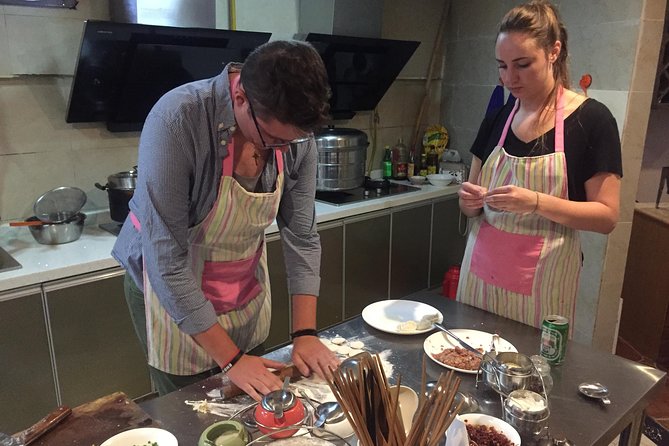
The standard menu is designed to show different parts of Sichuan cooking rather than repeat the same sauce four times.
Kung Pao chicken gives you the familiar combination of chicken, peanuts, chili, and a savory-sweet sauce. The useful lesson is not just the ingredient list. You see how quickly the ingredients come together in a hot pan and how a few strongly flavored items can carry the dish.
Sweet and sour pork is another lesson in balance. One useful detail is that the dish may be prepared in a less sugary style than the heavy versions common outside China. You get a chance to taste how acidity and sweetness work with the meat rather than simply covering it.
Sichuan-style eggplant, sometimes described as fish-flavored eggplant, introduces one of the cuisine’s most confusing names. It does not mean the dish tastes like fish. The name refers to a seasoning style traditionally used with fish, built from savory, spicy, sweet, and sour notes.
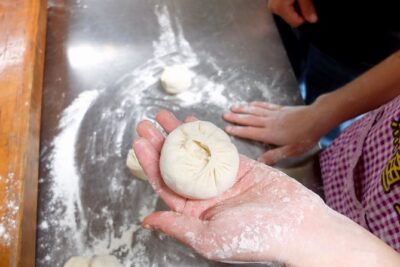
Steamed dumplings slow the class down and add a hands-on task that is different from wok cooking. You fill and fold them, then learn how shape and sealing affect the finished result. If you have never folded dumplings, this may be the most playful part of the afternoon.
The menu can change. Past classes have included mapo tofu, twice-cooked pork, dandan noodles, pork ribs with potatoes, bean curd in XO sauce, shrimp dumplings, and sweet and sour chicken. If you already know how to make Kung Pao chicken, request a substitute in the Special Requirements box when booking. The chef will try to help, but the change is not promised.
From Sichuan pepper to the finished plate
The class aims to teach technique, not just hand you a recipe. You learn about the spices and combinations behind Sichuan food, including the way heat, sourness, sweetness, salt, and aroma are brought into balance.
Sichuan pepper is central to the region’s cooking. Its effect is different from chili heat, and using too much or too little can change the dish. A good practical lesson shows you when the spice enters the pan and how it fits with dried chili, garlic, ginger, sauces, and oil.
Expect a demonstration followed by your own turn at the work. This format is useful because you can ask for a repeat while the chef is beside you. In a very small class, you may receive direct corrections on dumpling folds, cutting, or the order in which ingredients enter the wok.
The level of explanation varies. Some classes have a chef with strong English, and one session included an English-speaking helper. In other sessions, the chef knew only the necessary cooking words or spoke almost no English. The food can still be easy to follow, but you should not book this expecting a long lecture on Chinese culinary history or detailed translation of every ingredient.
That difference matters. If your priority is cooking with your hands and eating a good meal, the language gap may not trouble you. If your priority is technical detail, spice theory, and long conversation, ask the operator about English support before paying.
The kitchen is part of the adventure
The setting is not fixed in the way a museum visit is fixed. Classes have been held in a hostel kitchen, a family-run cafe, a guesthouse cafe, and, for some private sessions, the chef’s home. The common thread is a small, clean, working kitchen rather than a grand teaching facility.
That can be a plus. You get a more ordinary view of local cooking, with practical equipment and a relaxed atmosphere. One class included an ayi helping with the dishes, and another used a cafe kitchen where everything was ready when the class began.
It can also mean less polish. A compact kitchen may feel crowded if all five places are filled. A home or hostel setting may not offer the presentation or equipment of a formal cooking studio. Go in expecting a friendly local cooking lesson, not a professional chef certification course.
Some formats have included a market visit before cooking, giving you a chance to see ingredients firsthand. This is not clearly part of every session, so treat it as a possible addition rather than a guaranteed stop. The main published itinerary begins with hotel pickup and continues to the cooking venue.
Same country, a completely different kind of day:
- Chengdu: Giant Panda Breeding Research Base Ticket
★ 4.5 · 580 reviews - Tuktuk Food Tour Through Chengdu’s Local Eats
★ 5.0 · 435 reviews - Private Half-Day Chengdu Panda Breeding Center Tour with Optional Volunteer
★ 5.0 · 353 reviews - Chengdu: Sichuan Opera Shu Feng Yan Yun Evening Show Ticket
★ 4.7 · 185 reviews
Why the small group matters
The maximum group size is five, which is one of the strongest reasons to consider this class. Sichuan cooking moves quickly, and a large class can turn hands-on work into a demonstration watched from the back.
With only one student, the lesson can become a private tutorial. Couples and families with teenagers also fit the format well. A parent and two young teenagers, for example, can divide the work without losing access to the chef. Dumpling folding, chopping, and wok work are manageable tasks for younger cooks when the chef sets the pace.
A full group of five should still feel personal, but the published course duration depends on the number of participants. More people can mean more social energy and more dishes to share, while fewer people usually means more time for questions and menu changes.
This is also a good choice for solo visitors who want a social evening without joining a large food tour. You cook beside other food lovers, sit down together afterward, and have a natural reason to talk.
Hotel pickup and the 4 pm start
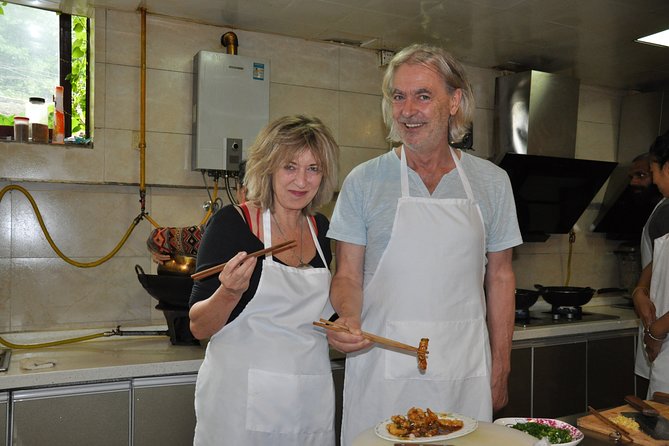
Pickup and drop-off are included, which makes the afternoon easier in a city where unfamiliar addresses and language barriers can slow you down. The start time is listed as 4 pm, and prompt pickup has been reported for private bookings.
Do not count on a detailed orientation from the driver. At least one pickup used a driver with little or no English, so it is sensible to have your hotel details and booking information ready. The venue is near public transportation, but the included transfer is the simpler option if your pickup is arranged.
The drive itself is not presented as sightseeing. Its value is practical: you get from your hotel to the kitchen and back without having to find the address yourself. Confirm the pickup details with Samtour of Chengdu OTC Travel after booking, especially if your hotel is outside the usual central area.
Is $83.99 a fair price?
At $83.99 per person, this is not the cheapest meal in Chengdu. You can eat excellent Sichuan food for far less, so the price only makes sense if you value the instruction, transport, small group, and recipes.
The strongest value comes when you receive a private or near-private class. Four dishes, a local chef, hotel transfers, and dinner make the cost easier to justify for a couple or family that wants an activity rather than just a meal.
The value is weaker if you want a polished school, extensive English commentary, or a fixed professional kitchen. The cooking is often simple home-style food, and the teaching quality depends on the chef and translation available that day. That is not necessarily a flaw. Simple dishes are often the ones you can repeat at home.
The recipe cards improve the long-term value. Several dishes are designed to be manageable outside China, and one participant made a dish again soon after returning home. You are paying for a skill you can use, not only for dinner that disappears at the table.
Eating what you made
The meal comes at the end of the work, although you may taste dishes as they are completed. You sit down in the cooking venue and eat the food with the chef and the rest of the group.
This arrangement gives the class a clear payoff. You can judge the balance of each dish while the process is still fresh. If a sauce is too hot or too sweet, you have a better chance of remembering what caused it.
The food is intended as dinner, and it is included in the price. If you take the morning version offered by the operator at other times, one practical tip is to skip breakfast because cooking and eating begin quickly. For this advertised session, the stated start time is 4 pm.
Do not expect a separate tasting menu prepared by someone else. The charm is that the meal reflects your own work, with the chef adding guidance and finishing touches.
Who should book this class?
I would choose this for a foodie who wants to interact with local cooks, a couple looking for a shared activity, or a family with older children and teenagers who are willing to participate.
It also suits a solo visitor. A one-person booking may become a private lesson, though that depends on the schedule. You should enjoy learning by watching, copying, tasting, and asking questions rather than needing a formal classroom.
This is less suitable for someone who wants advanced culinary training. The recipes are traditional and useful, but the instruction can be basic. English varies from excellent to very limited, and the amount of background information is not consistent.
If food allergies or dietary restrictions matter to you, use the booking requirements field to raise the issue. The supplied details specifically allow a requested dish, but they do not promise substitutions for every dietary need. Ask before the 24-hour cancellation deadline if the menu is important to you.
Booking, cancellation, and practical details
Confirmation is provided at booking, and mobile tickets are accepted. Group discounts may be available, though the listed per-person price is $83.99.
The activity is generally booked about 31 days ahead, so reserving early is sensible if your Chengdu dates are fixed. The maximum group size is five, but the number of participants can affect both the course duration and how much individual time you receive.
Free cancellation is available until 24 hours before the local start time. Cancel at least a full day ahead for a refund. Changes or cancellations inside that window are not accepted for a refund.
Should you book it?
Book this class if you want a small, hands-on Chengdu food experience and you are happy with a local, informal setting. The best parts are the personal attention, four-dish format, included dinner, hotel transfer, and recipe cards you can use later.
Think twice if polished English instruction is essential. Ask about the chef, venue, and language support before booking, and request any menu change in advance. For most curious cooks, the modest kitchen and occasional translation gaps are a fair trade for learning dishes you can actually make again.
FAQ
How long is the Sichuan cooking class?
The class lasts about four hours. The exact duration depends on the number of participants.
What time does the class start?
The listed start time is 4 pm.
Is hotel pickup included?
Yes. Hotel pickup and drop-off are included in the experience.
How many people can join the class?
The maximum group size is five travelers.
Which dishes will I cook?
The standard dishes include Kung Pao chicken, sweet and sour pork, Sichuan-style or fish-flavored eggplant, and steamed dumplings. The menu can vary.
Can I request a different Sichuan dish?
Yes. You can request another dish in the Special Requirements box when booking. The chef will try to accommodate the request, but it cannot be guaranteed.
Is dinner included?
Yes. Dinner consists of the dishes prepared during the class.
Will the chef speak English?
The experience includes a local English-speaking chef, but the level of English can vary. Some sessions have used a helper to translate, while other chefs have spoken only limited English.
Can I cancel for a full refund?
Yes, if you cancel at least 24 hours before the local start time. Cancellations or changes made less than 24 hours before the start are not refunded.
More Half-Day in Chengdu
- Half-Day Chengdu Back Alley Foodie Tour
★ 5.0 · 58 reviews - Half-Day Professional Mapo Tofu Cooking with a Local Market Visit
★ 5.0 · 19 reviews - Half-day Private Mahjong course in Local Tea House
★ 5.0 · 16 reviews - Private Half-Day Tour in Sichuan Culture Show with Hot Pot Dinner in Chengdu
★ 4.5 · 15 reviews
Just added around Chengdu
- Visiting Chengdu Panda Base in a Half Day★ 5.0 · 4 reviews
- Classsic sichuan Opera at sichuan Provincial Theater★ 5.0 · 4 reviews
- Tea Village in lost Town and Buddha 1 day tour★ 5.0 · 32 reviews
- Sichuan Opera with face-changing at Sichuan opera theater★ 4.5 · 6 reviews
- Sichuan Opera Show with Hotel Pickup★ 5.0 · 3 reviews
- Mini Group: Half-Day Chengdu Pandas Guided Tour★ 5.0 · 3 reviews
- Panda, Leshan, and Emei Mountain 2-day tour★ 5.0 · 4 reviews
- Shu Feng Ya Yun Sichuan Opera Ticket★ 5.0 · 13 reviews
Cooking Classes, compared.

Half-Day Chengdu Cooking Class with a Local Market Visit
Read our review →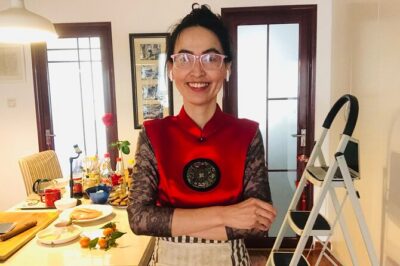
Online Cooking Class Beijing Dumplings and Cuisine by Sunflowerli Renowned Chef
Read our review →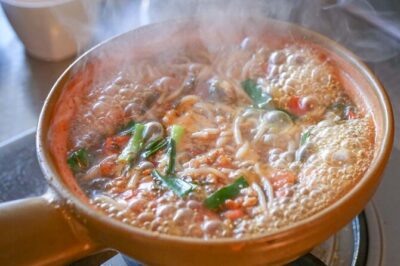
Lijiang Naxi Cuisine Cooking Class & Market Visit
Read our review →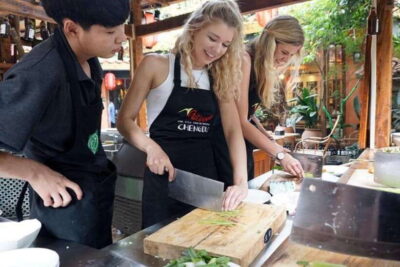
Cooking Class with Fresh Market Half Day Experience
Read our review →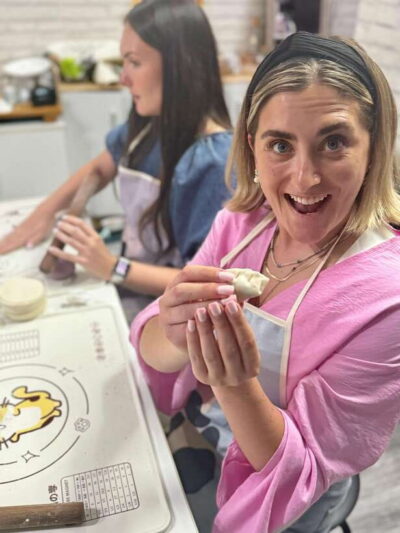
Half-Day steamed Buns Cooking Class with a Local Market Visit
Read our review →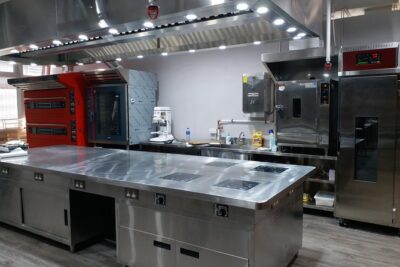
Hong Kong Market Walking Tour & Chinese Cooking Class
Read our review →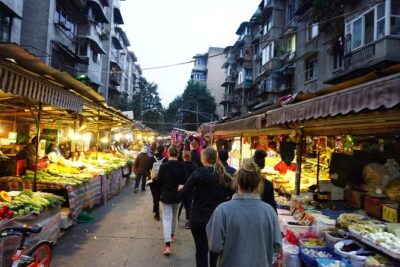
Half-Day Professional Mapo Tofu Cooking with a Local Market Visit
Read our review →Browse the lists this tour appears in