
Reviewed · CHENGDU TOURS
Learn cold noodle and wolf-teeth potato at local home
Zigong-style cold noodles and wolf-teeth potatoes turn a simple cooking lesson into a taste of family life in Sichuan. Karen teaches the dishes her mother sold at a food stall, using the salt and chili flavors tied to her hometown.
I like the small group size, capped at six, and the fact that you do the cooking rather than watch a demonstration. I also like that the class includes chili oil, recipes, ingredients, equipment, water, and an apron.
The main drawback is the short format. At about two hours, you get a focused introduction rather than a broad Sichuan cooking course, and transportation to the meeting point is not included.
Key points at a glance
- A family recipe from Zigong: Karen learned these dishes from her mother, who sold them at a local food stall.
- Two classic snacks: You prepare cold noodles and wolf-teeth potatoes, both popular street foods from Zigong.
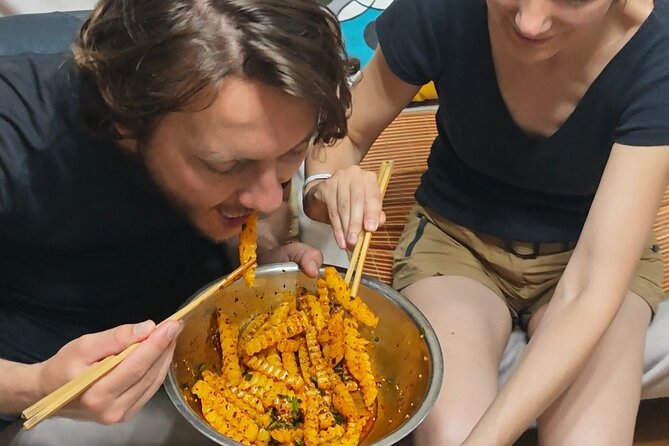
- Hands-on cooking: You cut, fry, steam, cool, mix, and season the food under Karen’s direction.
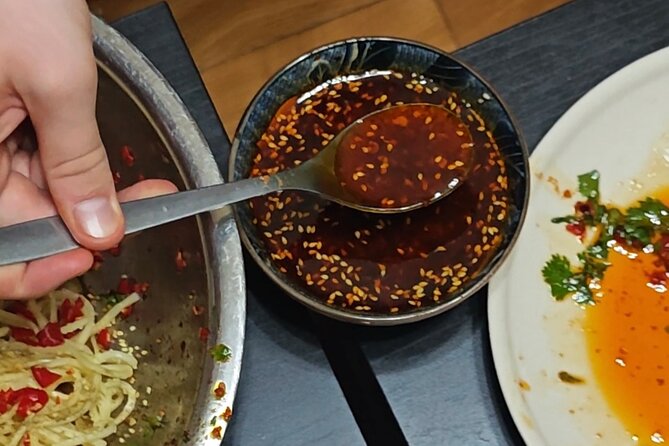
- Homemade chili oil: The lesson includes Karen’s family method for making the spicy oil that gives the dishes their character.
- Flexible spice level: Ask for no chili if you cannot eat spicy food, and tell Karen about allergies or dietary restrictions in advance.
- Good value at $31: The fee covers food, equipment, an apron, water, snacks, and recipes in a class lasting roughly 100 to 120 minutes.
Why these two Zigong snacks make a good Chengdu class
Chengdu has no shortage of food activities, but this one narrows its attention to two everyday snacks with a strong personal connection. That focus is part of the appeal. You are not rushing through a long menu or trying to copy six dishes in one sitting. You are learning two recipes well enough to make them again.
Cold noodles are served chilled and mixed with seasonings. Wolf-teeth potatoes are cut into ridged pieces, then fried and seasoned. The names may sound unusual, but the food itself is approachable. Both dishes depend on the balance of salt, chili, oil, and other seasonings, so the lesson also gives you a useful introduction to the flavor choices behind Sichuan snack food.
Karen’s connection to Zigong adds substance to the class. She was born there, and her parents worked in the Zigong salt factory. Her grandfather was a boiler man at the factory. Zigong is known for well salt, so salt is not just another ingredient in this story. It is part of the place and part of her family background.
That connection matters because the class is built around home cooking, not restaurant technique. Karen is not presenting herself as a professional chef. She learned the methods from her mother, who ran a food stall for years. You get the kind of practical instruction passed from one family member to another, with the flavors shaped by memory and habit.
Other Chengdu days worth booking alongside this:
- Chengdu: Giant Panda Breeding Research Base Ticket
★ 4.5 · 580 reviews - Half-Day Chengdu Cooking Class with a Local Market Visit
★ 5.0 · 465 reviews - Tuktuk Food Tour Through Chengdu’s Local Eats
★ 5.0 · 435 reviews
Meeting Karen near Zhongxin Road
The class begins at Zhongxin Road, Zhong Xin Lu, in Jinniu District, Chengdu. The experience ends at the same meeting point, so you do not need to arrange a separate return transfer from the activity.
The meeting point is near public transportation, but the cost of getting there is not included. Plan your route before you leave, and arrive on time. The class lasts about one hour and 40 minutes to two hours, so a late arrival could cut into the cooking rather than simply shortening a talk.
Once you meet Karen, the first stage is informal. You introduce yourselves and get familiar with each other before moving into the ingredients and cooking process. In a group of no more than six, this should feel more like a kitchen lesson than a large demonstration.
The limited capacity is useful here. Cooking requires room to handle ingredients, watch heat, ask questions, and taste as you go. A larger group would make this kind of personal instruction harder, especially when learning the finer points of chili oil and seasoning.
Learning cold noodles from a family method
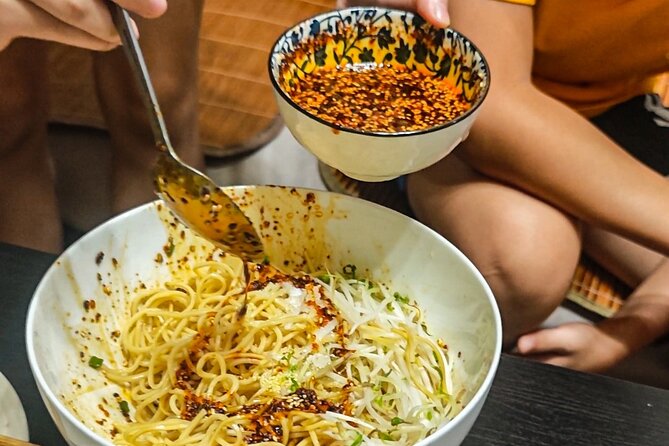
The cold noodle portion starts with an explanation of the ingredients and the basic process. You then prepare the dish under Karen’s instruction rather than simply watching her make it.
The supplied details do not give a full step-by-step recipe, so you should not expect a printed technical manual with every measurement and cooking time. You will receive the recipe, though, which gives you a useful way to recreate the dish at home after the class.
The method is presented as a Zigong approach, not a generic noodle recipe. That distinction is important. Sichuan food is often reduced to the word spicy, but the character of the dish depends on how salt, oil, heat, and seasoning work together. Karen’s lesson should help you understand that balance through your own cooking.
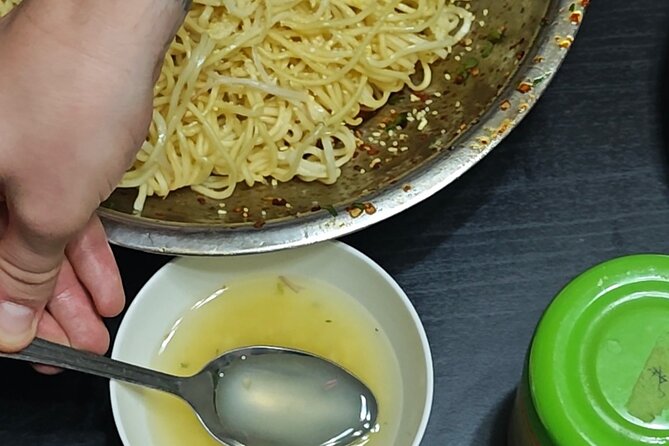
The noodles are steamed and cooled as part of the process. That gives the class a little more range than a simple mixing demonstration. You learn how the noodles are prepared before the seasonings are added, and you can taste the result once the dish is finished.
For me, the strongest part of this section is the connection to Karen’s childhood. She remembers buying cold noodles after school with a classmate, then returning home after eating them. That is a small detail, but it explains why this dish matters to her. You are learning a snack associated with ordinary school days, local shops, and family food stalls.
Cutting and frying wolf-teeth potatoes
The second dish is wolf-teeth potato, named for the jagged shape created when the potato is cut. Karen’s family method involves cutting and frying the potato, then adding the seasonings that give the snack its Sichuan character.
This is a good choice for a short cooking class because the transformation is easy to see. A plain potato becomes a ridged, crisp-edged snack with a shape that holds seasoning. You get a practical lesson in how a simple ingredient can become a recognizable regional food.
The class does not promise a restaurant-style presentation, and that is fine. The point is the method and the flavor. If you want to learn food you can actually prepare in an ordinary kitchen, this is more useful than a complicated dish requiring hard-to-find equipment.
You should also expect to work under guidance rather than at your own pace. Karen will direct you through the steps, which is especially helpful if you are unfamiliar with the ingredients or cooking methods. The available equipment and ingredients are included, so you do not need to bring cooking tools.
Same country, a completely different kind of day:
- Private Half-Day Chengdu Panda Breeding Center Tour with Optional Volunteer
★ 5.0 · 353 reviews - Chengdu: Sichuan Opera Shu Feng Yan Yun Evening Show Ticket
★ 4.7 · 185 reviews - Private Chengdu Day Tour: Giant Pandas and Jinsha Site Museum
★ 5.0 · 142 reviews - Visiting Dujiangyan Yaan Wolong Panda Base Optional Volunteering
★ 5.0 · 105 reviews
The chili oil lesson adds real value
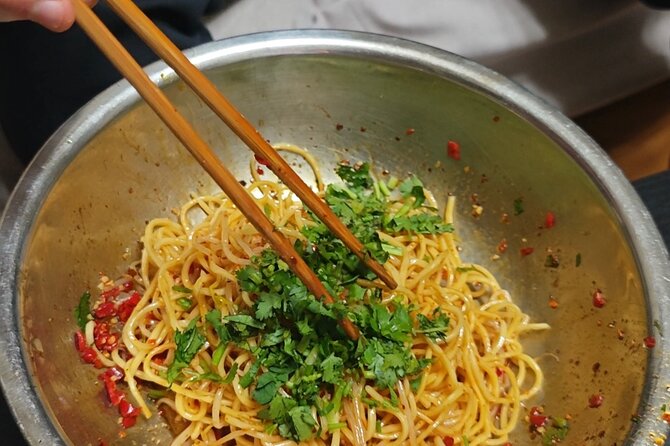
The chili oil is one of the most useful additions to the class. It is not just a side detail. Chili oil helps define many Sichuan dishes, and learning a family recipe gives you something you can use beyond these two snacks.
You can ask for the dishes without chili if you cannot eat spicy food. That makes the class more accessible, but it also changes the experience slightly. If you can manage some heat, tell Karen your comfort level so she can guide the seasoning appropriately.
Do not assume that every Sichuan dish must be painfully hot. The information provided here does not promise a particular heat level, and the class can be adjusted for people who avoid chili. The important thing is to mention your needs before cooking begins.
You should also report food allergies or other dietary restrictions in advance. The ingredients are included, but the experience is not presented as a certified allergy-free kitchen. Clear communication is the sensible approach.
Tasting your own work
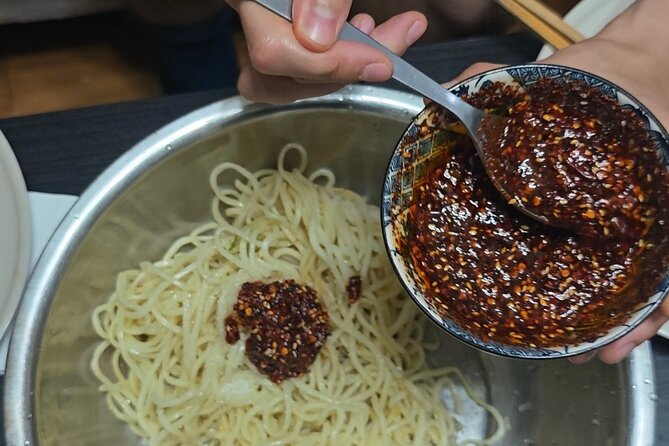
After the cooking is finished, you sit down to taste the cold noodles and wolf-teeth potatoes you prepared. Karen also discusses features of Sichuan and Zigong cuisine while you eat.
That final tasting is more than a reward. It lets you compare the finished flavor with the ingredients and methods you just used. You can ask why the dish tastes salty, hot, oily, or balanced, and you can think about what you would change when making it at home.
A cooking class can feel incomplete if you leave without eating the result. Here, snacks are included, and tasting your work is part of the plan. The meal is not described as a full lunch or dinner, so you should treat it as a hands-on snack experience rather than a substitute for a larger meal.
The class also gives you a chance to share your reaction to the food. That conversation fits the small format. You are not moving on to another stop, and the activity ends back at the meeting point.
What $31 gets you
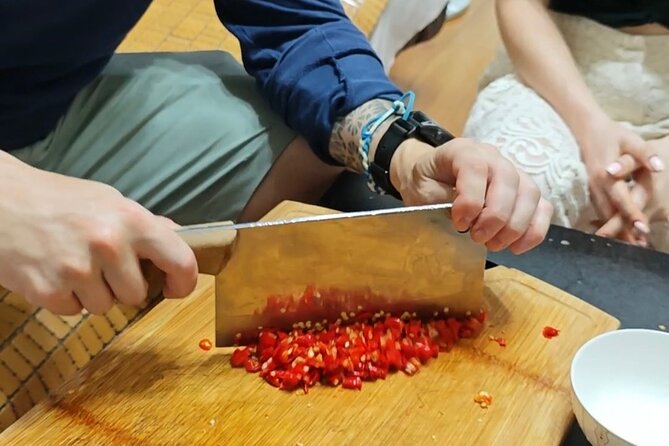
At $31, this class offers solid value if you want personal instruction and a meal-sized taste of local food culture. The fee includes all food ingredients, cooking equipment, an apron, water, snacks, and the recipe.
The recipe is especially helpful. You are not paying only for food eaten once in Chengdu. You leave with instructions for making the dishes again, including the chili oil method. That gives the class a longer life, provided you have access to the needed ingredients at home.
The price also covers the setting and the host’s family knowledge. You are not simply buying a plate of noodles and potatoes. You are paying for a guided activity in which you prepare the food yourself, hear about Zigong cuisine, and connect the dishes to Karen’s family.
Still, value depends on what you want. If your main goal is to eat as many Sichuan dishes as possible, a food walk may offer more variety. If you want to learn practical recipes in a small group, this focused class makes better sense.
Timing, group size, and practical planning
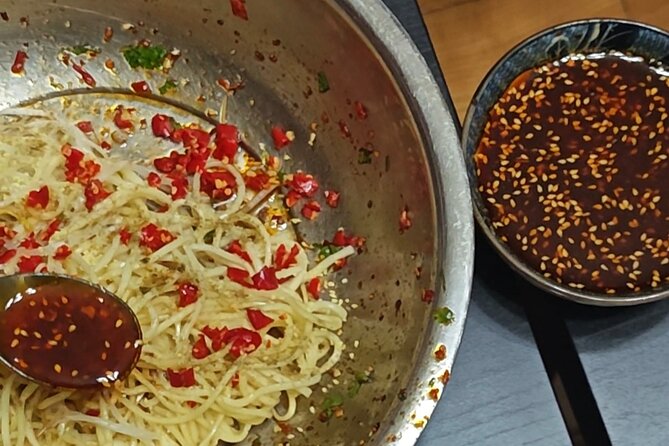
The experience lasts approximately one hour and 40 minutes to two hours. That is long enough for introductions, ingredient explanations, cooking, chili oil preparation, tasting, and a short discussion of local cuisine.
The maximum group size is six. That limit should give you a better chance to follow each step and ask questions. It also means the experience may feel more personal than a standard class with a large audience.
The activity is offered with a mobile ticket, and booking confirmation is sent at the time of booking. You must meet at Zhongxin Road, and transportation to and from the meeting point is not part of the fee.
Children must be accompanied by an adult. Most people can take part, but you should still communicate any food restrictions before the class. The minimum drinking age is listed as 18, although the supplied information does not describe an alcoholic drink component, so do not book this as a drinking activity.
If your preferred date is not shown on the calendar, you can message the provider and ask for the date to be opened. That option is useful if your Chengdu schedule is fixed, but you should arrange it before making firm plans.
Who will enjoy this cooking experience
I would recommend this class to you if you want a close look at everyday Sichuan food rather than a formal restaurant lesson. It suits curious eaters, home cooks, couples, small groups, and families with older children who can follow kitchen instructions.
It is also a good match if you have already eaten Sichuan food and want to understand how a few basic elements create its flavor. Salt, chili oil, noodles, and potatoes may sound simple, but the class shows how much regional identity can rest on ordinary ingredients.
You will likely appreciate it most if you are willing to participate. The main value comes from cutting, frying, steaming, cooling, seasoning, and tasting. If you prefer to sit back while someone else cooks, this may not be the right activity.
People who cannot eat spicy food can request no chili, which is a useful accommodation. People with allergies should contact Karen before arrival. Since the class takes place in a local home and uses a family cooking method, you should expect a personal lesson rather than a highly standardized culinary school format.
The main limitations to keep in mind
The class focuses on only two dishes. That is a strength if you prefer a clear, manageable lesson, but a limitation if you want to learn dumplings, hot pot, mapo tofu, or a long list of Sichuan specialties.
The duration is also compact. You get enough time to cook and taste, but not enough for a broad discussion of Zigong food or an extended market visit. No market shopping, restaurant stop, or city sightseeing is included in the information provided.
The location is in Chengdu, while the recipes come from Zigong. That is convenient if you are staying in Chengdu, but you are not visiting Zigong itself. The cultural connection comes through Karen’s family story and cooking method.
Finally, transportation is your responsibility. The meeting point is near public transportation, but you must budget both time and fare for reaching Zhongxin Road. Arriving late is particularly unhelpful in a class where the steps build on one another.
Should you book it?
Book this experience if you want a small, hands-on introduction to Zigong snack food and the chance to learn recipes tied to a real family kitchen. The $31 price is fair because it includes the ingredients, equipment, apron, water, snacks, recipe, and personal instruction for a group of no more than six.
Skip it if you want a full meal, a wide survey of Sichuan cuisine, or a class taught by a formally trained chef. The appeal here is narrower and more personal. You learn the cold noodles and wolf-teeth potatoes Karen grew up with, including her family’s chili oil, then eat what you made.
For many visitors, that focus is exactly the point. You leave with two practical recipes, a better sense of Zigong flavor, and a food memory connected to Karen’s mother and the salt-making city where her family lived.
FAQ
Where does the cooking experience start?
It starts at Zhongxin Road, Zhong Xin Lu, Jinniu District, Chengdu, Sichuan, China, 610032.
Where does the activity end?
The activity ends back at the meeting point.
How long does the experience last?
It lasts approximately one hour and 40 minutes to two hours.
How much does the experience cost?
The listed price is $31.
What dishes will I learn to make?
You will learn to make cold noodles and wolf-teeth potatoes, two popular snacks from Zigong in Sichuan.
Is chili oil included in the lesson?
Yes. Karen teaches her family recipe for making chili oil as part of the cooking experience.
Can I request food without chili?
Yes. If you cannot eat spicy food, you can ask for the dishes to be prepared without chili.
What should I do about allergies or dietary restrictions?
Tell the host about any food allergy or dietary restriction before the experience.
What is included in the price?
The fee includes snacks, all food ingredients, the recipe, an apron, water, and cooking equipment.
How many people can join?
The activity has a maximum of six participants. Children must be accompanied by an adult.
Just added around Chengdu
- Visiting Chengdu Panda Base in a Half Day★ 5.0 · 4 reviews
- Classsic sichuan Opera at sichuan Provincial Theater★ 5.0 · 4 reviews
- Tea Village in lost Town and Buddha 1 day tour★ 5.0 · 32 reviews
- Sichuan Opera with face-changing at Sichuan opera theater★ 4.5 · 6 reviews
- Panda, Leshan, and Emei Mountain 2-day tour★ 5.0 · 4 reviews
- Sichuan Opera Show with Hotel Pickup★ 5.0 · 3 reviews
- Mini Group: Half-Day Chengdu Pandas Guided Tour★ 5.0 · 3 reviews
- Shu Feng Ya Yun Sichuan Opera Ticket★ 5.0 · 13 reviews
Chengdu Tours, compared.

Half-Day Chengdu Cooking Class with a Local Market Visit
Read our review →

Private Half-Day Chengdu Panda Breeding Center Tour with Optional Volunteer
Read our review →
Sichuan Opera Shu Feng Yan Yun Evening Show Ticket
Read our review →
Private Chengdu Day Tour: Giant Pandas and Jinsha Site Museum
Read our review →
Visiting Dujiangyan Yaan Wolong Panda Base Optional Volunteering
Read our review →
Chengdu Sichuan Opera Show Ticket – Shu Feng Ya Yun
Read our review →Browse the lists this tour appears in